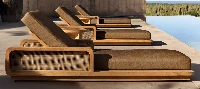

Walk into any luxury resort, high-end rooftop lounge, or private estate garden, and you will notice something striking about the outdoor timber. Some tables shimmer with a rich, golden-honey gloss. Others showcase a muted, matte warm amber tone. And many display a stately, weathered driftwood finish.
If you are currently evaluating treatment options for your property, you are likely asking: what is the difference between teak oil, teak sealer, and letting teak turn natural silver grey?
The short answer comes down to chemical composition, maintenance labor, and how each method interacts with the natural tectoquinone oils inside timber heartwood. Choosing the wrong approach can lock you into a relentless cleaning cycle, attract dark mildew, or alter the natural beauty of your furniture.
Whether you are furnishing a cozy boutique balcony with a teak balcony sofa or outfitting a multi-acre beach resort deck, understanding these three surface strategies is essential to protecting your investment and minimizing long-term operational costs.

🔬 Understanding Teak Chemistry: Oleoresins, Lignin, and UV Oxidation
To understand why treatments perform differently, you first have to look at what happens inside the wood grain when exposed to sunshine and rain.
Premium Grade-A teak heartwood possesses an extraordinary natural defense mechanism. It contains a high concentration of natural oleoresins and insoluble silica content. These natural compounds make the timber inherently resistant to rot, termites, and fungal decay-even if you leave it completely untreated in severe weather.
When raw timber sits under direct sunlight, photo-oxidation occurs. Solar ultraviolet radiation breaks down lignin, the organic polymer that binds wood cellulose fibers together and gives fresh wood its warm, golden-brown hue. As surface lignin degrades and washes away with rainwater, a thin outer layer (less than 0.5 mm deep) transforms into a silvery-grey cellulose shell.
Crucially, this graying is purely a surface-level aesthetic shift. The underlying structural core remains 100% sound. How you manage or accept this chemical process dictates whether you need teak oil, teak sealer, or no surface coating at all.
When designing expansive pool decks, property managers often pair low-maintenance timber loungers like a teak outdoor sunbed with breathable fabrics to balance sun exposure with effortless seasonal upkeep.
🧪 Option 1: Teak Oil - The High-Maintenance Myth
Let's address the single biggest misconception in outdoor wood care: teak oil is rarely made from teak trees.
Most commercially sold "teak oils" are actually mixtures of refined linseed oil or tung oil, heavily diluted with petroleum-based mineral spirits and chemical driers.
How Teak Oil Works
Because raw timber already saturates its pores with natural heartwood oils, applied topical oil cannot penetrate deep into the dense wood grain. Instead, it sits near the top surface layer. The solvent evaporates, leaving a temporary, wet-look shine that lasts anywhere from 4 to 12 weeks depending on solar exposure.
The Downside of Oiling
Feeds Mildew Spores: Organic vegetable oils serve as an ideal nutrient source for airborne cladosporium mold and black fungi. In humid or rainy climates, oiled wood often develops unsightly dark blotches within months.
Locks You into a Cycle: Once you oil timber, the dried organic residues evaporate unevenly under UV rays, leaving a patchy finish. To maintain the look, you must reapply oil 3 to 4 times a year.
Risk of Wood Drying: Frequent applications of petroleum solvents can actually strip away the timber's natural protective resins over time.
For large contract installations-such as an outdoor teak sectional sofa for 8 to 10 people seating in a busy hotel lounge-using oil is usually impractical due to the high ongoing labor cost and risk of oily residue transferring onto guest clothing.

🛡️ Option 2: Teak Sealer - Locking in Golden Tones Without the Grease
If your design aesthetic demands that rich, golden-honey appearance without the nightmare of constant oiling, teak sealer is the industry-recommended solution.
Unlike oil, a high-grade sealer is an aqueous or solvent-borne alkyd resin emulsion infused with micro-pigments and chemical UV-inhibitors.
How Teak Sealer Works
Sealers do not attempt to soak deep into the timber core. Instead, they form a micro-porous, breathable polymer membrane just below the wood surface. This barrier blocks solar UV radiation from breaking down surface lignin while allowing internal moisture vapor to escape freely.
No Organic Food for Mold: Synthetic resin sealers contain no organic vegetable fats, drastically reducing black mold risks.
Long-Lasting Protection: A single professional application typically protects timber for 12 to 18 months before requiring a light top-coat touch-up.
Uniform Golden Finish: Micro-pigments inside the sealer replicate the natural color of freshly sanded heartwood, concealing minor color variances across table planks.
This makes sealer ideal for high-contact dining surfaces, such as a commercial teak patio table with umbrella hole and brass cap, where food spills, wine drips, and heavy daily washing require a durable, stain-resistant finish.
👵 Option 3: Letting Teak Turn Natural Silver Grey - Zero Maintenance Elegance
The third approach is simple: do nothing.
Allowing timber to undergo its natural silvery grey patina process is the preferred choice for landscape architects, eco-resorts, and minimalist residential projects worldwide.

The Weathering Progression
Over 6 to 12 months of weather exposure, rain and sunshine strip away surface pigments, transforming golden wood into a silvery, platinum-grey patina.
Important Fact: Weathering does not mean the wood is rotting. The natural capillary action of high-density heartwood prevents deep water penetration. Beneath that paper-thin silver oxide layer, the timber remains as strong, dense, and rot-resistant as the day it was milled.
Advantages of the Natural Grey Route
Lowest Total Cost: Zero expense on oils, sealers, or specialized chemical strip washes.
Minimal Maintenance: Requires only an annual wash with mild soapy water and a soft bristle brush to remove surface dust and pollen.
Timeless Aesthetic: Blends naturally into coastal dunes, modern concrete architecture, and lush garden landscapes.
📊 Comprehensive Comparison Matrices: Oil vs. Sealer vs. Natural Patina
To help property managers and procurement teams evaluate these options side-by-side, here are three comprehensive comparison tables outlining technical, financial, and environmental performance.
Technical & Performance Breakdown
| Evaluation Criteria | Teak Oil | Teak Sealer | Natural Silver Grey |
| Primary Chemical Base | Linseed/Tung oil + mineral spirits | Water-based acrylic resin + UV blockers | None (Raw natural heartwood) |
| Visual Finish | Wet-look dark gloss | Warm golden/honey matte tone | Platinum silver-grey patina |
| UV Defense Level | Low (Fades in weeks) | Exceptional (Blocks 90%+ UV rays) | None (Encourages natural oxidation) |
| Mildew & Black Mold Risk | High (Feeds fungal growth) | Extremely Low | Low (Requires occasional cleaning) |
| Application Frequency | Every 2–3 Months | Every 12–18 Months | Never (Annual soap rinse only) |
| Touch Experience | Can feel slightly oily/tacky | Smooth, dry, natural wood feel | Soft, dry, slightly textured grain |

5-Year Maintenance Cost & Labor Comparison (Commercial Resort Scenario)
| Cost / Labor Factor | Teak Oil Protocol | Teak Sealer Protocol | Natural Silver Grey Protocol |
| Chemical Material Cost | High (frequent purchasing) | Moderate (purchased once every 1.5 yrs) | $0.00 |
| Labor Hours Required | ~16 Hours / year per set | ~3 Hours / year per set | ~1 Hour / year per set |
| Strip Washing / Sanding Need | High (to remove dark oil buildup) | Low (light buffing before recoating) | None |
| Interruption to Guest Use | High (sticky surface drying time) | Minimal (dries in 2–4 hours) | Zero |
| 5-Year Overall TCO Rating | Most Expensive | Cost-Effective Middle Ground | Lowest Cost Option |
Climate Compatibility Guide
| Climate Zone | Teak Oil | Teak Sealer | Natural Silver Grey |
| Tropical / High Humidity | ❌ Avoid (Extreme mold risk) | ✅ Highly Recommended | ✅ Excellent |
| Arid / Extreme Sun (Desert) | ❌ Avoid (Dries out & turns black) | ✅ Essential to prevent bleaching | ✅ Excellent |
| Coastal / Marine Salt Air | ⚠️ Caution (Requires constant care) | ✅ Excellent | ✅ Outstanding (Classic nautical look) |
| Freeze / Thaw Winter Zones | ❌ Avoid | ✅ Recommended (Paired with covers) | ✅ Excellent |
🏛️ International Standards, Certifications & Manufacturing Credentials
When sourcing contract-grade furniture for commercial development, specifying raw material quality is just as important as choosing the right surface finish. Low-grade sapwood will decay regardless of whether you apply oil or sealer.

To guarantee your timber assets deliver decadal lifespans, demand compliance with verified international manufacturing standards:
FSC certified teak: Ensures timber is harvested from sustainably managed plantation forests with complete supply-chain traceability (Forest Stewardship Council).
SGS certified chemical testing: Verifies that applied sealers, top-coats, and adhesives meet strict safety thresholds without releasing hazardous volatile compounds.
ISO 9001 quality management: Guarantees precision automated kiln-drying processes, ensuring timber moisture content is stabilized strictly between 8% and 12% to prevent post-installation warping.
EN 581 standard: European mechanical safety and structural load testing standard specifically regulating contract outdoor furniture used in public spaces and hotels.
BIFMA X5.5: American National Standard for office and commercial space desk and table products, testing structural impact and joint fatigue.
REACH compliance: Ensures all chemical finishes, seals, and synthetic components adhere to strict European Union environmental protection guidelines.
💡 Howvin's Professional Care Protocol & Decision Guide
At Howvin, we engineer commercial-grade outdoor collections built from premium Grade-A timber. Based on our decades of manufacturing experience, here is our decision framework for selecting your surface care strategy:
For High-Traffic Dining & Commercial Food Outlets: Choose teak sealer. It seals wood pores against grease, ketchup, and wine spills while preserving a golden look that complements luxury indoor-outdoor dining spaces.
For Rooftop Lounges, Beach Clubs, and Oceanfront Resorts: Choose natural silver grey. The grey patina harmonizes effortlessly with ocean views, and the zero-maintenance workflow frees up engineering staff for other tasks.
For Small Residential Spaces: A compact teak balcony sofa or casual lounge set can be maintained easily with a quick annual application of water-borne sealer to keep it looking showroom-new.
When to Use Oil: In almost all modern commercial scenarios, we advise replacing traditional oiling protocols with breathable polymer sealers to eliminate mold issues and labor overhead.
❓ FAQ:
Q1: Can you switch from oiled teak to a natural silver grey finish later on?
Yes, but it requires deep surface preparation. You must first apply an industrial sodium hydroxide wood cleaner or heavy-duty stripper to dissolve and lift all oxidized oil residues trapped in the surface grain. Once stripped, wash the wood thoroughly with clean water, allow it to dry completely, and sand lightly with 120-grit sandpaper. Once raw wood is exposed, sunlight will naturally transform it into a uniform silver grey within 3 to 6 months.
Q2: Will letting teak turn silver grey reduce its structural lifespan or cause splintering?
No. Silvering is an optical change caused by UV light breaking down surface lignin in the outer fraction of a millimeter. The internal heartwood core retains all of its natural moisture, oleoresins, and silica, maintaining full structural integrity and load-bearing strength. Minor surface checking (hairline grain cracks) may appear as humidity shifts, but this is a natural wood characteristic that does not affect safety or durability.
Q3: How do you remove food stains or grease drops from an untreated silver-grey teak table?
For fresh oil or grease spots on raw silver teak, sprinkle absorbent cornstarch or chalk powder over the stain immediately and let it absorb the oil for 24 hours. Brush away the powder, then scrub the area with warm water mixed with liquid dish soap using a soft bristle brush. For persistent spots, apply a diluted solution of oxalic acid wood brightener, which lifts organic discoloration without bleaching the natural wood grain.
Q4: Is it necessary to apply a clear varnish or polyurethane lacquer to outdoor teak?
Never apply film-forming polyurethane lacquers, clear varnishes, or hard acrylic paints to outdoor teak. Teak naturally expands and contracts with changes in ambient temperature and relative humidity. Because hard film coatings cannot flex with the wood, they quickly crack, flake, and trap water underneath. This trapped moisture causes ugly white blisters and creates ideal conditions for internal wood decay. Stick strictly to microporous sealers or leave the wood raw.
Q5: How does kiln-drying affect the way teak reacts to oil or sealer finishes?
Proper kiln-drying in an ISO 9001 certified facility reduces internal wood moisture to an optimal 8–12% threshold. This structural stabilization minimizes internal wood movement, closes grain pores uniformly, and prevents sap migration. Properly kiln-dried timber absorbs water-based sealers far more evenly, preventing premature peeling and ensuring that the protective UV barrier adheres securely for its full intended lifespan.