
Severe storms do not care how much you spent on your patio layout. When a gale-force hurricane, tropical depression, or sudden microburst rolls through a beach resort or private courtyard, high-velocity winds and flying debris can turn heavy outdoor setups into collateral damage.
When your patio gets hit, the immediate impulse is panic-especially if you walk outside to find a cracked frame, broken mortise joint, or split table leg. But before you throw away an expensive set, pause.

Knowing how to restore structurally damaged teak wood after severe storm exposure? comes down to understanding wood mechanics. Teak is one of the most resilient natural hardwoods on the planet. Unlike softer woods that shatter under tension, teak's dense grain structure allows it to absorb massive impact forces. In most cases, even severe damage-like a shattered armrest on a heavy duty teak outdoor sofa-can be restored to full commercial load-bearing capacity if you follow the right structural engineering sequence.
At Howvin, we engineer furniture for luxury hotels, public venues, and commercial properties worldwide. In this guide, we break down the step-by-step structural inspection, epoxy injection techniques, and refinishing protocols needed to bring storm-battered teak back to life.
🔍 Structural Inspection Protocol: Assessing Damage on Your Heavy Duty Teak Outdoor Sofa
Not all post-storm wood damage is structural. After a severe weather event, you must separate cosmetic grain stress from true mechanical failure.
When wood is submerged in rainwater or subjected to rapid pressure changes, it undergoes hygroscopic swelling. As the surface dries faster than the interior core, micro-fractures known as wood grain checking appear along the grain lines. Checking is a natural movement in solid wood-it does not compromise structural integrity.
However, if a windstorm hurls a 100-pound sofa across a stone deck, you are dealing with dynamic impact trauma.
📋 Phase 1: The 4-Point Structural Assessment Checklist
Before attempting any chemical adhesion or sanding, conduct this physical examination:
Joint Integrity Test: Apply lateral force to the armrests and back posts. Listen for creaking or cracking sounds, which indicate internal glue shearing inside the mortise and tenon joinery.
Fastener Pull-Out Inspection: Inspect all hardware connection points. Check whether marine-grade 316 stainless steel bolts have pulled out of the wood threading or enlarged the pilot holes.
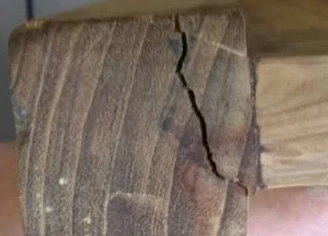
Delamination & Splitting Check: Run a thin feeler gauge or feeler blade along deep cracks. If the fissure extends deeper than 50% of the timber's cross-section thickness, it requires structural doweling rather than simple wood filling.
Tannin & Moisture Saturation Level: Use a pinless digital moisture meter. Never apply sealers or epoxies if the internal moisture content exceeds 14%.
🛠️ Structural Damage Severity & Restoration Action Plan
| Damage Type | Visual Indicators | Structural Risk Level | Primary Restoration Method |
| Surface Checking | Hairline fractures along grain; < 2mm depth | Low (Cosmetic only) | Sand with 180-grit paper; apply solvent-borne teak sealer |
| Joint Shear | Wobbly frame; gap visible at joint shoulder | High (Frame failure risk) | Disassemble joint; inject structural epoxy resin; clamp |
| Deep Split / Fracture | Full timber fracture; loose splinters | Critical (Unsafe for seating) | Insert hardwood biscuits or dowels with polyurethane wood adhesive |
| Fastener Stripping | Hardware spins freely; enlarged bolt hole | Medium (Localized instability) | Bore out hole; glue in solid teak plug; re-drill pilot hole |
🛠️ Step-by-Step Joint & Frame Repair on a Round Teak Outdoor Dining Table
Large dining tables are vulnerable during high-wind events. Because of their wide surface area, a storm can flip a heavy table upside down, placing immense torsional leverage on the leg pedestals and apron joints.
If you are fixing a overturned round teak outdoor dining table, follow this industrial repair sequence to restore full structural capacity.

Step 1: Sanitation & Moisture Stabilization
Never attempt structural woodworking on wet, mud-caked timber. Wash the damaged section with a mild solution of warm water and trisodium phosphate (TSP) to remove dirt, organic debris, and mold spores. Allow the piece to air dry in a shaded, well-ventilated area for at least 72 hours.
Step 2: Cleansing the Fracture Zone
Old glue, dirt, and loose wood fibers inside a fracture will prevent new adhesives from bonding. Use compressed air and a fine wire brush to clear the interior of the split. Wipe the internal surfaces with acetone. Acetone strips away the surface natural oleoresin content of the wood, allowing the adhesive to penetrate deep into the cellular pore structure.
Step 3: Adhesive Injection & Internal Reinforcement
For load-bearing joints, standard PVA wood glue will fail under outdoor humidity cycling. You must use a two-part structural epoxy resin or a moisture-curing polyurethane glue.
Squeeze the epoxy deep into the fissure using a syringe.
For severe splits, drill perpendicular pilot holes through the hidden side of the frame.
Drive fluted oak or teak dowels through the split to lock the broken sections together permanently under high shear strength resistance.
Step 4: Clamping with Uniform Pressure
Position heavy-duty bar clamps or a pneumatic clamp system across the repair zone. Use softwood clamping blocks to protect the table's surface from pressure marks. Tighten until you see uniform glue squeeze-out along the entire crack line. Leave the clamps engaged for a full 24 hours.
📊 Adhesive Performance in Outdoor High-Stress Environments
| Adhesive Class | Waterproof Grade | Flexibility | Tensile Bond Strength | Recommended Application |
| Two-Part Epoxy (Thixotropic) | 100% Submersible | Low (Rigid bond) | Extreme (> 3,500 PSI) | Load-bearing leg fractures & split aprons |
| Polyurethane (D4 Grade) | Waterproof (EN 204) | Moderate | High (> 2,800 PSI) | Mortise & tenon joint re-gluing |
| Exterior PVA (Type I) | Water-Resistant | Low | Medium (> 2,000 PSI) | Non-structural slat repairs only |
🌧️ Surface Refinishing: Removing Tannin Stains, Mold, and Water Rings
Once the frame is structurally sound, you must address the chemical aftermath of storm exposure. Rainwater mixed with falling leaves creates acid leaching, resulting in dark black tannin stains on the wood surface.
To eliminate dark water ring burn without stripping away wood volume:
Apply a 10% concentration of oxalic acid (commonly sold as wood brightener) using a synthetic bristle brush.
Allow the solution to react on the stained area for 15 minutes. The chemical reaction neutralizes the iron-tannate complexes responsible for dark discolorations.
Rinse thoroughly with clean water to stop the chemical action.
Once completely dry, perform a 3-stage mechanical sanding sequence using 80-grit, 120-grit, and finally 180-grit sandpaper following the natural direction of the wood grain.
🏛️ Commercial Specification Strategy: Selecting Resilient Teak for Extreme Climates
For commercial purchasing directors, property managers, and hotel developers, dealing with storm damage highlights the importance of original product specification. Fixing a cheap residential-grade table after every storm quickly destroys operational profitability.
When specifying furniture for hurricane-prone resort regions or exposed coastal rooftops, commercial buyers should focus on heavy-frame designs.

In high-wind public areas, lightweight furniture becomes a hazard. Specifying a heavyweight grade A teak sofa for public hospitality areas ensures the furniture stays anchored during sudden atmospheric pressure drops. Grade-A heartwood, harvested from the inner core of mature trees, features a high natural silica content and dense oil saturation that repels water absorption, reducing the risk of internal rot during prolonged monsoon conditions.
To ensure your procurement assets withstand extreme weather cycles, insist on manufacturer compliance with international mechanical and safety standards:
EN 581 standard (European structural safety and stability test for contract outdoor furniture).
BIFMA X5.5 (Commercial desk and table structural performance standards).
ISO 9001 quality standards (Guarantees precise kiln-drying protocols between 8% and 12% moisture content before manufacturing).
🧪Material Durability Matrix: Grade-A Teak vs. Alternative Materials in Coastal Storm Zones
| Material Type | Resistance to Wind Overturn | Impact Resistance | Post-Storm Repairability | Lifespan in Marine Environments |
| Grade-A Heartwood Teak | Superior (High Density) | Outstanding | Excellent (Can be re-sanded/epoxied) | 30–50+ Years |
| Powder-Coated Aluminum | Moderate (Requires anchoring) | High | Poor (Bent frames cannot be unbent easily) | 10–15 Years |
| Synthetic Outdoor Wicker | Low (Blows away easily) | Moderate | Very Poor (Unravels if cut by debris) | 3–7 Years |
| Sapwood / Grade-C Teak | Moderate | Low | Poor (Rots quickly when soaked) | 2–5 Years |
🌿 Sustainability & Green Building Standards Post-Storm
When storm damage does occur, repairing existing timber assets rather than sending them to landfills aligns directly with modern corporate sustainability goals.
For commercial real estate developers pursuing green building credentials, choosing the best eco friendly outdoor teak furniture for green hotel certification reduces whole-lifecycle carbon footprints.

Restoration preserves the embodied carbon locked within the hardwood timber. When sourcing replacement components or new collections for hospitality retrofits, ensure your supply chain partner provides:
FSC certified teak documentation confirming timber origin from responsibly managed plantations.
SGS certified lab reports validating non-toxic adhesives and zero-VOC surface finishes.
Compliance documentation supporting points for LEED accreditation (specifically under Materials and Resources credits for sustainable sourcing and building product disclosure).
❓ FAQ:
Q1: Can I use a high-pressure power washer to clean storm debris off broken teak furniture?
No. Never use a high-pressure power washer on structurally compromised or soaked teak. High-pressure water jets (above 1200 PSI) blast away the soft earlywood rings, creating deep gouges, raising the grain, and driving moisture deep into internal joint sockets. This creates trapped pockets of water that cause rapid fungal decay. Always use a soft-bristle scrub brush and low-pressure hose water.
Q2: How can hotel maintenance teams distinguish between cosmetic checking and a dangerous structural crack?
Cosmetic checking runs strictly parallel to the wood grain lines, rarely exceeds 1.5mm in width, and stops short of joint intersections. A structural crack usually cuts across grain stress lines, opens up significantly when weight is applied to the frame, or originates directly from a load-bearing joint fastener or mortise socket. If the frame flexes visibly when pushed by hand, it is a structural failure.
Q3: Is it better to apply teak oil or a specialized wood sealer after completing structural repairs?
For outdoor contract furniture exposed to severe weather, specialized solvent-based sealers are far superior to traditional teak oils. Teak oil is typically made from linseed or soy oil mixtures, which serve as a food source for airborne mold and mildew spores in humid storm-prone climates. A quality sealer locks in the natural oils without creating a sticky surface layer that traps dirt and water.
Q4: What emergency measures should resort personnel take immediately before a forecasted hurricane?
If indoor storage space is unavailable during an evacuation order, do not leave outdoor furniture scattered across open decks. Stack chairs tightly, wrap dining tables together, and anchor heavy pieces using marine-grade webbed tie-down straps anchored to structural building pillars or concrete footings. Remove all fabric cushions and store them indoors, as wet cushions act as heavy water sponges that add unnecessary strain to table and sofa frames.
Q5: Can structurally repaired teak furniture still pass commercial load-testing standards?
Yes, provided the repair was executed using structural two-part epoxy resin or doweling techniques rather than simple surface wood filler. A properly bonded epoxy joint is actually stronger in tensile and shear strength than the surrounding natural wood fibers. Once fully cured, the repaired assembly will comfortably pass standard commercial weight capacity tests under EN 581 standard protocols.