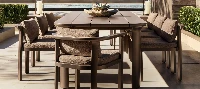

Over time, exposed outdoor timber undergoes a dramatic visual transformation. That vibrant, golden-amber finish you fell in love with gradually shifts into a muted, driftwood silver-grey. While some homeowners and landscape architects celebrate this natural weathering, hospitality managers, resort directors, and design-conscious homeowners often prefer the warm, luxurious aesthetic of freshly milled heartwood.
If you are staring at a faded patio set, you are probably wondering: how to clean weathered teak furniture to bring back its original honey-gold color?
The restoration process is neither mysterious nor overly difficult, but it does require a clear understanding of timber chemistry. Graying is not a sign that your wood is rotting or dying. Instead, it is a surface-level defense mechanism triggered by solar ultraviolet radiation and rainwater.

Whether you are restoring a compact garden bench or an expansive teak wood outdoor sectional set across a hotel poolside, reversing this oxidation requires the right sequence of deep cleaning, chemical brightening, and protective sealing.
At Howvin, we engineer contract-grade outdoor collections for luxury properties worldwide. In this comprehensive guide, we unpack the exact restoration protocols used by commercial maintenance teams to safely strip away oxidized cellulose, neutralize dark water stains, and lock in that golden honey tone for years to come.
🔬 The Science of Weathering: Why Teak Turns Silver-Grey
Before picking up a scrub brush or chemical bottle, it helps to understand what is actually happening on the surface of your furniture.
Premium Grade-A teak heartwood is prized worldwide for its high concentration of natural tectoquinone oleoresins and dense silica content. These natural compounds give the wood extraordinary natural resistance to rot, termites, and water penetration. However, natural oils cannot fully stop solar UV radiation from affecting the outer wood fibers.
When unsealed timber is exposed to direct sunlight, solar UV rays break down lignin-the organic binding agent that holds wood cellulose fibers together and gives fresh timber its golden-brown pigment. As water washes away the broken-down surface lignin, a thin outer layer of bleached cellulose fibers remains.
This silver patina layer is exceptionally thin, typically extending less than 0.5 mm into the wood grain. The structural core underneath remains completely dense, strong, and oil-rich. Restoring the honey-gold color is simply a matter of removing this oxidized micro-layer without damaging the healthy grain underneath.

🧰 Step-by-Step Restoration Protocol: Reclaiming the Golden Honey Finish
Restoring oxidized timber requires a systematic 4-stage process. Skipping steps-such as applying sealers over unwashed timber-will trap dirt, mold spores, and gray streaks beneath the finish, resulting in a dark, blotchy appearance.
Step 1: Deep Washing & Degreasing
Start by stripping away surface dirt, pollen, airborne pollutants, and organic residue.
Wet the furniture thoroughly with clean hose water.
Apply a mild, eco-friendly cleaner or a diluted solution of trisodium phosphate (TSP) combined with warm water.
Scrub along the natural direction of the wood grain using a soft to medium-density nylon bristle brush.
Avoid using steel wool or stiff wire brushes, which scratch soft wood fibers and leave behind tiny metal particles that turn into rust spots later.
Step 2: Chemical Oxidation Removal (The Oxalic Acid Brightener)
Washing removes dirt, but it will not fully reverse chemical oxidation. To strip the silver grey layer and restore the warm amber tone, you need an oxalic acid wood brightener or a professional two-part teak cleaner.
Oxalic acid is a organic acid that reacts with bleached surface cellulose and iron-tannate complexes (dark water stains). It neutralizes surface pH and brings back the natural golden tones of the wood grain within minutes.
Apply the wood brightener evenly across the damp wood surface using a chemical-resistant pump sprayer or sponge.
Allow the solution to dwell on the timber for 10 to 15 minutes. Keep the surface damp by misting lightly with water if working under direct sunlight.
Scrub gently as you see the silver color lift and turn into a golden slurry.
Rinse the furniture thoroughly with high-volume, low-pressure hose water until all chemical residue is washed away.
Step 3: Mechanical Grain Smoothing (Sanding Sequence)
Once the timber has air-dried completely for at least 48 hours, you will notice that chemical washing has slightly raised the natural wood grain, leaving a mildly rough texture.
To restore a silky smooth finish:
Perform a light manual sanding using a sanding grain sequence starting with 120-grit sandpaper for rough spots, followed by 180-grit or 220-grit paper for final smoothing.
Always sand strictly parallel to the wood grain lines. Sanding across the grain creates micro-scratches that absorb excess stain and show up as dark streaks.
Wipe away all fine wood dust using a dry microfiber cloth or a vacuum with a soft brush attachment.
Step 4: Locking in the Honey Color with UV Sealers
If you leave restored teak completely untreated, solar UV rays will turn it silver-grey again within 3 to 6 months. To lock in the honey-gold color for 12 to 18 months, apply a water-based alkyd resin sealer infused with UV-blocking micro-pigments.
Unlike traditional vegetable oils, synthetic sealers form a breathable, micro-porous membrane that blocks UV degradation without creating a greasy surface that attracts black mold.

📊 Cleaning Method Comparison Matrix
| Restoration Method | Effectiveness on Silver Patina | Risk of Wood Grain Damage | Labor Intensity | Recommended Use Case |
| Soapy Water & Soft Brush | Low (Removes dirt, leaves grey) | Zero | Low | Routine monthly maintenance |
| Oxalic Acid Brightener | High (Restores honey-gold) | Very Low | Moderate | Annual deep color restoration |
| Two-Part Heavy Cleaner | Extreme (Strips heavy stains) | Low | High | Severe multi-year neglect |
| High-Pressure Power Washer | High (Fast silver removal) | CRITICAL (Gouges wood fibers) | Low | NOT Recommended |
| Dry Sanding Only | High (Removes outer layer) | Moderate (Loss of wood thickness) | High | Localized scratch repair |
☀️ Material Dynamics: Teak vs. Metal Under Extreme Sun
For property managers designing outdoor spaces in high-heat environments-such as desert resorts, tropical beach clubs, or sun-drenched rooftop lounges-material choice extends beyond aesthetic color preferences.
A frequent consideration when selecting contract lounge furniture is how different materials handle extreme thermal radiation. When evaluating a teak sofa vs aluminum sofa heat retention under desert sun, natural hardwood offers a distinct physical advantage.
Powder-coated aluminum frames possess high thermal conductivity. Under direct solar radiation in desert climates, metal frames can easily reach surface temperatures exceeding 65°C (149°F), making armrests and seat frames uncomfortable or unsafe for bare skin contact without thick cushion coverage.
In contrast, solid heartwood acts as a natural thermal insulator. Its cellular air pockets give it low thermal conductivity, allowing the wood surface to remain comfortable to the touch even during peak afternoon heat.

📊Material Thermal & Comfort Performance in High-Heat Environments
| Performance Metric | Grade-A Solid Teak | Powder-Coated Aluminum | Synthetic Polyethylene Wicker |
| Thermal Conductivity | Very Low (Insulator) | High (Heat Conductor) | Moderate |
| Touch Comfort in 40°C Sun | Cool to warm; comfortable | Can cause skin burns | Warm; becomes pliable/soft |
| UV Structural Stability | Excellent (Does not weaken) | Excellent | Subject to UV brittleness over time |
| Color Restoration Option | Simple sanding/sealing | Requires complete re-powdercoating | Non-restorable if faded |
💼 Commercial ROI: Restoration Costs & Sourcing Strategy for Resorts
For procurement directors and resort operations managers overseeing hundreds of outdoor guest spaces, maintenance is a major budget item. Managing the total operational cost of timber assets requires balancing routine care against premature furniture replacement.
Calculating the long-term restoration and oiling cost for resort outdoor teak furniture reveals that maintaining existing solid timber assets costs a fraction of replacing mid-tier furniture every few years.
📊 5-Year Cost & Maintenance Analysis for Commercial Resorts (Per 50 Dining Sets)
| Strategy Option | Initial Capital Outlay | 5-Year Maintenance Cost | Structural Lifespan | 5-Year Total Cost Profile |
| Grade-A Teak (Restored Annually) | High | Moderate (Sealer & Labor) | 25–40+ Years | Lowest TCO over time |
| Grade-A Teak (Left Natural Grey) | High | Minimal (Soap wash only) | 25–40+ Years | Lowest overall labor cost |
| Low-End Softwood / Grade-C Teak | Low | High (Frequent repairs/staining) | 3–5 Years | High (Early replacement needed) |
| Metal / Synthetic Composite | Moderate | Low | 5–8 Years | Moderate |
Partnering directly with established outdoor teak furniture manufacturers allows commercial buyers to specify contract-grade construction features that reduce long-term maintenance costs from day one:
Kiln-Dried Timber: Ensuring wood is stabilized to 8%–12% moisture content in automated kilns to prevent post-installation cracking or warping after chemical cleaning.
Mortise and Tenon Joinery: Traditional wood joints reinforced with solid teak dowels expand and contract uniformly with changing humidity, preventing loose table legs.
Marine-Grade Hardware: Utilizing 316 stainless steel hardware for all internal bolts and brackets ensures rust-free performance in marine salt-air environments.

🛡️ Sourcing Credentials, Quality Certificates & Green Standards
When procuring timber furniture for international hotel chains or residential developments, verifying manufacturer compliance with international quality and sustainability standards is essential.
Always request official documentation validating material origin and manufacturing quality:
FSC certified teak: Guarantees that timber is legally harvested from responsibly managed plantation forests monitored by the Forest Stewardship Council.
ISO 9001 quality management: Confirms that the manufacturing facility operates under standardized quality control protocols, from timber drying to final assembly.
EN 581 standard: European safety, strength, and stability testing standard specifically regulating contract outdoor furniture used in commercial hotels and public spaces.
BIFMA X5.5: American National Standard for commercial office and hospitality space tables, verifying structural load capacity and joint durability.
SGS certified testing: Independent laboratory verification confirming that all applied wood sealers, adhesives, and coatings meet strict non-toxic, low-VOC environmental safety standards (REACH compliance).
❓ FAQ:
Q1: Can you use a high-pressure power washer to speed up the cleaning of silver weathered teak?
No. High-pressure power washers should never be used on outdoor teak furniture. Water pressure exceeding 1200 PSI drives water deep into the wood grain, stripping away soft earlywood fibers and leaving deep gouges, ridges, and splintered surfaces. This rough texture traps dirt, accelerates mold growth, and requires extensive sanding to smooth out. Always stick to chemical brighteners, low-pressure hose water, and soft-bristle scrub brushes.
Q2: How often should a commercial hotel property schedule teak color restoration?
For high-traffic commercial resorts that prefer a golden honey finish, color restoration and sealer reapplication should be scheduled once every 12 to 18 months. If the furniture is located in high-intensity solar regions (like equatorial or desert zones), applying a light coat of water-based UV sealer every 12 months prevents the wood from transitioning into silver-grey, avoiding the need for deep chemical stripping.
Q3: What happens if you skip the oxalic acid step and just sand the weathered silver furniture?
Sanding silver wood without using a chemical brightener will remove the silver layer, but it requires removing significantly more wood volume. You would need to sand off the entire 0.5 mm weathered surface layer to reach fresh golden heartwood. Over multiple cleaning cycles, aggressive sanding thins table planks and weakens structural joints. Using oxalic acid chemically lifts the silver oxidation without stripping away valuable wood thickness.
Q4: Does restoring weathered teak back to honey-gold weaken the furniture over time?
No, provided the restoration is done using proper chemical brighteners and light manual sanding rather than aggressive power washing. Because weathering affects only the microscopic outer cellulose layer, chemical brightening removes oxidized surface molecules while leaving the structural heartwood core completely intact. Proper sealing after cleaning actually protects the internal wood oils from UV degradation, extending the overall lifespan of the furniture.