Buy commercial sun loungers as a pool-operating system, not as a row of matching frames. For a hotel or resort in the UAE or Saudi Arabia, the purchase needs to work for the guest lying on it, the attendant cleaning it and the maintenance team repairing it later.
A sensible shortlist usually starts with three configurations: a sling lounger, a moulded bed with or without an additional cushion, and a frame carrying a full upholstered mattress. There is no automatic winner. Choose between them by checking exposure, comfort, cleaning, handling, repair access and the evidence for the exact model.
This guide concerns movable hospitality pool furniture. It does not set pool-deck clearances, accessibility requirements or local approval rules. Those belong to the actual project and its responsible advisers. A coastal resort, an inland hotel courtyard and a rooftop pool should not receive an identical specification simply because all three are in the Gulf.
Define how the pool deck will operate

Give each furniture zone its own operating brief
Begin with a marked-up plan. Identify the loungers beside the water, those beneath permanent shade, beach-facing positions and any area cleared for events. For each zone, note direct sun, splash, wind exposure, airborne sand, cleaning access and the hours when it will be occupied. Record the intended storage arrangement rather than assuming everything will remain outside indefinitely.
Then ask operations what happens during a normal reset. Are attendants moving an entire lounger, changing a towel, removing a mattress or wheeling furniture into a store? A specification that ignores those actions can make a straightforward-looking purchase awkward to operate. Keep the zone reference on the furniture schedule so bidders know which conditions apply to each item.
Count usable positions, not just the number of beds
A lounger drawn flat on a plan is not its full operating envelope. Check the reclined position, the movement of the backrest, access from the side and the position of tables and umbrella bases. Include the routes used by guests and staff, together with the access and safety requirements confirmed for the property.
Use the actual proposed dimensions in the layout. Do not take a generic spacing figure from a furniture article and treat it as a Gulf-wide rule. A wider model may reduce the usable count; a base placed between two beds may compromise the space that appeared available. Resolve these conflicts before quantities become fixed in the purchase order.
Choose the seating system before choosing the finish

Compare sling, moulded-bed and cushioned designs by their daily tasks
The practical distinction is what supports the guest and what must be cleaned, moved or replaced. A sling design needs a clear specification for the tensioned fabric and its attachment. A moulded bed needs its own comfort and cleaning assessment. A thick mattress introduces covers, filling, drying and storage into the operating plan.
Ask each supplier whether the item is intended to be used without a separate cushion. Do not remove an intended mattress merely to simplify housekeeping, or add a generic cushion without checking fit and restraint. Let the sample review settle whether the proposed configuration delivers the experience promised by the design, without relying on photographs alone.
| Configuration | What to examine | Operating question to resolve |
|---|---|---|
| Sling lounger | Fabric reference, attachment, tension, edge contact and replacement method | Can the approved seating surface be cleaned and replaced without an impractical repair process? |
| Moulded bed | Complete shape, surface, joints or mechanisms, and any intended cushion | Is it comfortable in the configuration the venue will actually use? |
| Full cushioned lounger | Mattress fit, filling, cover construction, fastening and care instructions | Where will wet or removed cushions go, and who will handle them? |
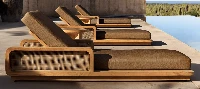
| Timber or woven-frame lounger | Structural details, finish, visible seating material and serviceable parts | Can the operator maintain the intended appearance and obtain suitable repairs? |
Specify the frame, fittings and seating surface separately
"Aluminium lounger" and "resin lounger" are incomplete descriptions. Ask for the frame material, coating or finish, connecting hardware, feet, wheels, reclining components and seating surface. Where the construction includes timber or weave, identify those materials and the supplied finish as well.
The purpose is not to create an impressive list of material names. It is to make substitutions visible. A quotation with a different sling, coating or backrest mechanism is not necessarily equivalent because the silhouette looks similar. Have the supplier identify the exact configuration being offered and explain any difference from the sample or supporting report. Keep those distinctions in the item schedule, not only in a sales conversation.
Assess exposure without accepting unsupported lifespan claims

Review contact comfort under representative conditions
An indoor sample review can confirm shape and finish, but it cannot settle the experience of a lounger exposed to the site's sun. Arrange an appropriate outdoor assessment of the intended colour, arms, frame edges, adjustment points and seating surface. Have the operator define a safe assessment procedure; do not use guests as test subjects or assume that a towel resolves every contact issue.
Record when and where the sample was assessed and whether it was shaded. Compare the actual proposed configurations rather than declaring that one entire material family is always cooler or more comfortable. If shade or cushions are necessary for the intended use, make them part of the approved arrangement and its operating instructions.
Treat UV test hours as test evidence, not a calendar
A claim such as "tested for thousands of hours" needs context: which material was tested, using which method, exposure cycle and assessment criterion? Ask what was measured-colour change, strength retention or another property-and whether the report identifies the supplied material and colour.
Q-Lab's explanation of weathering correlation makes an important distinction: there is no universal conversion from accelerated exposure hours to years outdoors. For procurement, use relevant comparative evidence and any suitably documented field history. Do not turn a laboratory-hour number into a guaranteed service life for a Gulf pool deck, or treat it as a substitute for written warranty terms.
Check comfort and mechanical evidence together

Test entry, reclining and adjustment on the complete sample
Include different intended users in an organised comfort review. Consider getting on and off the bed, sitting upright, lying back and reaching the adjustment mechanism. Evaluate whether arms help the intended guest group or obstruct the way the space is used. The lowest-looking frame is not automatically the most convenient one.
Have trained staff operate the backrest according to the manufacturer's instructions and examine the locking positions and accessible moving areas. Record concerns and request the supplier's response. A sample review is useful for fit and operation, but it is not a substitute for mechanical safety testing or permission to improvise a load test on site.
Read the exclusions in the finished-product report
Where a project uses EN 581-2 as part of its specification, obtain the relevant report and check the edition, model, configuration and intended use. NEN's public description of EN 581-2 concerns outdoor seating safety, strength and durability, but excludes removable upholstery, wheel durability and resistance to ageing caused by light, temperature and moisture, among other matters.
That boundary matters. A mechanical report does not approve the mattress or predict the frame's appearance after prolonged exposure. Ask the laboratory or responsible adviser to resolve gaps between the tested item and the order. A reference to a European standard is also not proof that every requirement for a UAE or Saudi project has been met.
Make cleaning and cushion care part of selection

Trial the operator's cleaning routine before ordering
Give the proposed supplier the cleaning products and procedures the property intends to use. Request written compatibility guidance, including restrictions for the frame, seating surface, fittings and cushions. If the care instructions conflict with the operator's routine, resolve that conflict before approval rather than expecting housekeeping to discover it later.
For example, Grosfillex's resin-sunlounger care guidance recommends gentle, non-abrasive cleaning and warns against high-pressure cleaners and metal cleaning tools for those products. That is a useful reminder to obtain the actual instructions-not a universal cleaning recipe for every lounger. Test approved cleaning on a suitable sample and record any effect on appearance or operation.
Approve the complete cushion and its storage route
Water resistance at the fabric face does not describe the whole mattress. Sunbrella's cushion guidance distinguishes water-resistant fabric from waterproofing and notes that filling specifications vary between finished products.
Request the fabric reference, filling, seams, underside construction, removable-cover details and care label. If the supplier describes a cushion as quick-drying, agree what that means for your operating requirement and how it will be assessed. Check the proposed storage location and handling route too. A dry replacement cover is of limited help if the filling remains unsuitable for use, and a storage box should not be assumed to solve an unresolved drying process.
Verify handling and repair before committing to a model

Rehearse stacking and moving on the actual route
Request the approved stacking limit, stack dimensions, item weight and handling instructions. Check whether cushions must be removed, how the backrest should be positioned and whether a trolley is required. Wheels on a lounger do not mean it can be moved over any surface in any manner.
Use the sample to review the route between the pool, cleaning position and store, including thresholds and changes in level. Ask staff to demonstrate the instructed movement without dragging or lifting from unsuitable components. Where the property changes its layout for events, check the complete stored quantity against available space. "Stackable" is a feature; a workable storage plan is a separate approval.
Ask for a replacement demonstration, not merely a promise of spares
Find out which components are replaceable, how they are identified and what a repair involves. Nardi's Alfa parts catalogue, for example, lists distinct wheels, feet, backrest components and fabric assemblies. It illustrates the level of component identification a buyer can request; it does not establish compatibility with another brand or local stock availability.
For the proposed model, ask for part references, required tools, instructions and the supplier's stated support arrangements. Where practical, have a representative replacement demonstrated. Clarify whether the property can carry out that task, needs an approved technician or must return the item. Then decide whether the repair route is acceptable for the venue's staffing and disruption limits.
Turn the shortlist into a controlled purchase

Issue an RFQ that makes quotations genuinely comparable
An RFQ-a request for quotation-should identify the operating requirement as well as the product. Send every bidder the same zone schedule, quantities, configuration and documentation request. Ask suppliers to separate the lounger, cushion, cover, spare parts, packaging and delivery scope rather than letting one ambiguous unit price hide different inclusions.
When reviewing Howvin's poolside furniture range, identify the proposed model and ask for the documents available for that exact configuration. Do not assume that information for another lounger applies. Mark alternatives clearly, including any change to colour, sling, dimensions or mechanism, so value-engineering decisions remain visible to the approving team.
| RFQ field | What to make explicit |
|---|---|
| Project and zone | Destination, location within the property, exposure and operating arrangement |
| Ordered configuration | Model, dimensions, colour, finish, seating surface and cushion details |
| Supporting evidence | Relevant reports, identification of tested items and explanations of differences |
| Sample approval | Sample reference, decision-makers, accepted deviations and retained production reference |
| Service parts | Part numbers, proposed quantities, repair instructions and confirmed supply terms |
| Commercial scope | Included accessories, packaging, delivery point, unloading and assembly responsibilities |
| Aftercare | Care documents, written warranty scope, exclusions and claim procedure |
Keep sample approval connected to production and delivery
Approval should leave a record that another team can use. Identify the sample, finish references, fabric codes, dimensions and any agreed modifications. State what remains unapproved. If a proposed substitution affects use, maintenance or supporting evidence, send it back through the relevant approval rather than accepting it silently.
For phased deliveries, retain the same item identity and record approved changes between batches. Ask for packaging dimensions and handling information before checking site access and storage. Match carton or item labels to the furniture schedule so receiving staff can distinguish similar-looking variants. A photograph is useful, but it does not replace a controlled specification or prove that later deliveries match the approved configuration.
Plan acceptance and ownership before the shipment arrives

Separate receiving checks from release for guest use
At delivery, check quantities, identity, condition and the included accessories and documents. Follow the agreed inspection and reporting procedure, retaining suitable records of damage or mismatch. Do not assume that a signed delivery receipt means the furniture is technically approved for operation.
Before release, confirm correct assembly, instructed operation and the resolution of any defects or questions. Route concerns about mechanisms, instability or damaged components to the supplier and responsible project team; do not improvise repairs to meet an opening deadline. The checks below provide a purchasing structure, not a substitute for the manufacturer's instructions or the property's safety procedures.
| Checkpoint | Evidence to retain |
|---|---|
| Design and sample review | Approved configuration, layout fit, comfort/handling findings and unresolved issues |
| Pre-shipment document review | Final schedule, accepted changes, relevant reports, packing information and care documents |
| Receiving inspection | Quantity, model/finish identity, condition, accessories and discrepancy records |
| Operational release | Assembly/operation checks, defect closure, staff instructions and responsible sign-off |
| Maintenance handover | Component references, supplier contacts, warranty process and inspection/care plan |
Compare operating costs using the property's own information
Consider purchase price alongside cleaning, moving, storing, repairing and taking furniture out of use. Ask operations to assess the work involved in each shortlisted configuration. Use actual staffing, repair and replacement information where available; a generic claim that one material saves a fixed amount would not establish value for your property.
Decide what reserve furniture and service parts are justified by the expected repair route, available storage and confirmed replenishment arrangements. There is no universal spare percentage. Review warranty exclusions at the same time: cosmetic change, cleaning damage, misuse and component coverage may be treated differently. A repairable product can be useful, but only if the relevant parts and practical repair capability are genuinely available.
Frequently asked questions
Which commercial sun loungers are best for Gulf hotels?
Choose a documented configuration that fits the specific pool zone and operating routine. Assess the complete lounger, not just its frame material. Comfort, cleaning, heat exposure, handling and service parts may lead to different choices for a busy pool deck and a sheltered premium lounge area.
Are aluminium loungers better than resin loungers?
Not automatically. Compare the exact construction, finish, seating surface, mechanisms, maintenance requirements and relevant evidence. Neither material name establishes a safe load, comfortable contact temperature, resistance to every cleaner or a guaranteed service life. Include the intended colour and configuration in sample approval.
How many UV test hours should a hotel require?
Set the requirement with the appropriate specification and testing advice. Review the method, exposure cycle, material, colour, measured property and acceptance criterion. Do not choose a number because it appears in another project's brochure, and do not convert laboratory hours into a promised number of years outdoors.
Can pool staff pressure-wash sun loungers?
Only where the exact product's instructions permit the proposed procedure. Materials, seams, coatings and mechanisms can have different restrictions. Obtain written cleaning guidance and make it available to the team. Another manufacturer's cleaning instructions do not authorise the same method on your furniture.
How many spare loungers or replacement slings should we order?
Base the decision on the property's expected use, repair process, storage, confirmed replenishment arrangements and tolerance for unavailable seating. Ask for separate pricing and references for relevant components. A fixed percentage for every Gulf hotel would conceal important differences between projects.
What should be approved before placing a bulk order?
Approve the model and configuration, sample, layout fit, required supporting documents, care routine, replacement arrangements and commercial scope. Identify remaining approvals rather than treating them as assumptions. If considering Howvin's H-880037L commercial resin sun lounger, request the current model-specific information and confirm the proposed order details in writing.
Buy a pool deck the team can keep in service
The right lounger is one the hotel can use, clean, move and support without repeatedly revisiting decisions that should have been settled before purchase. Resolve the seating system first, test the proposed operating routine and retain a clear record of what was approved.
For a Howvin project enquiry, prepare the zone plan, quantities, intended configuration, exposure and storage constraints. Ask which model-specific documents, samples and replacement arrangements can be confirmed for the proposed order. That gives both sides a more useful starting point than a request for a price against a photograph.