
🌴 Executive Technical Summary: For luxury resort operations directors, poolside deck managers, and commercial outdoor furniture buyers operating in tropical, coastal, or high-humidity regions, preventing fungal contamination beneath seating pads is an essential operational requirement. When evaluating how to prevent mold and mildew growth under teak lounge chair cushions in humid environments?, textile engineering and frame architecture reveal that mold does not originate from the teak wood itself, but rather from moisture trapped between non-breathable cushion undersides and flat solid seating surfaces. By combining reticulated open-cell polyurethane foam, open-mesh Textilene cushion bases, and engineered slatted teak frames crafted from Grade-A teak heartwood, resort properties can create a continuous airflow system that eliminates trapped moisture and stops fungal spore germination entirely.

1. 🌧️ The Microclimate Problem: Why Fungi Flourish Beneath Lounge Cushions
In humid tropical microclimates, outdoor seating experiences rapid dew accumulation, high ambient air moisture, and heavy liquid splashes from swimming pools or frequent downpours.
💡 The Cushion Microclimate Breakdown:
Capillary Water Trapping ──► Water seeping through seams gets trapped between flat cushion bottoms and wooden frames.
Stagnant Air Cavities ──► Solid seating decks restrict air circulation, preventing moisture evaporation.
Organic Dust Accumulation ──► Airborne pollen, body oils, and dust settle under cushions, serving as nutrient sources for fungal spores.
Spore Germination Window ──► Sustained humidity levels above 70% enable black mold spores to colonize surfaces within 24 to 48 hours.
Understanding this physical dynamic explains why simply treating fabric surfaces with water-repellent sprays is insufficient. True long-term mold prevention requires designing the entire cushion-to-deck interface for maximum drainage and airflow across all outdoor teak furniture sofa sets and loungers.
2. 📊 Cushion Foam Core Materials & Permeability Comparison
Selecting the correct interior core material is the single most critical factor in preventing moisture retention inside outdoor seating assets:
| 🧽 Foam Material Type | 💧 Water Drainage Mechanism | 💨 Internal Air Flow Rate | 🍄 Mold & Mildew Resistance Level | ⏱️ Dry-Through Time After Heavy Rain |
| Reticulated Open-Cell Polyurethane Foam | 🟢 100% Pore open; water flows directly through | 🟢 Exceptional (3D honeycomb lattice) | 🟢 Immune (Anti-microbial treated, zero water retention) | 🟢 15 to 30 Minutes |
| High-Resilience Closed-Cell Foam | 🔴 Water blocked at surface; trapped in seams | 🔴 Zero internal air circulation | 🟡 Moderate (Traps moisture in surrounding polyester wrap) | 🔴 12 to 24 Hours |
| Standard Polyurethane Indoor Foam | 🔴 Acts like a sponge; absorbs and holds liquid | 🔴 Poor air flow when wet | 🔴 Very High Risk (Sustained internal dampness breeds mold) | 🔴 2 to 4 Days (Requires manual extraction) |
| Polyester Fiberfill (Dacron Wrap) | 🟡 Water drains slowly through fiber matrix | 🟡 Moderate air flow when dry | 🟡 High Risk (Holds dampness at cushion base) | 🔴 6 to 12 Hours |

3. 🛋️ Cushion Core & Undercushion Engineering for Deep Seating
Commercial resort lounge setups must utilize specialized cushion construction techniques that facilitate downward water egress while maintaining high ergonomic comfort.
🛋️ Airflow Dynamics in Outdoor Teak Furniture Sofa Sets
When specifying deep-seated outdoor teak furniture sofa sets for commercial hospitality patios, seat cushions require dual-zone breathability. The upper face must utilize high-grade solution-dyed acrylic fabric to repel surface spills, while the bottom panel must utilize a heavy-duty textilene mesh or permeable vinyl-coated mesh.
This combination allows gravity to pull water straight through the cushion interior and out through the bottom panel without collecting inside the casing.
💨 High-Permeability Daybeds: The Upholstered Outdoor Teak Sofa with Perma Dry Quick Drain Foam System
For luxury cabana beds and large lounge daybeds, specifying an upholstered outdoor teak sofa with perma dry quick drain foam guarantees that massive cushion sections dry within minutes following tropical downpours.
By using open-cell reticulated foam formulated with built-in anti-fungal additives, the interior matrix remains dry and inhospitable to mold spores, even when left outdoors continuously in equatorial climates.

4. 📊 Undercushion Deck & Frame Construction Comparison
The underlying frame structure directly impacts whether air can circulate beneath sitting pads:
| 🪵 Frame Deck Architecture | 🌬️ Under-Cushion Airflow Capacity | 💧 Moisture Evaporation Speed | 🛠️ Commercial Durability Rating | 🍄 Fungal Prevention Performance |
| Engineered Beveled Slatted Teak Deck | 🟢 Exceptional (3D air channels between slats) | 🟢 Rapid (Continuous natural convection) | 🟢 30+ Years (Grade-A teak heartwood) | 🟢 Superior (Zero stagnant moisture zones) |
| Woven Synthetic Mesh Decking | 🟢 High vertical drainage | 🟢 Fast evaporation | 🟡 5 to 8 Years (UV degradation risk) | 🟢 High prevention rating |
| Solid Flat Plywood / Wood Board | 🔴 Zero air circulation | 🔴 Extremely slow (Traps moisture permanently) | 🔴 1 to 3 Years (Delamination & rot risk) | 🔴 Severe Mold Danger Zone |
| Perforated Metal Decking | 🟡 Moderate air flow through punch holes | 🟡 Moderate evaporation speed | 🔴 3 to 7 Years (Corrosion at hole edges) | 🟡 Moderate Risk (Rust and mold buildup) |
5. 🏡 Commercial Resort Daybeds & Cabana Architecture
Integrating heavy-duty daybeds into luxury hotel cabanas demands timber stability that resists both constant atmospheric moisture and heavy guest usage.
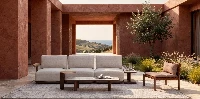
Figure 2: Commercial outdoor teak daybeds for luxury hotel cabanas featuring open ventilation deck slats and mildew-resistant textiles.
🏨 Cabana Lounging: Specifying Commercial Outdoor Teak Daybeds for Luxury Hotel Cabanas
Installing commercial outdoor teak daybeds for luxury hotel cabanas requires selecting frames built with generous gap spacing between timber slats. Factory engineers typically specify twelve-to-fifteen-millimeter ventilation channels between seat deck slats.
These gaps allow rising air currents to dry the underside of heavy daybed mattresses continuously. Furthermore, using Grade-A teak heartwood ensures that the underlying frame contains natural rubber resins (caoutchouc) and natural preservatives (tectoquinone), preventing structural wood rot even when exposed to damp cushion undersides.
6. 🛒 Bulk Procurement Strategies for Hospitality Groups
Sourcing furniture in volume for multi-property resort developments requires establishing strict factory material specifications prior to production.
Figure 3: Commercial wholesale teak patio furniture manufactured with precision slatted ventilation decks for tropical hospitality projects.
📦 Sourcing Wholesale Teak Patio Furniture for High-Humidity Projects
Procurement directors sourcing wholesale teak patio furniture for tropical hotel projects should verify that OEM manufacturers incorporate three key anti-mold engineering details:
Bottom Mesh Panels: Ensuring all seat cushions feature open mesh undersides rather than solid fabric enclosures.
Beveled Slat Edges: Specifying rounded or beveled edges on teak seat slats to reduce surface contact area with cushion bottoms by thirty percent.
Elevated Cushion Glides: Utilizing thin, non-marking silicone or rubber riser pads beneath cushion corners to create a three-millimeter air gap off the wooden deck.

7. 📊 Comprehensive Housekeeping & Maintenance Protocol
Establishing clear operational procedures for resort housekeeping staff guarantees long-term mold control across outdoor seating inventory:
| 🗓️ Operational Frequency | 🧼 Housekeeping & Maintenance Task | ⏱️ Staff Effort per Unit | 💰 Estimated Annual Cost per Unit | 🛡️ Mold Prevention Outcome |
| ☀️ Daily Routine | Tilt cushions vertically on edge during morning deck prep to air out undersides | 🟢 1 Minute | 🟢 $0 (Standard staff duty) | Clears overnight dew accumulation completely |
| 🌧️ Post-Storm Protocol | Stand cushions on end to accelerate gravity drainage through mesh bottom | 🟢 2 Minutes | 🟢 $0 (Standard staff duty) | Flushes trapped rain out of open-cell foam interior |
| 🧼 Monthly Cleaning | Wash cushion undersides with mild pH-neutral soap; scrub teak deck slats | 🟢 10 Minutes | 🟢 Under $5 (Cleaning soap) | Removes accumulated organic pollen, dust, and oils |
| 🛡️ Bi-Annual Treatment | Spray fabric undersides with eco-friendly anti-fungal fabric sealer | 🟡 15 Minutes | 🟡 $10 – $20 (Sealer spray) | Prevents fungal hyphae from gripping fabric fibers |
⚠️ Resort Housekeeping Care Warning:
Housekeeping staff should never store damp outdoor cushions flat on top of each other in closed storage closets or airtight plastic bins. Stacking wet cushions creates a dark, anaerobic warm chamber that triggers aggressive black mold outbreaks across entire cushion inventories within 48 hours. Always store outdoor cushions vertically in well-ventilated, humidity-controlled storage rooms equipped with commercial dehumidifiers.
8. 🛠️ Frame Joinery and Timber Physics in Humid Climates
The interaction between damp cushion undersides and teak frame decks relies heavily on the physical properties of mature timber and precision factory joinery:
Computerized Steam Kiln Drying: Milled teak timber dried down to eight to twelve percent equilibrium moisture content ensures that individual seat deck slats retain their flat, true profile without twisting or bowing when exposed to damp cushions.
Natural Oleoresin Barrier: Mature heartwood contains high concentrations of natural latex (caoutchouc) and mineralized silica, preventing water absorbed from damp cushions from penetrating the timber core.
Traditional Mortise and Tenon Joinery: Interlocking wood joints secured with teak dowels allow frame components to expand and contract smoothly with seasonal ambient humidity changes without loosening.
316 Marine Grade Stainless Steel: All concealed structural hardware utilizes 316 marine grade stainless steel, preventing rust bleeding that could ruin light-colored cushion covers.

9. 📜 International Testing Standards & Anti-Fungal Certifications
Commercial hospitality buyers evaluating outdoor furniture systems for tropical environments should insist on independent laboratory certifications confirming fabric safety, timber durability, and environmental compliance:
OEKO-TEX Standard 100: International testing certification confirming that outdoor upholstery fabrics and cushion foams are completely free from harmful chemicals, heavy metals, and toxic anti-fungal treatments.
GREENGUARD Gold: Certification verifying that cushion materials meet strict low chemical emission standards, ensuring clean indoor and outdoor air quality around guest cabanas.
CAL 117: California Technical Bulletin 117-2013 standard certifying fire-retardant performance for commercial upholstery foams without compromising water-drainage pore structures.
EN 350-2: European standard certifying Grade-A teak heartwood as Class 1 Very Durable, representing the highest official natural resistance rating against wood-destroying fungi and decay.
ASTM D2017: Accelerated laboratory test method validating timber natural decay and rot resistance under high-humidity conditions.
FSC certification: Forest Stewardship Council certification verifying that teak timber is harvested legally from responsibly managed plantation forests.
SVLK timber legality: Mandatory Indonesian timber legality assurance system ensuring full supply chain traceability.
ISO 9001: Quality management system standard governing factory woodworking precision, steam kiln drying consistency, and final cushion assembly testing.
❓FAQ:
Q1: How to prevent mold and mildew growth under teak lounge chair cushions in humid environments during rainy seasons?
To prevent mold and mildew growth under teak lounge chair cushions in humid environments, combine three essential engineering strategies: specify cushions built with reticulated open-cell polyurethane foam, use permeable textilene mesh on the cushion underside, and install cushions on slatted teak decks crafted from Grade-A teak heartwood. Additionally, train housekeeping staff to tilt cushions vertically on edge during daily morning deck maintenance to allow accumulated moisture to evaporate completely.
Q2: Why does mold grow under outdoor cushions even if the top fabric is water-resistant?
Mold grows under outdoor cushions because water enters through stitching seams, zipper tracks, and edge piping during heavy rains or poolside splashes. Once inside, gravity pulls the water to the cushion base. If the cushion bottom or seating deck lacks breathability, the trapped liquid creates a dark, high-humidity microclimate where airborne fungal spores thrive on body oils and organic dust.
Q3: What is the best foam material for outdoor resort seating in tropical island climates?
The best foam material is reticulated open-cell polyurethane foam (often branded as Perma Dry or Fast Dry Foam). Unlike standard closed-cell or polyurethane indoor foams that act like sponges, reticulated foam features a 3D open honeycomb lattice. Water passes directly through the foam core without being absorbed, allowing the cushion to dry in 15 to 30 minutes after rain.
Q4: Can applying teak oil under lounge chair cushions cause mold to grow faster?
Yes. Applying traditional synthetic teak oil to slatted seating decks beneath cushions can accelerate mold growth in humid climates. Uncured organic oil remains sticky in high atmospheric humidity, creating a nutrient-rich food source for airborne mold spores. Instead, leave the teak deck un-oiled or treat it with a breathable water-based teak protector or teak shield.
Q5: How often should hotel housekeeping wash under-cushion fabric covers?
Hotel housekeeping should wash under-cushion fabric covers monthly during peak high-humidity seasons using mild pH-neutral soap and warm water. Monthly washing removes accumulated body oils, salt spray crust, and organic pollen that serve as food sources for fungal spores, keeping cushion undersides completely clean and hygienic.