
🏔️ Executive Engineering Summary: For luxury alpine resort developers, desert hospitality planners, and commercial outdoor purchasing managers operating in regions with severe diurnal temperature swings, timber structural stability under thermal stress is a paramount concern. When evaluating will teak furniture warp or split when exposed to sudden thermal expansion and cold?, wood physics and mechanical testing confirm that genuine Grade-A teak heartwood possesses exceptional resistance to thermal shock, freeze-thaw cycles, and heat-induced warping. Unlike standard hardwoods or softwoods that experience high volumetric expansion and cell wall rupture under rapid temperature drops, teak features an extraordinarily low radial shrinkage ratio and tangential shrinkage ratio. Combined with high internal natural latex (caoutchouc) and precision kiln drying to an 8%–12% equilibrium moisture content, teak remains dimensionally true without severe splitting or structural distortion.
1. 🌡️ The Physics of Thermal Shock: Why Teak Resists Heat Expansion and Freezing Cold
Outdoor furniture deployed in environments like alpine ski lodges or high-altitude desert resorts undergoes daily thermal cycling-shifting rapidly from blazing midday sun exposure to freezing night temperatures.
💡 The Micro-Mechanics of Thermal Stress in Timber:
Cellular Water Expansion ──► Free water trapped inside wood cells freezes, expands by 9%, and ruptures non-elastic cell walls.
Differential Shrinkage (Tangential vs. Radial) ──► Unequal contraction during rapid cooling creates surface tension, driving deep grain checks and splitting.
Thermal Plasticity Failure ──► Rapid heating softens weak timber binders, causing planks to twist and cup under load.
Teak Elasticity Buffer ──► Natural rubber resins (caoutchouc) act as internal shock absorbers, dampening thermal tension between wood fibers.
🔬 Low Volumetric Shrinkage Coefficient
Wood warping and splitting are caused primarily by moisture movement driven by temperature differentials rather than temperature alone. Teak exhibits one of the lowest volumetric shrinkage rates among all commercial hardwoods (approximately 5.3% total volumetric shrinkage from green to oven-dry state). This dimensional stability ensures that when ambient temperatures drop fifty degrees within hours, internal stress remains below the threshold that causes fiber separation.
🛡️ Natural Rubber and Resin Damping
Teak heartwood contains between 1% and 5% natural rubber content (caoutchouc). This viscoelastic resin coats the cell walls, providing internal flexibility. When sudden thermal expansion occurs under direct solar radiation, the rubberized matrix flexes micro-structurally, preventing localized surface stress from escalating into full structural cracks.

2. 📊 Thermal Expansion & Freeze-Thaw Behavior of Outdoor Timbers
Evaluating will teak furniture warp or split when exposed to sudden thermal expansion and cold? requires comparing physical contraction and expansion metrics across common commercial framing timbers:
| 🪵 Timber Species | 📐 Tangential Shrinkage Ratio | 📐 Radial Shrinkage Ratio | 🌡️ Thermal Shock Resistance Level | 🧊 Freeze-Thaw Splitting Risk | ⏱️ Expected Alpine Lifespan |
| Grade-A Teak Heartwood | 🟢 4.0% (Extremely Low) | 🟢 2.2% (Exceptional Stability) | 🟢 Superior (Flexes with temperature swings) | 🟢 Minimal (Micro-checking only) | 🟢 30 to 50+ Years |
| European White Oak | 🔴 10.5% (High) | 🔴 5.6% (Moderate) | 🟡 Moderate (Requires heavy sealing) | 🔴 High (Deep radial splitting risk) | 🟡 10 to 15 Years |
| Indonesian Shorea (Balau) | 🔴 9.2% (High) | 🔴 4.5% (Moderate) | 🔴 Low (Prone to severe checking under sun) | 🔴 High (Surface fiber lifting) | 🟡 8 to 12 Years |
| Pressure-Treated Pine | 🔴 7.8% (Variable) | 🔴 4.4% (Variable) | 🔴 Poor (Twists and cups rapidly) | 🔴 Severe (Structural warp and splitting) | 🔴 3 to 5 Years |

3. 🏔️ High-Altitude & Alpine Resort Applications: The Teak Outdoor Conversation Set
Commercial hospitality spaces in alpine or mountain environments require outdoor seating that withstands snow accumulation, freezing winds, and intense morning UV radiation without structural degradation.
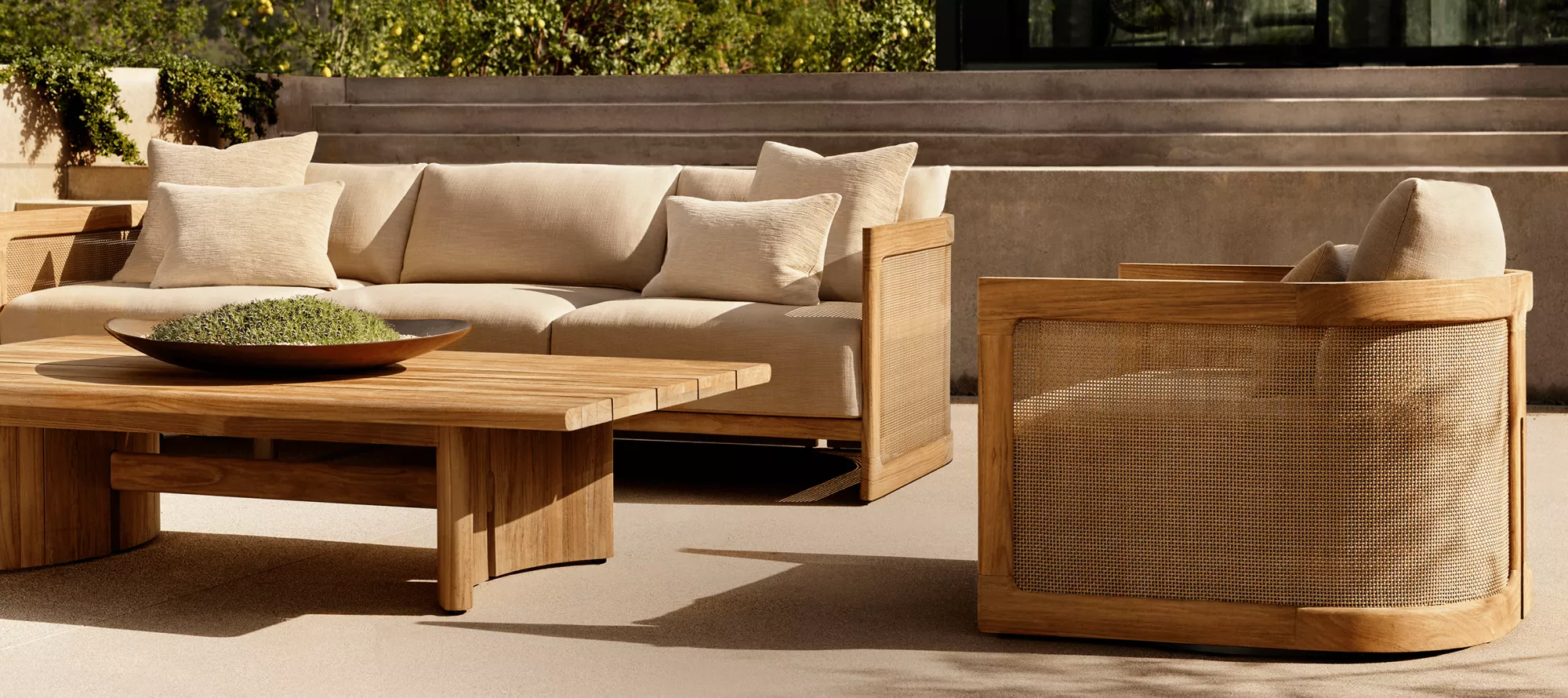
Figure 1: Premium teak outdoor conversation set installed on a high-altitude mountain resort terrace, maintaining structural stability in freezing temperatures.
🏔️ All-Weather Seating for Mountain Terraces and Fire Pit Lounges
Placing a robust teak outdoor conversation set around fire pits on hotel sky-decks exposes the wood to extreme localized thermal gradients-intense radiant heat on one side and sub-zero freezing air on the other.
Standard timber exposed to this severe temperature gradient splits along the grain lines within months. Grade-A teak's high Janka hardness and dense, interlocking grain structure allow heat to dissipate evenly across the frame members, preventing differential thermal expansion from pulling joint mortises apart.
4. 🛠️ Precision Manufacturing: How Kiln Drying and Joinery Prevent Warping
While natural wood chemistry gives teak its thermal shock resilience, factory engineering determines whether finished furniture remains straight over decades of exposure.
Computerized Steam Kiln Drying: Raw teak boards must undergo slow, multi-week steam kiln drying to achieve a uniform equilibrium moisture content of 8% to 12%. This removes bound water from cell lumens, ensuring that freezing temperatures cannot crystalize internal moisture and blow cell walls apart.
Traditional Mortise and Tenon Joinery: Structural joints bonded with wood dowels move naturally in harmony with the frame during expansion and contraction, preventing glued seams from shearing off under thermal fatigue.
Floating Slat Construction: Tabletop and seat deck slats are engineered with subtle expansion channels, allowing individual wood slats to expand horizontally during heat waves without pressing against adjacent slats or warping the outer frame.

5. 📊 Structural Resistance under Rapid Temperature Drops (-15°C to 45°C)
Analyzing how different outdoor frame materials behave under rapid thermal shock highlights key engineering trade-offs:
| 🏗️ Frame Material | ☀️ Max Solar Surface Temp | 🥶 Sub-Zero Freezing Response | ⚡ Thermal Expansion Coefficient | 🛠️ Structural Integrity After 100 Thermal Cycles |
| Kiln-Dried Teak Heartwood | 🟡 55°C (Stays comfortable to touch) | 🟢 Flexible; no embrittlement | 🟢 Extremely Low (Cellular rubber buffer) | 🟢 100% Intact (Zero joint loosening or deep splits) |
| Extruded Powder-Coated Aluminum | 🔴 75°C (Extremely hot in sun) | 🟢 Impervious to freeze | 🔴 High (Expands/contracts rapidly at joints) | 🟡 90% Intact (Fasteners can loosen over time) |
| Stainless Steel (304 / 316 Grade) | 🔴 80°C (Causes contact burns) | 🟢 Impervious to freeze | 🟡 Moderate thermal movement | 🟢 95% Intact (Requires insulated seating touchpoints) |
| Synthetic Cast Resin / Wicker | 🔴 70°C (Softens and sags under sun) | 🔴 Becomes brittle; cracks under stress | 🔴 High expansion and contraction rates | 🔴 50% Intact (High risk of cold cracking and snapping) |
6. 🛋️ Modern Architectural Trends: Contemporary Scandinavian Design Outdoor Teak Sofa Set
Modern commercial properties demand clean architectural lines that do not sacrifice structural resilience in harsh seasonal climates.
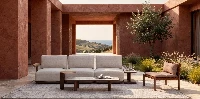
Figure 2: A sleek contemporary Scandinavian design outdoor teak sofa set seamlessly combining minimal aesthetics with high-resistance thermal engineering.
🎨 Minimalist Aesthetics Meets Extreme Climate Engineering
Specifying a contemporary Scandinavian design outdoor teak sofa set allows designers to incorporate slender, elegant frame profiles into high-altitude luxury projects.
Minimalist Scandinavian design emphasizes exposed timber joinery and long, unbroken linear surfaces. Because teak maintains dimensional accuracy during rapid thermal shifts, these slender frame elements will not bow, twist, or sag, preserving crisp architectural silhouettes even through severe winter freeze cycles.
7. 🏷️ B2B OEM / ODM Custom Sourcing: Outdoor Teak Furniture OEM ODM Manufacturer for Private Labels
Global outdoor brands and hotel purchasing syndicates require manufacturing partners capable of engineering custom teak lines tailored to specific climate challenges.
🏭 Sourcing Custom Climate-Resistant Collections
Working directly with an established outdoor teak furniture OEM ODM manufacturer for private labels gives commercial buyers complete control over timber selection, moisture calibration, and custom hardware integration.
Factory engineers customize kiln-drying schedules based on final project destinations-setting lower target moisture levels for dry desert resorts or alpine mountain zones to ensure zero post-installation shrinkage.

8. 🧩 Modular Layout Systems: The Teak Outdoor Seating Sectional
Large outdoor hospitality venues, such as rooftop sky-lounges and beachfront terraces, rely on modular seating systems that can be reconfigured while enduring continuous weathering.
Figure 3: Versatile teak outdoor seating sectional modular setup engineered with stainless steel interlocking connectors for large commercial venues.
🧩 Structural Stability in Multi-Piece Modular Configurations
Deploying a modular teak outdoor seating sectional in open-air commercial venues requires that individual sofa bases maintain perfect alignment over time.
If timber modules warp or twist due to temperature swings, interlocking connector brackets misalign, causing sectionals to wobble or separate. Teak's exceptional dimensional stability guarantees that modular frames preserve their square geometry year after year, allowing venue staff to reconfigure seating arrangements effortlessly.
9. 📊 Seasonal Preventive Maintenance & Thermal Care Protocol for Resort Operations
Establishing clear operational routines ensures commercial teak assets maintain optimal appearance and structural integrity through extreme seasonal transitions:
| 🗓️ Climate Season / Phase | 🧼 Operations & Housekeeping Task | ⏱️ Staff Effort per Unit | 💰 Estimated Annual Material Cost | 🛡️ Protection & Performance Result |
| ❄️ Autumn / Pre-Freeze Prep | Clean frames with pH-neutral soap; apply water-based teak protector | 🟢 15 Minutes | 🟢 $5 – $10 per unit | Seals end-grain pores against freeze-thaw water entry |
| 🧊 Winter / Sub-Zero Period | Brush off heavy wet snow accumulation; leave frames uncovered or use breathable covers | 🟢 2 Minutes | 🟢 $0 (Standard staff duty) | Prevents ice crust buildup from trapping excess surface moisture |
| ☀️ Spring / Thaw Inspection | Inspect mortise joints; rinse off dirt with low-pressure hose | 🟢 10 Minutes | 🟢 $0 (Fresh water rinse) | Clears winter grime; verifies joint tightness post-thaw |
| 🏜️ Summer / Extreme Sun | Apply teak shield to dining tabletops to resist oil stains and UV drying | 🟡 20 Minutes | 🟡 $10 – $15 per table | Retains surface moisture balance under intense solar heat |
⚠️ Resort Thermal Care Warning:
Resort maintenance crews operating in alpine climates must never wrap damp teak furniture tightly in non-breathable plastic tarps or stretch wrap during winter shutdowns. Trapping ambient moisture under airtight plastic creates a micro-greenhouse effect during sunny winter days, followed by flash freezing at night. This rapid moisture freeze cycle causes severe micro-checking along wood end-grains. Always use breathable, UV-rated fabric covers that feature built-in ventilation flaps.

10. 📜 International Testing Standards & Laboratory Certifications
Commercial purchasing agents sourcing teak furniture for high-stress climate installations should verify that factory production complies with international testing and environmental standards:
ASTM D143: Standard Test Methods for Small Clear Specimens of Timber, verifying Janka hardness, modulus of rupture, and transverse thermal shear strength.
EN 581-1 / EN 581-2: European safety, strength, and structural durability standards for commercial outdoor seating and tables.
ISO 9001: Quality management system certifying factory precision woodworking, computerized kiln drying calibration, and hardware inspection.
FSC certification: Forest Stewardship Council certification guaranteeing timber is sourced from sustainably managed plantation forests.
SVLK timber legality: Indonesia's mandatory timber legality assurance system verifying legal wood origins and full supply chain traceability.
ISO 14001: Environmental management standard certifying sustainable manufacturing and low-VOC finishing processes.
❓ FAQ:
Q1: Will teak furniture warp or split when exposed to sudden thermal expansion and cold in mountain resorts?
No, genuine teak furniture will not suffer structural warping or severe splitting under sudden thermal expansion and cold. Grade-A teak heartwood possesses a exceptionally low radial shrinkage ratio and tangential shrinkage ratio, alongside natural rubber resins (caoutchouc) that cushion micro-thermal stress. When timber is properly steam kiln-dried to an 8%–12% equilibrium moisture content, it remains dimensionally stable through rapid temperature shifts.
Q2: Is small surface checking normal when teak furniture is exposed to freezing winter weather?
Yes, minor hairline surface cracks-known in the wood industry as checking-are a natural characteristic of solid hardwood exposed to outdoor climate changes. Checking occurs on the surface outer grain as timber adjusts to atmospheric humidity drops. These micro-checks are purely cosmetic, do not compromise the structural integrity of the frame, and close naturally when ambient humidity rises.
Q3: Why is teak superior to metal outdoor furniture in extreme heat and cold?
Teak is a natural thermal insulator with low thermal conductivity. In direct desert sun (45°C+), metal frames become scorching hot and can burn guests, while teak remains comfortably cool to the touch. Conversely, in sub-zero alpine conditions, metal becomes icy and brittle, whereas teak retains a neutral, pleasant surface temperature and maintains its structural elasticity.
Q4: Should commercial outdoor teak furniture be stored indoors during freezing winter months?
While teak furniture can remain outdoors year-round in sub-zero snow conditions without rotting or structural failure, storing frames in an unheated shed or covering them with breathable vent-equipped covers keeps frames clean and reduces spring maintenance overhead. Never store teak in heated indoor rooms with low humidity during winter, as artificial dry heat can cause rapid wood moisture loss.
Q5: How does kiln drying at the factory prevent wood splitting during freeze-thaw cycles?
Factory steam kiln drying lowers internal timber moisture content to 8%–12%, extracting free water trapped inside wood cell cavities (lumens). Without free water inside the cell structure, freezing ambient temperatures cannot create ice crystal expansion within the wood fibers, thereby eliminating the root cause of deep freeze-thaw splitting.