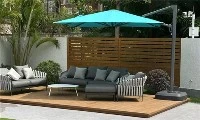

International hotel operators, commercial resort developers, and hospitality procurement directors operate under mounting global scrutiny regarding environmental sustainability. Institutional investors increasingly tie commercial real estate valuations to Environmental, Social, and Governance (ESG) criteria, while green building certification frameworks like LEED v4 demand rigorous material auditing.
When outfitting luxury oceanfront lanais, pool decks, and open-air restaurant spaces, commercial specifiers consistently select tropical hardwoods for their organic warmth and physical resilience. However, stringent global timber regulations-such as the European Union Deforestation Regulation (EUDR) and the US Lacey Act-make unverified timber sourcing a legal and financial liability.
Commercial procurement officers must address a fundamental question during project planning: What are the FSC certification requirements for sustainable hotel teak furniture sourcing?
Achieving compliance requires much more than securing a static certificate from an overseas supplier. It demands complete supply chain traceability from sustainable forestry concessions through factory manufacturing and final job site delivery.
By specifying fully certified items-such as a teak deep seating outdoor sofa or high-traffic teak outdoor lounge chairs-commercial buyers protect their brand reputation while investing in long-term outdoor furniture durability.

🌲 1. Core Principles of FSC Standards in Commercial Sourcing
The Forest Stewardship Council (FSC certification) serves as the definitive global standard for responsible forest management. For hospitality buyers, understanding FSC mandates begins with distinguishing between raw timber harvesting and factory-level processing.
A commercial wood product cannot bear an official FSC claim unless every commercial entity taking legal ownership of the timber maintains active certification.
1. Forest Management (FM) Compliance
Raw timber must originate from concessions independently audited to ensure biodiversity preservation, water resource protection, prohibition of hazardous chemicals, and strict protection of indigenous community rights and forestry worker welfare.
2. Chain of Custody (CoC) Continuity
The FSC Chain of Custody tracks certified material across every processing node. If an uncertified timber broker, kiln-drying contractor, or assembly factory handles the wood during production, the certification chain breaks permanently.
3. Invoice Claim Classifications
Procurement teams must review supplier invoicing to confirm the exact FSC claim category:
FSC 100%: The product consists entirely of virgin timber harvested from FSC-certified forests.
FSC Mix: The product blends FSC-certified timber with controlled wood or eligible recycled fibers under strict mass-balance accounting.
FSC Recycled: All timber content comes entirely from post-consumer or pre-consumer reclaimed wood sources.
| FSC Claim Classification | Material Composition Standard | Commercial Hospitality Application | ESG & LEED Compliance Value |
| FSC 100% | 100% Virgin Certified Forest Timber | Gold standard for new outdoor teak FF&E orders | Maximum LEED MR credit contribution |
| FSC Mix | Certified Wood + Controlled Wood Blend | Standard for mixed-material contract furniture | High compliance acceptance |
| FSC Recycled | 100% Reclaimed Timber Fiber | Common in rustic or heritage hotel concepts | Excellent circular economy narrative |
| Controlled Wood | Risk-Mitigated Non-Certified Wood | Cannot carry consumer-facing FSC logos | Baseline legal compliance only |
In major timber-exporting nations, national legality tracking systems like the Indonesian SVLK certified program operate alongside voluntary FSC frameworks to guarantee absolute legal origin from forest to shipping vessel.
📜 2. Chain of Custody (CoC) Auditing and Factory Verification
A frequent vulnerability in hotel procurement is accepting a supplier's raw timber certificate while overlooking factory-level processing audits. A forest management certificate alone does not give a manufacturing plant authority to invoice finished furniture as certified.
Furniture factories must undergo annual third-party audits performed by accredited certification bodies such as SGS, Bureau Veritas, or Preferred by Nature.
Critical Factory Audit Benchmarks
Physical Segregation: Certified raw lumber must be stored in designated, clearly marked bays in the timber yard to prevent mixing with non-certified wood.
Mass-Balance Accounting: Auditors review input-versus-output records to verify that a factory's volume of exported furniture does not exceed its volume of purchased certified raw lumber.
On-Invoice Licensing: Every official commercial invoice and bill of lading must display the manufacturer's unique FSC license code alongside the explicit line-item claim.
When specifying large modular seating arrays, such as a deep seating outdoor teak sofa with quick dry foam cushions, procurement officers must mandate these exact invoice disclosures before releasing milestone progress payments.
| Procurement Verification Stage | Mandatory Document / Evidence | Verification Standard | Primary Risk Factor |
| Vendor Prequalification | FSC License Code (FSC-CXXXXXX) | Active status on info.fsc.org | Expired or suspended license |
| Raw Material Purchasing | Sawmill Certificate + Shipping Manifest | Unbroken CoC vendor chain | Uncertified intermediate vendor |
| Factory Processing | Mass Balance Audit Report | Input volume ≥ Output volume | Co-mingling uncertified timber |
| Project Logistics | Final Commercial Invoice | On-invoice FSC claim text | Missing license code on invoice |

🪵 3. Timber Science, Material Grades, and Construction Standards
Environmental compliance must align with physical longevity. Purchasing certified wood offers limited value if the resulting furniture warps, cracks, or structural joints fail after one season on an exposed oceanfront deck.
Hotel buyers should perform a detailed grade A teak vs grade B teak outdoor furniture comparison when drafting technical specifications.
Timber Grade Performance
Grade A teak: Harvested from the center heartwood core of mature tectona grandis trees. Rich in natural latex resins, organic oils, and high natural silica content, it inherently repels water, resists salt fog corrosion, and prevents timber rot.
Grade B/C teak: Milled from outer heartwood or living sapwood layers. It contains lighter coloration, uneven grain patterns, lower oil content, and higher moisture retention, leaving it susceptible to checking and structural degradation under commercial traffic.
| Structural Criteria | 🌟 Grade A Certified Teak | 🟡 Grade B/C Uncertified Teak | Commercial Impact |
| Heartwood Source | 100% Inner Heartwood Core | Outer Heartwood or Young Sapwood | Max density & structural stability |
| Natural Oil Concentration | Very High (>8% natural oils) | Low (<3% natural oils) | Long-term weather resistance |
| Kiln-Drying Standard | 8% – 12% Moisture Content | >16% Moisture Content | Prevents cracking & joint warping |
| Frame Joinery Method | Mortise and tenon joinery | Surface Screws or Butt Joints | Resists racking under heavy loads |
| Hardware Specification | Grade 316 stainless steel | Zinc-Plated Steel or Brass | Zero rust staining in ocean environments |
| Expected Service Life | 15 to 25+ Years Contract Life | 2 to 5 Years Commercial Life | Lower Total Cost of Ownership (TCO) |
To withstand high humidity and seasonal temperature changes, timber frames must undergo computerized kiln-drying to reach an equilibrium moisture content between 8% and 12%.
Structural frame joints should feature traditional mortise-and-tenon construction locked with hardwood dowels.
For deep-seating cushion sets, pairing certified frames with reticulated quick-dry foam cores and covers made from UV-stable solution-dyed acrylic fabric ensures water drains rapidly while preventing internal mold growth.

🛡️ 4. Anti-Greenwashing Safeguards and Testing Standards
Greenwashing remains a risk in global FF&E procurement. Unscrupulous brokers sometimes present legitimate certificates belonging to unrelated mills or submit expired document scans.
Essential Contract Testing Benchmarks
In addition to forestry audits, commercial outdoor furniture should undergo physical safety and durability testing at accredited facilities, such as those performing TÜV Rheinland testing:
EN 581 standard: European safety, strength, and stability requirements for contract outdoor seating and tables.
ISO 9001: Quality management manufacturing standards ensuring batch-to-batch structural consistency across large commercial production runs.
| Testing & Cert Standard | Primary Focus | Audit / Testing Body | Commercial Hospitality Benefit |
| FSC CoC Certification | Supply Chain Sustainability | FSC Accredited Auditors | Fulfills ESG mandates & LEED MR credits |
| SVLK Certification | Timber Export Legality | Indonesian Forestry Ministry | Guarantees customs clearance without delay |
| EN 581 Standard | Physical Structural Safety | Independent Testing Labs | Protects property against patron injury claims |
| ISO 9001 | Quality Management System | International Registrars | Eliminates dimensional defects across order |

🏛️ 5. Integrating Sustainable Furniture into Hotel ESG and LEED Frameworks
Specifying certified outdoor furniture delivers measurable advantages within commercial real estate development and operations:
LEED v4 Credit Contribution: FSC-certified timber directly supports the Materials and Resources (MR) Credit: Building Product Disclosure and Optimization - Sourcing of Raw Materials.
Supply Chain Risk Mitigation: Complete chain-of-custody documentation shields hotel brands from customs impoundment or financial penalties under the EUDR and US Lacey Act.
Decarbonization Impact: Sustainably managed forests act as carbon sinks. Selecting certified timber supports continuous replanting cycles and responsible forest stewardship.
❓ FAQ
Q1: What are the FSC certification requirements for sustainable hotel teak furniture sourcing?
Sustainable hotel sourcing requires that raw timber originates from an FSC-certified forest (Forest Management certification) and that every processing entity-including sawmills, furniture factories, and exporters-maintains an active FSC Chain of Custody (CoC) certificate. The final commercial invoice must explicitly include the supplier's valid FSC license code and line-item claim.
Q2: How can a hotel procurement team verify an FSC certificate's validity?
Procurement teams should search the supplier's 6-digit FSC license code (e.g., FSC-CXXXXXX) directly on the official FSC Public Certificate Database (info.fsc.org). The database verifies whether the certificate status is "Valid," confirms the legal company name, and ensures the certified product scope includes outdoor furniture manufacturing.
Q3: What is the difference between FSC 100% and FSC Mix in contract furniture specifications?
FSC 100% indicates that all wood content comes entirely from FSC-certified forests. FSC Mix means the product combines certified timber with controlled wood or eligible recycled fibers. For solid contract teak furniture, specifying FSC 100% remains the preferred benchmark for maximum sustainability compliance.
Q4: Is SVLK certification required alongside FSC certification for Indonesian teak imports?
Yes. SVLK is Indonesia's mandatory national timber legality assurance system required for export customs clearance. FSC is a voluntary international forestry standard focused on environmental management. Hospitality buyers sourcing from Indonesia should require both SVLK and FSC documentation.
Q5: Can a factory produce FSC-certified furniture if it buys certified lumber but lacks a CoC certificate?
No. If a factory lacks an active FSC Chain of Custody certificate, the certified supply chain breaks upon delivery to that facility. The uncertified factory cannot legally issue FSC-certified commercial invoices or apply FSC trademarks to finished products.
Q6: How does specifying FSC-certified teak furniture assist with hotel LEED accreditation?
Under LEED v4 and v4.1, specifying FSC-certified timber products contributes directly to the Materials and Resources (MR) Credit: Building Product Disclosure and Optimization - Sourcing of Raw Materials, helping commercial projects earn points toward Silver, Gold, or Platinum status.
Q7: What are the legal risks of procuring uncertified timber under the EUDR or US Lacey Act?
Importing uncertified or illegally harvested timber can lead to severe penalties, including government seizure of shipments, substantial financial fines, operational bans, and significant public reputational damage for hotel brands.
Q8: Does FSC certification automatically guarantee Grade A teak quality?
No. FSC certification confirms environmental sustainability and legal chain-of-custody tracking. Timber grading (Grade A versus Grade B/C) relates to physical heartwood selection, oil density, and moisture content. Procurement tenders must specify both Grade A timber quality and FSC certification.
Q9: Why is a deep seating outdoor teak sofa with quick dry foam cushions ideal for resort ESG goals?
This configuration combines long-lasting certified timber frames with high-performance marine upholstery. The Grade A frame offers a service life of 15 to 25+ years, while open-cell quick-dry foam prevents moisture retention and mold, extending replacement cycles and reducing landfill waste.