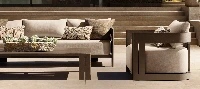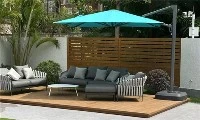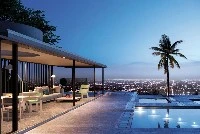

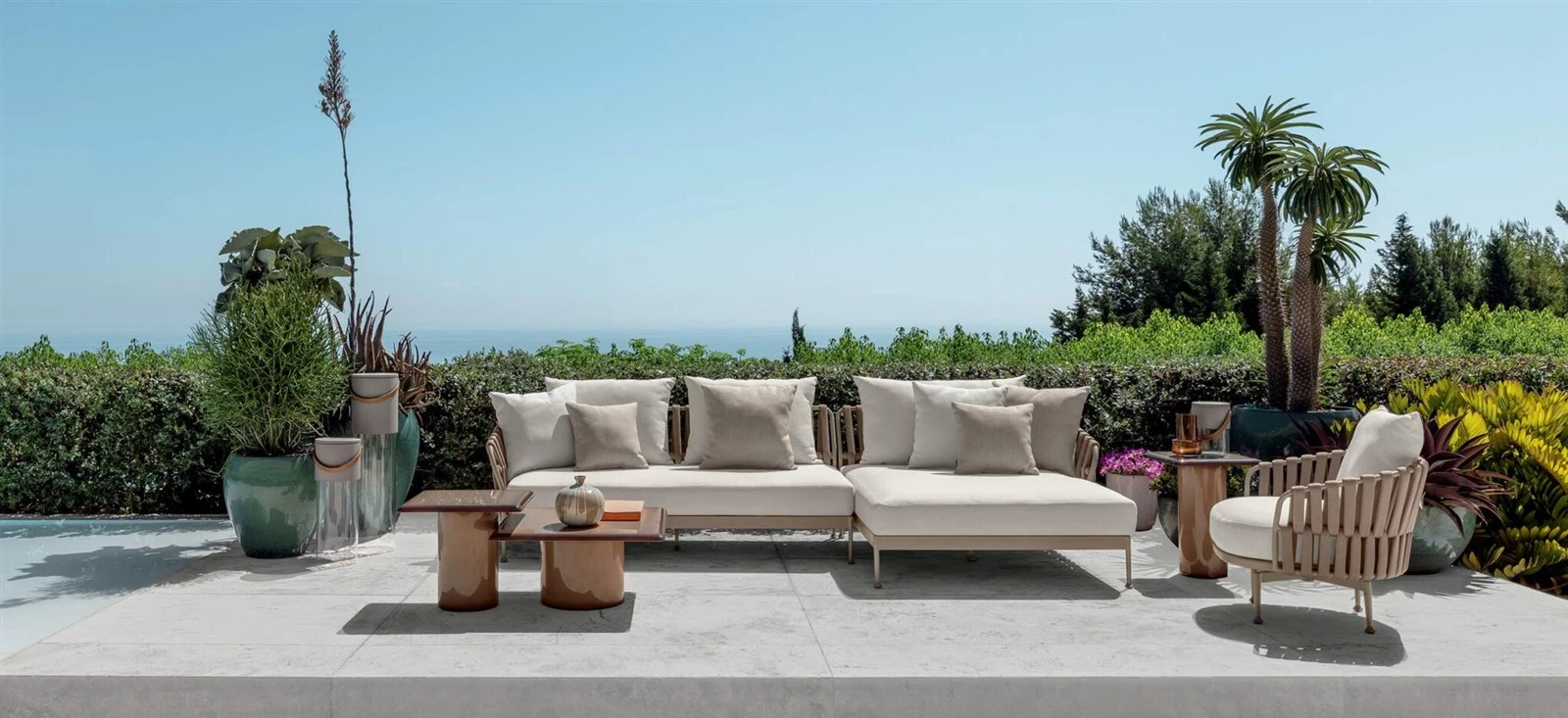
Hospitality procurement directors, resort operations executives, and commercial space architects frequently encounter a challenging operational trade-off when designing outdoor lounge decks: should commercial outdoor cushions in heavy rain be left exposed continuously, or do they mandate intensive daily staff labor for storage and retrieval?
When luxury beachfront properties or high-volume rooftop venues deploy a modular outdoor patio sectional sofa, the labor hours spent moving hundreds of deep-seating pads during localized downpours can severely impact operational efficiency. In high-traffic venues where an outdoor sofa with outdoor rug included defines the aesthetic ambience, deciding between manual storage routines and fully engineered all-weather cushion systems is fundamentally a financial and risk-management calculation.
Specifying resort all weather outdoor sofas engineered with self-draining material autonomy eliminates manual handling. For procurement managers sourcing wholesale all weather outdoor furniture, understanding core cushion material science is critical to safeguarding outdoor investments.
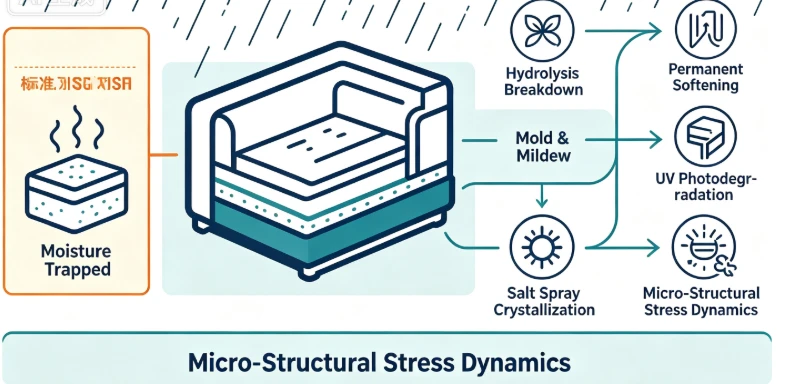
🌧️ Environmental Degradation Mechanics on Outdoor Patio Sectional Sofa Materials
Outdoor furniture deployed in commercial hospitality spaces operates under continuous environmental stress. Understanding the micro-structural breakdown of upholstery and core padding under extreme weather conditions is essential before issuing procurement orders.
Micro-Structural Stress Dynamics
Hydrolysis Breakdown: The process of hydrolysis represents the primary chemical degradation mechanism in low-grade seating. Standard polyfoam features a closed micro-cellular structure that retains moisture via capillary action. When water remains trapped inside unvented foam cores under warm temperatures, the polymer bonds undergo chemical cleavage, resulting in permanent softening, sag, and loss of load-bearing capacity.
Microbial Infection: Mold and mildew spores thrive in dark, wet, unventilated cushion cores, generating unpleasant odors and hygienic risks within 24 to 48 hours.
Solar Photodegradation: Wet fabrics exposed to post-rain sunlight face accelerated UV photolysis. Solar radiation breaks down surface dyes on piece-dyed textiles, whereas advanced solution-dyed acrylic integrates UV-stabilized color pigments into the liquid polymer solution before fiber extrusion, guaranteeing exceptional lightfastness and color retention.
Salt Spray Crystallization: In coastal environments, airborne salt spray introduces sodium chloride crystals into porous fabrics. As moisture evaporates, expanding salt crystals abrade textile fibers and degrade internal foam structures.
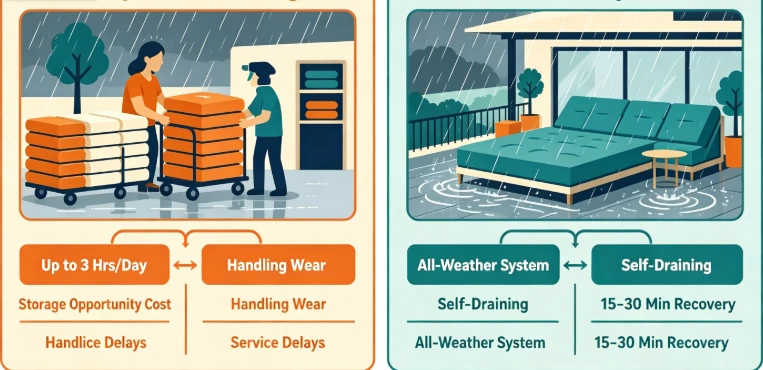
💼 Operational Trade-offs: Daily Staff Handling vs Resort All Weather Outdoor Sofas
Choosing whether to store cushions daily or specify self-draining material autonomy involves balancing initial capital outlays against long-term labor expenses.
Operational Impact Breakdown
Labor Inflation: In a venue with 80 to 120 lounge seats, staff spend up to three hours daily moving and organizing cushions. Over a year, this consumes hundreds of labor hours that could be directed toward guest service.
Storage Opportunity Cost: Storing bulky cushions requires climate-controlled back-of-house real estate, reducing space that could otherwise generate revenue.
Handling Wear: Repeatedly dragging and stacking cushions strains seams and damages zippers, leading to early cover repairs.
Service Delays: Unexpected rainfall leaves staff struggling to move cushions quickly, creating guest discomfort and leaving seating wet.
Specifying engineered all-weather cushion systems allows water to drain through the cushion core within minutes, enabling operators to wipe down surfaces and reopen seating quickly after rain.
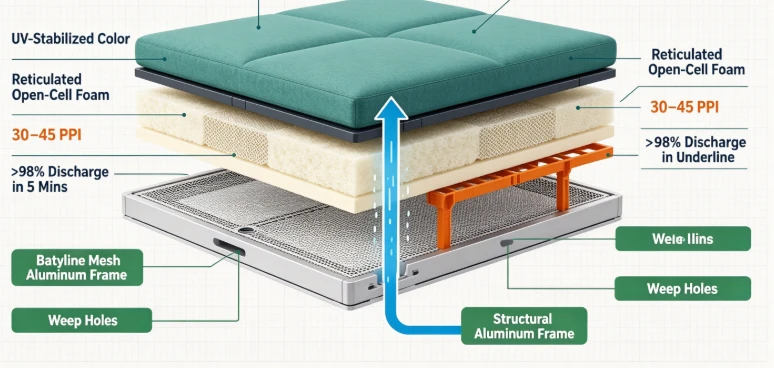
🧬 Material Science Matrix for Wholesale All Weather Outdoor Furniture
Achieving 24/7 all-weather resilience requires an integrated cushion assembly designed for rapid water evacuation.
Core Cushion Architecture
Inner Core: Standard polyurethane foam absorbs water like a sponge and retains moisture for days. In contrast, reticulated quick dry foam undergoes a specialized thermal reticulation process during manufacturing that completely burns away internal cell membranes. This creates a 97% open void matrix through which water flows freely.
Pore Size Specification: The pore size of reticulated foam is measured in Pores Per Inch (PPI). For commercial hospitality seating, specifying a range of 30 to 45 PPI provides an optimal balance between rapid water drainage and structural comfort.
Underline Drainage Base: To complete the drainage system, the cushion underside must feature an open structural mesh, such as a Batyline mesh underline base. Solid fabric backings block water exit paths and invalidate quick-drying foam performance.
Frame Engineering: Framing systems should feature structural powder-coated aluminum with weep holes to allow complete moisture drainage and prevent internal corrosion.
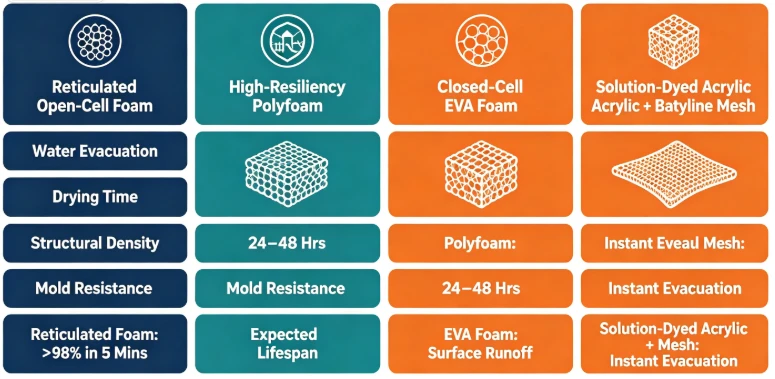
Material Core Performance Matrix
| Material Core Category | Water Evacuation Rate | Drying Time (Post-Heavy Rain) | Structural Density & Pore Matrix | Mold & Fungal Resistance | Expected Service Lifespan | Primary Venue Application |
|---|---|---|---|---|---|---|
| Reticulated Open-Cell Foam |
> 98% Discharge in 5 Mins |
15 to 30 Minutes |
2.8 – 3.2 lbs/cu.ft (30-45 PPI) |
Exceptional (Inherent Reticulation) |
5 to 7+ Years |
Fully Exposed Rooftops, Pool decks, Exposed Terraces |
| High-Resiliency Polyfoam |
Retains 40%–70% Water Volume |
24 to 48 Hours |
1.8 – 2.2 lbs/cu.ft (Micro-Cell) |
Poor (Traps Internal Moisture) |
12 to 18 Months |
Covered Verandas, Enclosed Atriums |
| Closed-Cell EVA Foam |
100% Surface Runoff |
Immediate Wipe-Dry |
Sealed Cell Matrix |
Moderate (Surface Cleanable) |
3 to 5 Years |
Pool Float Loungers, Marine Deck Seating |
Outdoor Textile & Underline Base Water Evacuation Matrix
| Upholstery & Underline Combination | Water Penetration Profile | Evacuation Efficiency | Marine UV & Salt Resistance | Maintenance & Care Requirement |
|---|---|---|---|---|
| Solution-Dyed Acrylic + Batyline Mesh |
Surface Repellent / Internal Flow |
Instant Evacuation (< 15 Mins) |
Exceptional (5+ Year UV Resistance) |
Low (Freshwater Flush & Mild Soap) |
| Piece-Dyed Polyester + Solid Vinyl Backing |
Traps Water Internally |
Obstructed (24+ Hours Retention) |
Poor (Fades & Cracks under UV) |
High (Mandatory Daily Storage) |
| Marine Vinyl + Open Drain Mesh Base |
100% Impermeable Surface |
Seam Evacuation Only |
Moderate (Requires Anti-UV Coating) |
Medium (Surface Wipe Only) |
📊 Financial ROI Analysis: Commercial Cushion Investment vs Labor Costs
Evaluating the economics of outdoor cushion procurement requires comparing initial capital expenditures (Capex) against recurring operational expenses (Opex).
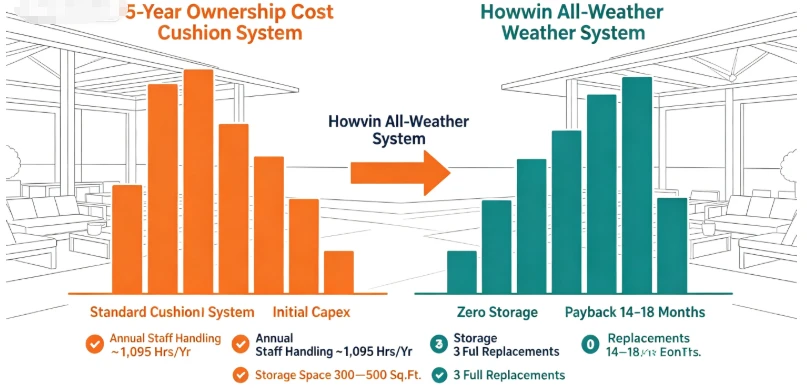
Operational Cost Comparison
While all-weather reticulated foam cushion systems carry a higher initial purchase price, they reduce ongoing labor costs and eliminate frequent replacement cycles.
Consider a commercial resort operating an outdoor terrace with 100 lounge seats:
Standard Cushion System: Lower initial procurement cost. However, daily cushion management requires dedicated labor hours. Moisture accumulation leads to foam rot, requiring complete replacement every 12 to 18 months.
Howvin All-Weather System: Higher initial investment. Cushions remain outdoors year-round without daily handling. The system delivers a service life of 5 to 7+ years.
Financial & Operational ROI Comparison
| Financial & Operational Metric | Standard Cushion System (Daily Storage Model) | Howvin All-Weather System (Leave Outside Model) |
|---|---|---|
| Initial Cushion Capex |
Baseline Cost ($) |
+35% to +45% Premium ($$) |
| Annual Staff Handling Hours |
~1,095 Hours / Year (3 Hrs / Day) |
~36 Hours / Year (Surface Wipe Only) |
| Dedicated Back-of-House Storage |
300 – 500 Sq. Ft. Required |
Zero Storage Space Required |
| 5-Year Cushion Replacement Cycle |
3 Full Replacement Cycles Required |
0 Replacements (5 to 7+ Year Lifespan) |
| Post-Rain Guest Readiness Time |
2 to 4 Hours (Manual Redeployment) |
15 to 30 Minutes (Self-Draining) |
| Net 5-Year Ownership Cost |
High (Labor Costs + Multiple Replacements) |
Low (Single Initial Capex) |
Commercial venues deploying reticulated foam seating typically achieve full payback on their initial investment within 14 to 18 months solely through labor savings and avoided replacement costs.
🛡️ Industry Testing Standards, Certifications, and Quality Frameworks
To verify that commercial outdoor seating complies with durability, fire safety, and environmental regulations, procurement specifications should require third-party laboratory verification.
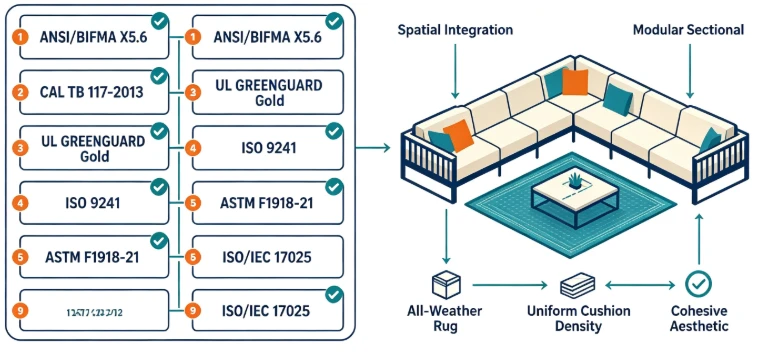
Key Commercial Compliance Certifications
Flammability Compliance: Seating components used in public venues must meet fire safety standards such as CAL TB 117-2013 for smolder resistance.
Air Quality and Low Emissions: Products certified under UL GREENGUARD Gold are screened for over 15,000 volatile organic compounds, ensuring safe indoor air quality when cushions are brought inside or used in enclosed spaces.
Structural Durability: Complete furniture frames and seating units should meet ANSI/BIFMA X5.6 performance standards, verifying load capacity, impact resistance, and joint strength.
Ergonomic Design: Compliance with ISO 9241 guidelines ensures appropriate lumbar support and long-term seating comfort.
Public Safety Standards: Safety evaluations conducted under ASTM F1918-21 criteria confirm material durability under commercial use.
Accredited Laboratory Testing: Verification reports issued by independent ISO/IEC 17025 accredited laboratories, such as SGS and TÜV Rheinland, provide objective proof of material performance.
Global Certification & Compliance Framework
| Certification Standard | Testing Authority | Scope of Evaluation | Commercial Threshold |
|---|---|---|---|
| ANSI/BIFMA X5.6 |
BIFMA Accredited Laboratories |
Structural Safety, Impact Resistance, & Static Load |
Pass 300+ lb Static & Dynamic Load Tests |
| CAL TB 117-2013 |
Independent Testing Facilities |
Cover Fabric & Foam Smolder Flammability |
Zero Sustained Smoldering Combustion |
| UL GREENGUARD Gold |
UL Solutions |
Volatile Organic Compound (VOC) Emissions |
Strict Low Chemical Emission Limits |
| ISO 9241 |
ISO Accredited Testing Bodies |
Commercial Ergonomic Alignment & Lumbar Support |
Verified Ergonomic Posture Metrics |
| ASTM F1918-21 |
ASTM International |
Material Durability & Enclosed Area Safety |
Commercial Mechanical Stress Compliance |
🛋️ Complete Spatial Integration: Outdoor Sofa with Outdoor Rug Included
Creating a functional outdoor space requires integrating weather-resistant cushions with durable frames and surrounding accessories.
When specifying modular outdoor sectional seating for expansive decks, procurement teams should maintain uniform cushion density across all modules to ensure consistent wear. Pairing sectional seating with an all-weather rug system creates a cohesive aesthetic while ensuring quick drainage across the floor surface. Sourcing complete lounge setups through established commercial suppliers ensures all structural frames, upholstery fabrics, inner foam cores, and assembly hardware meet hospitality standards.
🏭 Howvin Commercial Outdoor Manufacturing & Engineering Excellence
Howvin designs and manufactures high-performance commercial outdoor furniture tailored for hotels, resorts, and commercial venues worldwide.
Manufacturing Engineering Pipeline
CAD Custom Engineering: Precision frame designs tailored to commercial architectural specs.
Reticulated Core Technology: Howvin cushions feature high-density reticulated foam (2.8 to 3.2 lbs/cu.ft) paired with open drainage mesh underline bases for rapid drainage.
Corrosion-Resistant Frames: Structural frames are built from extruded aluminum finished with a double-layer powder coat engineered for enhanced marine durability.
Commercial OEM/ODM Capabilities: Howvin provides custom manufacturing services, including over 200 solution-dyed acrylic fabric selections tailored to commercial project requirements.
Quality Assurance: Independent laboratory testing ensures every production run meets international safety and performance standards.
❓ FAQs
1. How does 30 PPI vs 45 PPI reticulated foam affect drainage speed and seating comfort?
Pores Per Inch (PPI) measures open cell density within reticulated foam. A 30 PPI foam features larger open pores, delivering fast water drainage suitable for poolside loungers. A 45 PPI foam offers a tighter matrix that provides firmer seating support for deep-seating sectionals while maintaining rapid drainage performance.
2. Can commercial quick-dry cushions be pressure-washed after rain or exposure to salt spray?
Yes. Reticulated foam cores and solution-dyed acrylic covers can be flushed with clean water to remove salt, chlorine, and organic debris. Pressure washing should be kept under 1,200 PSI using a wide fan nozzle to avoid damaging the foam matrix or fabric finish.
3. Why is a Batyline mesh underline base mandatory for all-weather cushions?
Solid fabric backings trap water inside the cushion regardless of the inner foam type. An open Batyline mesh underline allows gravity to pull water out of the reticulated core quickly. Without a breathable mesh base, moisture collects at the bottom of the cover, creating conditions for mold growth.
4. What flammability standards apply to commercial outdoor cushions in resort settings?
Commercial seating used in public hospitality spaces must comply with regional fire safety regulations. In North America, CAL TB 117-2013 serves as the standard component test for smolder resistance. Enclosed or high-occupancy public areas may require additional full-scale flammability testing.
5. How do solution-dyed acrylic fabrics prevent fading compared to piece-dyed textiles?
In piece-dyed textiles, color is applied only to the yarn surface, allowing UV rays and chlorine to break down the dye over time. In solution-dyed acrylic, UV-stabilized pigments are mixed into the liquid acrylic solution before fibers are spun. The color runs completely through the fiber, providing long-term fade resistance and allowing bleach-based cleaning without color loss.
6. What is the expected lifespan of commercial all-weather cushions under heavy rainfall conditions?
Commercial cushions engineered with high-density reticulated foam, solution-dyed acrylic fabric, and marine-grade thread deliver a service life of 5 to 7+ years under continuous weather exposure. In contrast, standard polyurethane cushions used outdoors typically fail within 12 to 18 months due to water retention and foam breakdown.