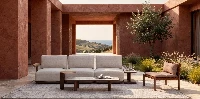

🏔️ Executive Technical Summary: For luxury alpine hotel developers, ski resort managers, and mountain estate architects, selecting exterior furniture that withstands sub-zero freezes, heavy snow loads, and intense high-altitude solar radiation presents a severe engineering challenge. When analyzing how does high-altitude mountain resort environment affect furniture performance?, wood physics confirms that Grade-A teak heartwood excels under extreme atmospheric conditions. Thanks to automated steam kiln drying that stabilizes internal equilibrium moisture content, combined with rich concentrations of natural rubber resins (caoutchouc) and tectoquinone, genuine teak resists freeze-thaw cracking, dimensional warping, and snowpack moisture decay without losing its structural strength.

1. ❄️ The Alpine Microclimate Challenge: Sub-Zero Temps, Intense UV, and Freeze-Thaw Cycles
High-altitude mountain resorts-such as those located in the Swiss Alps, Aspen, or Hokkaido-subject outdoor materials to environmental stresses distinct from coastal or urban settings:
💡 The Alpine Environmental Stress Factors:
Extreme Solar UV Glare ──► High elevation decreases atmospheric filtering, increasing solar UV strength by 10% to 12% per 1,000 meters, amplified by snow reflection.
Freeze-Thaw Temperature Swings ──► Rapid transitions from direct midday sunshine (+15°C) to freezing night winds (-20°C) cause thermal shock.
High-Altitude Atmospheric Aridity ──► Extremely low relative humidity draws internal moisture out of untreated timber, creating tension cracks.
Prolonged Heavy Snowpack Pressure ──► Accumulated snow sits on horizontal frames for months, exerting constant static pressure and moisture saturation.
🧪 Freeze-Thaw Resistance in Dense Timber
When water penetrates open-grained softwoods and freezes, it expands by approximately nine percent in volume. This hydraulic pressure snaps cellular walls, producing deep split lines and structural failure. Genuine teak heartwood avoids this decay because its cellular pores are naturally saturated with hydrophobic latex resins (caoutchouc), preventing free water from accumulating inside internal micro-cavities.

2. 📊High-Altitude Environmental Stressors vs. Teak Material Response
Understanding how does teak outdoor furniture perform in high-altitude mountain resorts? requires evaluating specific material reactions against alpine environmental hazards:
| 🏔️ Alpine Stressor | 🧪 Material Physics Challenge | 🛡️ Teak Heartwood Response Mechanism | 📈 Long-Term Structural Outcome |
| Intense UV Reflection Off Snow | Rapid breakdown of surface lignin polymer | UV radiation causes surface photolysis, forming a platinum silver patina | 🟢 100% Core strength retained; silver shield formed |
| Freeze-Thaw Cycles (-25°C to +15°C) | Hydraulic pressure expansion inside cell pores | Low permeability due to dense rubber resins prevents internal water accumulation | 🟢 Zero structural splitting or grain lifting |
| Sub-Zero Heavy Snow Loads | Static bending stress on horizontal seating frames | High Janka hardness and high modulus of elasticity absorb heavy snow loads | 🟢 No frame deflection or joint displacement |
| High-Altitude Aridity (Low RH) | Rapid moisture loss causing wood shrinkage cracks | Computer-controlled steam kiln drying to 8–12% EMC locks dimensional stability | 🟢 Joints remain tight; zero frame racking |
3. 🛡️ Structural Joinery Engineering for Extreme Sub-Zero Environments
High-altitude mountain lodges require furniture built to withstand extreme mechanical tension caused by temperature fluctuations.
🛋️ Deep Seating for Fire Pits and Ski Chalet Terraces
Placing a comfortable teak outdoor club chair sofa on an open-air ski lodge terrace allows guests to relax around outdoor fire pits after a day on the slopes.
When exposed to localized radiant heat from gas fire features on one side and sub-zero mountain winds on the other, inferior wooden frames warp due to uneven thermal expansion. High-density teak accommodates these temperature differentials naturally because its low coefficient of thermal expansion keeps frame dimensions stable.
☕ Snowmelt Drainage and Slat Engineering
Pairing seating arrangements with a heavy-duty teak patio coffee table featuring wide slatted tops ensures that melting snowpack drains freely away from the furniture. Precision-milled slatted surfaces prevent standing water from pooling on tabletops during afternoon thaws, eliminating ice dams that could otherwise damage surface finishes during nighttime freezes.

4. 📊 Material Performance Comparison in Alpine Mountain Resorts
Selecting materials for high-altitude ski chalets and public mountain plazas requires balancing durability, heat retention, and low maintenance:
| 🛋️ Material Type | ❄️ Sub-Zero Freeze-Thaw Resistance | ☀️ High-Altitude UV Stability | 🌡️ Surface Touch Temp in Cold | ⏱️ Expected Alpine Service Life |
| Grade-A Teak Timber | 🟢 Exceptional (Hydrophobic resins block ice expansion) | 🟢 Forms durable silver patina barrier | 🟢 Warm & comfortable to touch in sub-zero cold | 🟢 30 to 50+ Years |
| Powder-Coated Steel | 🔴 Water trapped in scratches freezes, causing rust flakes | 🟡 Paint chalking under high UV | 🔴 Extremely cold to touch (Frostbite hazard) | 🔴 3 to 6 Years |
| Extruded Wicker Resin | 🔴 Synthetic strands become brittle and snap in cold | 🔴 Polymer cracking under snow loads | 🟡 Neutral touch temperature | 🔴 2 to 5 Years |
| Softwood / Pine | 🔴 High water absorption leads to ice split cracking | 🔴 Rapid decay and gray mold growth | 🟢 Warm to touch | 🔴 2 to 4 Years |
5. 🏡 Commercial Specification: Ski Chalets, Mountain Lodges, and Private Family Estates
Specifying luxury outdoor furniture for mountain resort lounges involves selecting high-performance fabrics and winter protection systems that simplify estate operations.
🏡 High-Traffic Family Patios and Resort Estates
For private residential estates and multi-family mountain chalets, specifying a custom stain resistant fabric outdoor teak sofa for family patio environments ensures cushions resist spilled hot chocolate, fondue oils, and melting slush.
Utilizing solution-dyed acrylic fabric (such as Sunbrella or Agora) backed by quick-drying polyurethane foam allows cushions to shed snowmelt rapidly without harboring mold or mildew during seasonal storage.
🛡️ Off-Season Winter Storage and Protective Covers
Commercial resorts operating in areas with heavy winter snowfall often keep furniture outdoors year-round or store it during off-peak months. Investing in luxury teak outdoor conversation sets with weather cover included simplifies seasonal protection protocols for maintenance staff.
Custom-fitted, breathable fabric covers prevent heavy ice accumulation from adhering directly to timber frames while allowing air circulation beneath the cover to eliminate condensation buildup.

6. 🛠️ Joinery Engineering: Mortise and Tenon vs. Temperature Fluctuations
The mechanical survival of wooden furniture in alpine environments depends heavily on how frame joints are constructed in the factory:
Traditional Mortise & Tenon Joinery: Deep wood-to-wood interlocking joints absorb multi-directional expansion and contraction as temperatures fluctuate from day to night.
316 Marine Grade Stainless Steel: Internal dowels and structural bolts made from 316 marine grade stainless steel resist corrosion from road salt and snowmelt chemicals, maintaining frame rigidity.
Automated Steam Kiln Drying: Milled timber conditioned in computer-monitored kilns ensures internal stress is relieved before manufacturing, preventing wood frames from checking or warping when exposed to dry high-altitude air.
7. 📊 Seasonal Maintenance Pathway for Alpine Resorts
Implementing a structured maintenance schedule ensures mountain resort furniture remains in pristine condition across all winter and summer seasons:
| 🗓️ Season | 🧼 Operational Resort Protocol | ⏱️ Maintenance Effort | 💰 Cost Estimate per Set | 🛡️ Protection Benefit |
| 🍂 Late Autumn (Pre-Snow) | Clean frames with teak cleaner; apply water-based teak protector; fit winter covers | 🟡 2 Hours / Set | 🟡 $20 – $40 | Seals wood pores before heavy snow and ice arrive |
| ❄️ Mid-Winter (Active Ski Season) | Clear excess snowpack with soft bristle broom (avoid metal shovels) | 🟢 15 Mins / Day | 🟢 Minimal | Prevents excessive ice buildup on horizontal surfaces |
| 🌸 Early Spring (Thaw Period) | Remove covers; wash away snowmelt mineral deposits with mild soapy water | 🟢 1 Hour / Set | 🟢 Under $10 | Removes dirt residues accumulated during winter thaw |
| ☀️ Summer Peak Season | Allow timber to silver naturally or reapply protector for golden color preservation | 🟢 1 Hour / Set | 🟡 $15 – $30 | Maintains desired visual patina or golden amber finish |
⚠️ Alpine Resort Care Alert:
Maintenance crews should never use metal shovels or hard ice scrapers to remove frozen snowpack from teak tabletops or sofa arms, as metal blades can gouge the softened wood surface. Additionally, avoid applying synthetic organic teak oil prior to winter; unevaporated surface oil can trap freezing moisture and feed dark mold spores during spring thaws.
8. 📜 Quality Testing Standards & International Certifications
Commercial buyers specifying teak furniture for high-altitude mountain projects must ensure products carry recognized quality and environmental credentials:
ASTM D143: Standard Test Methods for Small Clear Specimens of Timber, evaluating mechanical properties including Janka hardness, bending strength, and shear resistance under severe temperature conditions.
ASTM G154: Accelerated weathering test verifying timber surface stability and patina formation under intense ultraviolet light exposure.
EN 350-2: European standard certifying Class 1 Durability (the highest rating for natural wood decay resistance).
FSC certification: Forest Stewardship Council certification guaranteeing timber originates from sustainably managed plantations.
SVLK timber legality: Mandatory Indonesian timber legality verification system ensuring transparent, legal wood supply chains.
ISO 9001: International quality management standard governing factory joinery precision, steam kiln drying accuracy, and final product inspection.

FAQ:
Q1: How does teak outdoor furniture perform in high-altitude mountain resorts during sub-zero winter freezes?
Teak outdoor furniture performs exceptionally well in high-altitude mountain resorts during sub-zero freezes. Its dense cellular structure, rich natural rubber resins (caoutchouc), and hydrophobic oils prevent freezing snowmelt water from penetrating deep into wood pores. This prevents the hydraulic pressure expansion that causes softwoods and poor-quality hardwoods to crack, split, or delaminate.
Q2: Will intense solar UV radiation reflected off mountain snow damage untreated teak frames?
High-altitude solar UV radiation accelerated by snow reflection causes rapid cosmetic photolysis of surface lignin, transforming golden teak into an elegant silvery-grey patina over four to eight months. However, this silver surface layer acts as a natural protective shield, leaving the internal core strength, high Janka hardness, and structural integrity 100% intact.
Q3: Why is kiln drying so important for teak furniture used in high-altitude mountain climates?
High-altitude mountain air typically has very low relative humidity. If timber is not properly conditioned, the dry air rapidly draws out internal moisture, causing wood fibers to shrink and crack. Precision kiln drying lowers wood moisture to an eight to twelve percent equilibrium moisture content, locking in dimensional stability so frames do not warp or develop loose joints in dry mountain air.
Q4: Should outdoor teak furniture be covered or brought indoors during alpine winter ski seasons?
While Grade-A teak can safely remain outdoors uncovered all winter without suffering structural damage, using breathable protective covers-such as those included with luxury teak outdoor conversation sets with weather cover included-is highly recommended. Covers keep snow, ice, and tree sap off the timber, significantly reducing spring cleaning effort for resort maintenance staff.