

Yes, it does. In damp or shaded outdoor settings, applying commercial teak oil is one of the fastest ways to trigger black mold growth across wooden furniture.
Most products sold as "teak oil" contain zero oil extracted from the teak tree. Instead, they are cocktails of raw linseed oil, tung oil, petroleum solvents, and synthetic dryers. In high humidity, these plant fats fail to oxidize or dry properly. They leave a sticky organic film on the wood surface-a rich food source for airborne fungal spores such as Aureobasidium pullulans. If you are evaluating Does applying teak oil cause mold or mildew growth in damp outdoor spaces?, the chemistry is straightforward: oiling outdoor timber in humid shade feeds mold rather than protecting the wood.
1. The Biochemistry: Why Organic Oils Turn Black in the Shade
Raw Grade-A teak heartwood does not require external oil for protection. Dense teak wood naturally contains high levels of insoluble latex resins (caoutchouc) and microscopic silica particles (silica). These compounds make the timber resistant to moisture, rot, and insects.
When maintenance teams apply heavy plant oils over raw wood in damp microclimates, they interfere with the timber's natural breathability. Moisture entering through unsealed undersides becomes trapped beneath the wet oil layer-a condition known as hygroscopic trapping. This trapped moisture, combined with non-drying lipids, creates an ideal environment for mold spores to germinate and penetrate the wood grain.

2. Material Performance in High Humidity
| Treatment Option | Fungal Spore Risk | Color Stability | Maintenance Interval | Cleaning Method |
| Traditional Teak Oil | High (Feeds mold in damp shade) | Fades in 3–6 months | Every 3 to 4 months | Solvent scrub & heavy sanding |
| Water-Based Teak Sealer | Low (Dries micro-porous with biocides) | Golden tone lasts 12+ months | Annual application | Wash with pH-neutral teak cleaner |
| Natural Silver Weathering | Low (Zero added organic lipids) | Settles into a silver patina | None (Routine washing only) | Light scrub with a soft-bristle brush |
3. Preserving a teak outdoor bench sofa on Shaded Terraces
Placing wooden lounge furniture in humid courtyards, near ocean fog, or under dense tree canopies requires adequate air circulation.
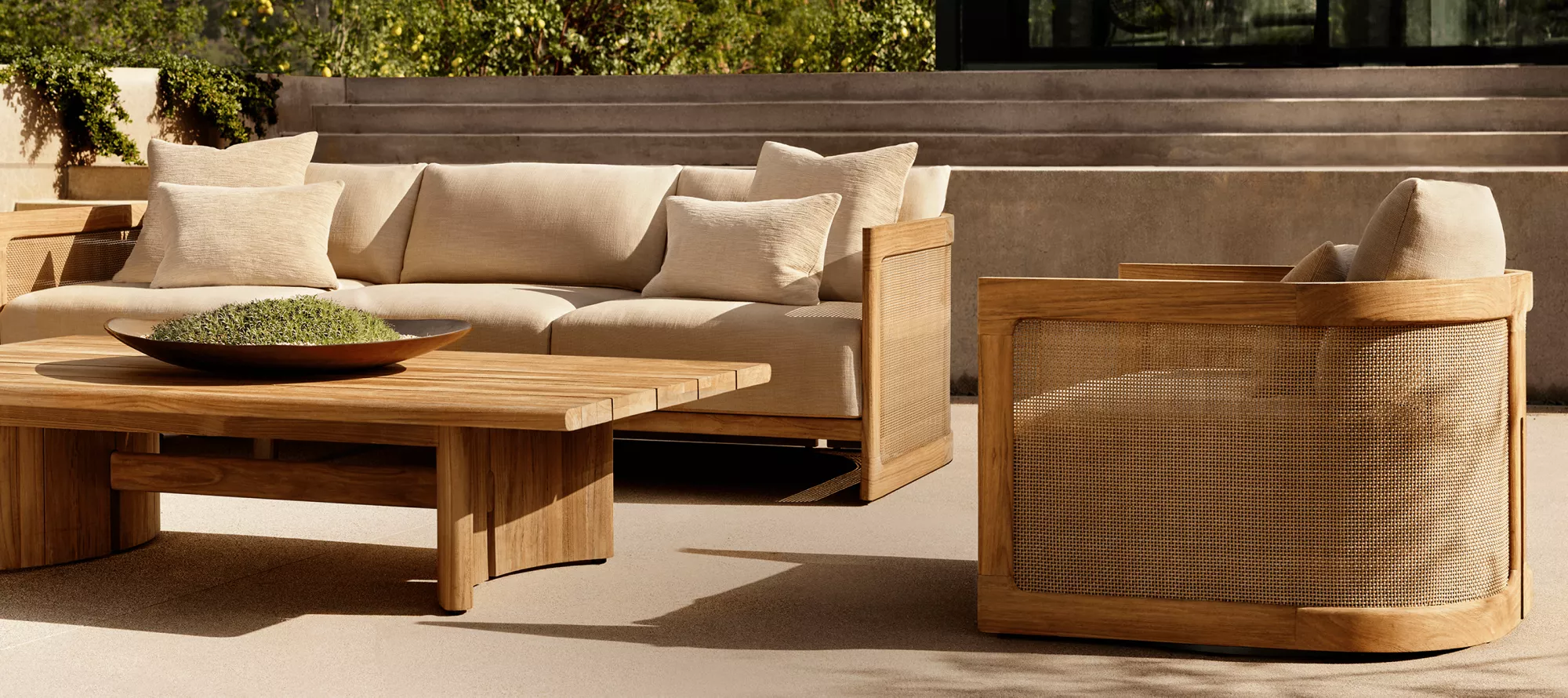
Figure 1: Placing a teak outdoor bench sofa in humid shade requires breathable sealers rather than organic oils to prevent fungal growth.
Positioning a teak outdoor bench sofa directly against damp stone walls or beneath heavy foliage traps stagnant air. Relative humidity in these pockets often stays above 80%, slowing down surface drying. Keeping furniture at least 15 cm away from walls encourages cross-ventilation, allowing morning dew to evaporate before mold spores take root.
Housekeeping teams should store quick-drying foam cushions vertically during rainy spells. Leaving wet cushions flat on horizontal wood slats traps water against the timber, creating dark mildew lines where the fabric meets the wood.

4. Real Labor Impact on Long-Term teak outdoor furniture cost
Initial purchase prices tell only half the story. The labor required to clean and re-oil furniture quickly inflates operational expenses.
Figure 2: Calculating long-term teak outdoor furniture cost involves factoring recurring labor hours for oil stripping versus low-maintenance sealers.
Factoring in routine maintenance shows that traditional oiling inflates overall teak outdoor furniture cost. Oiling furniture four times a year demands significant labor. Staff must strip dirt, sand sticky residues, and reapply oil. Switching to water-based teak sealers reduces maintenance to once a year. This eliminates frequent sanding cycles and preserves wood thickness over decades of commercial use.
5. Microclimate Environmental Risk Matrix
| Microclimate Zone | Avg Humidity | Sun Exposure | Recommended Care Strategy | Unsuitable Practice |
| Arid / Open Sundecks | Below 50% | Direct Sun (8+ hrs) | Water-based sealer or light oiling | Leaving excess oil un-wiped |
| Coastal / Poolside | 50% – 70% | Salt Spray / Partial Sun | Breathable sealer with UV blockers | Applying heavy linseed oil |
| Shaded Forest / Riverbank | Above 70% | Constant Shade / Rain | Raw natural wood or breathable sealer | Applying organic teak oil |

6. Evaluating an outdoor teak sofa restoration service for hotel operators
When outdoor furniture develops deep fungal stains from misapplied oils, property managers must choose between replacing the assets or restoring them professionally.
Figure 3: Contracting an outdoor teak sofa restoration service for hotel operators removes deep black mold without compromising timber joinery.
Hiring a specialized outdoor teak sofa restoration service for hotel operators can restore neglected timber at a fraction of replacement costs. Professional technicians use targeted biocide washes to neutralize embedded fungal spores within wood pores.
After chemical neutralization, technicians perform fine-grit sanding along the grain to remove surface pitting without altering joinery tolerances. Applying an industrial breathable sealer afterward protects the restored wood against future mold outbreaks.
7. Mechanism Maintenance on a custom size outdoor teak extendable dining table for outdoor events
Event venues using extendable tables need functional mechanisms that operate smoothly regardless of weather conditions.
Ordering a custom size outdoor teak extendable dining table for outdoor events gives banquet teams flexibility for large gatherings. However, these tables rely on internal wooden runners and brass hardware.
Applying traditional oil to internal sliding runners in humid weather causes wood fibers to swell. The wet oil attracts dust and food debris, gumming up the tracks and jamming the extension mechanism. Using dry Teflon sprays on sliding tracks and water-based sealers on table surfaces keeps mechanisms working smoothly without attracting dirt.

8. Step-by-Step Mold Remediation Protocol
| Phase | Tools & Materials | Duration | Objective |
| 1. Oil Stripping | Biocide cleaner & scrub pad | 20–30 mins | Dissolves un-cured lipids and kills surface spores |
| 2. Stain Neutralization | Oxalic acid wash & clean rinse | 15 mins | Lifts dark tannin spots; restores natural wood tone |
| 3. Surface Smoothing | 220-grit sanding block | 10 mins / m² | Smooths raised fibers along the grain direction |
| 4. Breathable Protection | Water-based synthetic sealer | 30 mins (2 coats) | Locks in color while allowing cellular respiration |
9. Industry Testing Standards & Material Compliance
Commercial timber furniture specified for hospitality projects should meet international structural and environmental standards:
ASTM D143: Standard test methods evaluating clear wood specimens for Janka hardness, shear strength, and bending stress limits.
EN 581-1: European safety requirements for general outdoor contract furniture.
EN 581-2: European mechanical safety and stability standards for commercial seating assets.
ISO 9001: Quality management certification ensuring exact joinery tolerances and computerized kiln drying to an 8%–12% equilibrium moisture content.
FSC certification: Forest Stewardship Council endorsement verifying legal timber sourcing from responsibly managed forests.
SVLK timber legality: Indonesia's timber legality assurance system ensuring 100% supply chain traceability.
ISO 14001: Environmental management system certification for low-emission manufacturing.
REACH: European Union regulation confirming the absence of heavy metals or toxic biocides in wood finishes.
FAQ
Q1: Does applying teak oil cause mold or mildew growth in damp outdoor spaces?
Yes. Traditional teak oils consist of organic plant lipids (linseed or tung oil) that require dry air and sunlight to cure. In humid or shaded environments, these oils remain wet and sticky inside wood pores, creating a direct food source for airborne fungal spores like Aureobasidium pullulans.
Q2: How should maintenance teams clean teak furniture that turned black after oiling?
First, strip the un-cured oil layer using a dedicated cleaner or biocide wash with a soft-bristle brush. Next, treat dark fungal spots with a mild oxalic acid solution to neutralize the stain. Once dry, sand lightly along the wood grain with 220-grit sandpaper and apply a water-based breathable sealer instead of oil.
Q3: Is raw teak better than oiled teak at resisting mold in rainy climates?
Yes. Raw Grade-A teak heartwood contains natural rubber resins (caoutchouc) and silica (silica), making it naturally resistant to rot without surface oils. Unsealed teak allows moisture to evaporate freely, preventing the sticky film that mold needs to grow. Over time, raw teak naturally weathers into a protective silver patina.
Q4: How often should properties apply water-based teak sealers in humid regions?
Water-based sealers generally need reapplication once a year. Unlike oils, water-based sealers dry completely and contain synthetic resins that protect against UV rays and moisture without feeding fungal growth.
Q5: Can pressure washers be used to blast mold off commercial teak tables?
No. Pressure washers strip away soft wood fibers, leaving deep grooves and a rough, splintered surface. This mechanical damage damages the wood structure and creates micro-crevices where moisture and mold spores settle more easily in the future.