

🍷 Executive Housekeeping & Maintenance Briefing: In luxury hotel outdoor dining terraces and high-end resort restaurants, untreated teak dining tables offer an unmatched natural aesthetic and warm tactile experience. However, unsealed timber surfaces remain inherently porous. When assessing How to remove deep grease stains, wine spills, or water spots from untreated teak tables?, hospitality maintenance teams must combine wood chemistry with gentle extraction techniques. Cooking lipids, red wine tannins, and mineral water deposits penetrate open cellular lumens. By implementing an absorbent poultice paste, applying mild oxalic acid solutions, and executing progressive fine-grit sanding along the grain, housekeeping staff can lift stubborn blemishes completely without compromising the timber's protective internal caoutchouc resin matrix or destroying its natural silver patina.

1. 🔬 Microscopic Pore Absorption: Why Untreated Teak Traps Liquid Contaminants
Understanding the microscopic physical structure of solid timber explains why different liquids produce distinct staining patterns on raw furniture surfaces.
🥑 Lipid & Fat Penetration
Premium Grade-A teak heartwood possesses high natural oil and wax reserves. However, when untreated timber meets hot cooking oils, melted butter, or salad dressings, the low viscosity of warm lipids allows them to sink deep into porous earlywood fibers. Standard soapy water only washes away surface grease, leaving dark, shadow-like oil spots embedded inside the timber.
🍷 Polyphenol & Tannin Chemical Reaction
Red wine, espresso, and balsamic vinegar contain intense organic pigments and acidic compounds called tannins. When spilled onto an unsealed table, these polyphenols bind chemically with trace iron particles and cellulose fibers in the wood, creating deep bluish-black or purple discolorations that cannot be wiped away with basic detergents.
🥛 Mineral Rings and White Moisture Marks
White ring stains occur when glassware or cold beverage pitchers sit on untreated wood. Condensation forces moisture into the superficial cellular layer, trapping air and liquid beneath the wood's natural surface wax. Additionally, hard water leaves behind chalky calcium and magnesium mineral deposits as the moisture evaporates.

2. 📊 Visual Table #1: Stain Type, Chemical Interaction, & Removal Method Matrix
Identifying the exact nature of the spill allows maintenance managers to select the correct non-destructive treatment protocol:
| 🧪 Stain Category | 🎯 Primary Contaminant | 🔬 Deep Pore Reaction | 🧰 Primary Removal Solvent / Tool | ⏱️ Average Restoration Time |
| Deep Grease & Oils | Animal fats, olive oil, salad dressing | Absorbed deeply into porous cell lumens | Absorbent poultice (Talc / Mineral spirits) | 🔴 12 to 24 Hours (Drying time) |
| Red Wine & Tannins | Wine polyphenols, coffee, berries | Chemically binds with wood cellulose | Oxalic acid wood brightener solution | 🟡 30 to 45 Minutes |
| White Water Spots | trapped condensation, calcium deposits | Trapped moisture beneath natural wax layer | Mild heat absorption / 220-grit sanding | 🟢 10 to 15 Minutes |
| Surface Dirt & Dust | Environmental soot, food crumbs | Superficial accumulation on outer grain | pH-neutral teak cleaner & soft-bristle brush | 🟢 5 to 10 Minutes |
3. 🧰 The 3-Phase Commercial Stain Extraction Protocol
Housekeeping departments should follow this systematic, non-destructive sequence to restore raw teak tabletops to pristine factory standards.
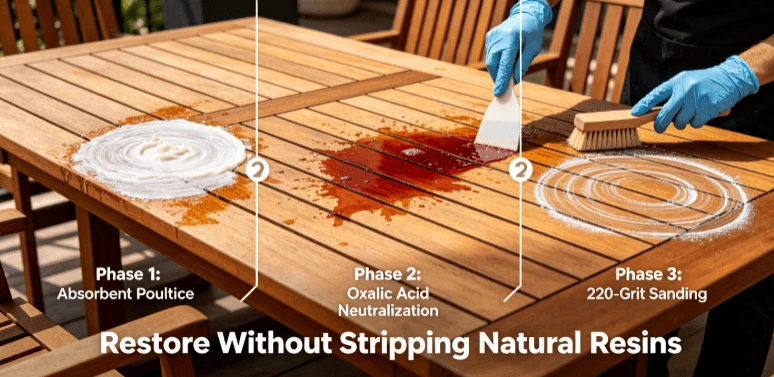
Phase 1: Drawing Out Deep Grease Stains via Absorbent Poultice
Do not rub grease spots with wet rags, as this spreads lipids across clean wood fibers.
Apply Powder Layer: Immediately cover fresh grease spills with cornstarch, talcum powder, or chalk dust. Allow the dry powder to draw out surface oil for 30 minutes, then sweep it away.
Apply Solvent Poultice: For deep, dried-in grease marks, create a thick paste using mineral spirits mixed with whiting powder or diatomaceous earth. Spread a 6mm layer over the stain, cover with plastic wrap, tape the edges, and let it draw oil out of the wood pores for 12 to 24 hours. As the solvent evaporates, it pulls embedded fats upward into the powder matrix.
Scrape and Wash: Gently scrape off the dried crust using a plastic putty knife, then rinse the surface with warm water and a soft-bristle brush.
Phase 2: Neutralizing Red Wine & Organic Tannins with Oxalic Acid
Standard household chlorine bleach destroys wood lignin, turning rich timber ash-gray and brittle. Instead, use an oxalic acid solution to safely break down dark organic tannins.
Dissolve 50 grams of technical-grade oxalic acid crystals into 1 liter of warm water.
Scrub the stained area uniformly along the natural wood grain using a dense sponge or micro-fiber cloth.
Allow the solution to react for 15 to 20 minutes. The dark purplish wine stain will oxidize and fade back to natural golden timber tones.
Neutralize the area thoroughly by rinsing with clean water mixed with a tablespoon of baking soda to stop the acid reaction.
Phase 3: Eradicating White Water Rings & Surface Smoothing
Heat Method for Fresh Rings: Place a clean cotton towel over the white water ring and pass a dry household iron set to medium heat over the fabric for 10-second intervals. The gentle heat draws trapped moisture out of the surface wax layer into the cotton towel.
Fine-Grit Progressive Sanding: If water mineral rings or raised grain remain, allow the wood to dry completely. Sand the affected spot gently along the wood grain using 180-grit, followed by 220-grit sandpaper. This smooths raised microfibrils (wood furring) without creating noticeable depressions.
4. 🪑 Commercial Terrace Applications: Protecting a teak round patio table
Outdoor bistro spaces and high-density hotel dining terraces require round table configurations that withstand continuous guest turnarounds.
Figure 1: Deploying a teak round patio table in open-air commercial dining zones requires daily spot-cleaning protocols to handle food grease and beverage spills.
🍽️ Managing High-Density Bistro Table Assets
Equipping outdoor venues with a teak round patio table layout maximizes seating capacity and improves waiter circulation paths.
However, round tables in active dining areas experience constant contact with acidic dressings, citrus juices, and red wine glasses. Implementing an end-of-shift inspection where floor staff wipe down circular tabletops with a damp cloth prevents food liquids from soaking deep into edge grain seams.
5. 📊 Visual Table #2: Housekeeping Tool & Chemical Compatibility Guide
Selecting safe cleaning materials prevents accidental chemical etching or mechanical gouging:
| 🧰 Tool / Solvent | 🟢 Approved Commercial Usage | 🔴 Prohibited / Hazardous Usage | 🔬 Wood Chemical Impact |
| Absorbent Poultice Paste | 🟢 Approved for Deep Grease | Do not scrub forcefully | Draws trapped lipids outward via capillary drying |
| Oxalic Acid Solution | 🟢 Approved for Wine & Tannins | Do not leave un-neutralized | Breaks polyphenol bonds; preserves wood lignin |
| Household Chlorine Bleach | No | 🔴 Prohibited | Destroys cellulose binders; causes severe surface splintering |
| Wire Wire / Steel Wool | No | 🔴 Prohibited | Embeds microscopic iron dust that turns wood black |
| 220-Grit Sandpaper | 🟢 Approved for Final Polish | Do not sand across grain | Smooths raised grain fibers cleanly |

6. 🛋️ Lounge Asset Economics: grade A teak sofa lifetime cost vs synthetic outdoor sofa
Commercial procurement directors must evaluate maintenance labor demands when choosing between premium hardwoods and synthetic lounge furniture.
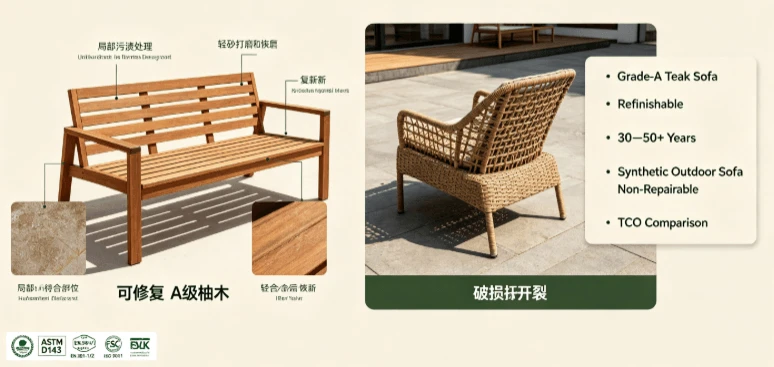
Figure 2: Analyzing grade A teak sofa lifetime cost vs synthetic outdoor sofa alternatives reveals superior long-term ROI and renewable surface durability for commercial properties.
💰 Total Cost of Ownership (TCO) Comparison
When analyzing grade A teak sofa lifetime cost vs synthetic outdoor sofa options, procurement managers quickly recognize the financial advantage of renewable materials.
Synthetic wicker or plastic composite sofas cannot be repaired once stained, burnt by cigarettes, or cracked by intense solar UV rays; they must be discarded entirely. Conversely, solid teak frames can be spot-treated, sanded, and refinished indefinitely. Reading commercial teak outdoor sofa reviews confirms that hotel engineering teams favor solid wood frames because localized stain removal requires minimal staff labor while preserving multi-year capital investments.
7. 📜 Procurement Risk Management: teak outdoor furniture warranty terms for commercial procurement
Hotel purchasing directors must understand how manufacturer warranty terms intersect with daily housekeeping protocols.
Figure 3: Reviewing commercial warranty documentation ensures that hotel housekeeping cleaning agents comply with factory maintenance directives.
📑 Aligning Cleaning SOPs with Factory Warranties
Reviewing teak outdoor furniture warranty terms for commercial procurement is vital before deploying unsealed timber assets across large resorts.
Leading commercial manufacturers provide clear guidelines regarding acceptable cleaning chemicals. Using high-pressure power washers, wire brushes, or harsh industrial acids immediately voids structural warranties. Training housekeeping staff on approved poultice and oxalic acid protocols ensures full compliance while maintaining valid factory coverage.
8. 📊 Visual Table #3: Stain Removal Method vs. Asset Lifespan Impact
Comparing long-term maintenance strategies demonstrates why gentle chemical extraction is superior to aggressive mechanical grinding:
| 🧼 Stain Treatment Approach | 👷 Housekeeping Labor Hours | 🪵 Timber Thickness Loss per Clean | 🛡️ Natural Caoutchouc Retention | ⏱️ Asset Service Lifespan |
| Targeted Poultice & Oxalic Wash | 🟢 Low (15 min active labor) | 🟢 0.0 mm (Zero wood removal) | 🟢 100% Retained inside heartwood | 🟢 30 to 50+ Years |
| Aggressive Heavy Sanding | 🔴 High (45+ min hand sanding) | 🔴 0.5 mm to 1.0 mm lost per cycle | 🟡 Partial removal of top oil layer | 🟡 Reduced due to wood thinning |
| Power Washing (High PSI) | 🟡 Moderate (Fast but damaging) | 🔴 Severe fiber tearing & gouging | 🔴 Stripped from outer cellular layers | 🔴 Reduced by 40% to 60% |
9. 📜 International Testing Standards & Commercial Certifications
Commercial procurement managers specifying outdoor teak furniture must verify that factory production complies with international testing standards:
ASTM D143: Standard test methods evaluating small clear wood specimens for Janka hardness, shear strength, and modulus of elasticity.
EN 581-1 / EN 581-2: European safety, mechanical strength, and structural stability certification for commercial contract seating and outdoor tables.
ISO 9001: Quality management system certification guaranteeing precise woodworking tolerances, computerized kiln drying control to an 8%–12% equilibrium moisture content, and joinery testing.
FSC certification: Forest Stewardship Council accreditation verifying that timber is harvested from legal, responsibly managed plantation forests.
SVLK timber legality: Indonesia's mandatory chain-of-custody system guaranteeing 100% legal timber traceability.
ISO 14001: Environmental management certification guaranteeing low-VOC finishes and eco-friendly manufacturing operations.
REACH: European Union regulation compliance ensuring zero toxic chemicals or heavy metals are present in wood treatments or sealers.
FAQ:
Q1: How to remove deep grease stains, wine spills, or water spots from untreated teak tables without ruining the wood?
To safely lift stubborn stains from untreated teak tables without damaging the timber, apply a targeted chemical extraction method rather than aggressive grinding. Use an absorbent poultice paste (talcum powder mixed with mineral spirits) to pull deep cooking fats out of the wood pores overnight. Use a diluted oxalic acid solution to neutralize red wine tannins, and execute a gentle 220-grit sanding along the wood grain to remove white water spots.
Q2: Will using oxalic acid to remove wine stains strip the natural silver patina from aged teak?
Yes. Oxalic acid is a wood brightener that strips oxidized gray surface cells and neutralizes dark stains, revealing the raw golden-brown timber underneath. If you wish to preserve the silver patina on weathered outdoor tables, spot-treat only the exact area affected by the wine spill, then allow natural outdoor UV exposure to re-silver the spot over 4 to 8 weeks.
Q3: Why should hotel housekeeping teams avoid using standard household dish soap or chlorine bleach on raw teak?
Standard liquid dish soaps often contain synthetic degreasers that leave sticky chemical residues inside open wood pores, attracting airborne dust. Chlorine bleach breaks down natural lignin binders within timber cell walls, turning wood fibers gray, fuzzy (wood furring), and prone to permanent surface splintering.
Q4: How long should solvent poultice paste sit on a deep oil stain before cleaning?
For deep, set-in cooking grease or butter stains, allow the poultice paste to sit covered under plastic wrap for 12 to 24 hours. This slow drying process allows the evaporating solvent to draw deeply absorbed lipids out of the cellular lumens and into the dry powder matrix above.