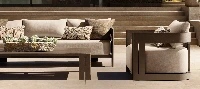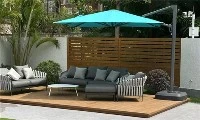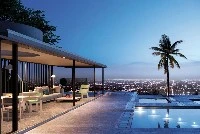

Beachfront hospitality properties operate in one of the most unforgiving environments on Earth. Constant exposure to corrosive salt fog, intense ultraviolet radiation, high humidity, tropical downpours, and relentless commercial guest turnover demands outdoor amenities that combine uncompromising luxury with extreme structural longevity.
When specifying FF&E (Furniture, Fixtures, and Equipment) for oceanfront cabanas, dining terraces, and VIP balconies, resort procurement teams routinely evaluate three primary materials: timber, metals, and synthetics. A recurring question arises during design workshops: Why do luxury beach resorts choose Grade A teak over aluminum or wicker furniture?
While lightweight metal and woven resin options offer appealing initial price points, world-class coastal destinations consistently select modern teak outdoor furniture as their long-term architectural benchmark.

🌊 1. Marine Microclimate Physics: Timber vs. Metal and Synthetics
Coastal environments test physical material limits every single day. The combination of sodium chloride aerosols and intense solar radiation degrades standard outdoor materials within two to three seasons.
Corrosion and Oxidative Resistance
Aluminum is widely praised for being rustproof. However, in direct marine zones (within 1,000 meters of the coastline), bare aluminum and standard powder coatings suffer from filiform corrosion and pitting. Salt-laden moisture creeps underneath the paint film via micro-cracks, causing chalking, bubbling, and structural flaking.
Wicker-typically constructed from high-density polyethylene (HDPE) woven over an aluminum frame-eliminates rust risks. Yet, prolonged exposure to high UV index ratings causes the synthetic polymers to lose plasticizers. Over time, the strands become brittle, snap under heavy loads, and unravel at critical stress joints.
In contrast, tectona grandis (the botanical name for teak) sourced from natural heartwood contains extraordinary concentrations of natural rubber latex and natural silica content. These organic compounds act as a natural waterproofing barrier, making Grade A teak completely immune to ocean salt air, oxidation, and internal decay without requiring synthetic surface sealants.
Thermal Conductivity and Guest Comfort
Metal patio furniture exhibits high thermal conductivity. Under direct mid-day sunlight, dark or brush-finished aluminum frames can reach surface temperatures exceeding 60°C (140°F), posing touch burn risks to guests wearing swimwear.
Polyethylene wicker mitigates surface heat better than metal, but its tight weave retains ambient heat, creating a warm microclimate around seating cushions.
Wood possesses low thermal conductivity. A teak outdoor loveseat situated on an open sun deck remains neutral to the touch regardless of radiant heat levels, delivering immediate tactile comfort for VIP clientele.
Marine Microclimate Endurance Matrix
| Performance Criteria | 🪵 Grade A Teak | ⚙️ Powder-Coated Aluminum | 🧺 HDPE Synthetic Wicker |
| 🌊 Ocean Salt Corrosion | 🛡️ Fully Immune | ⚠️ Pitting & Flaking Risk | 🛡️ Fully Immune |
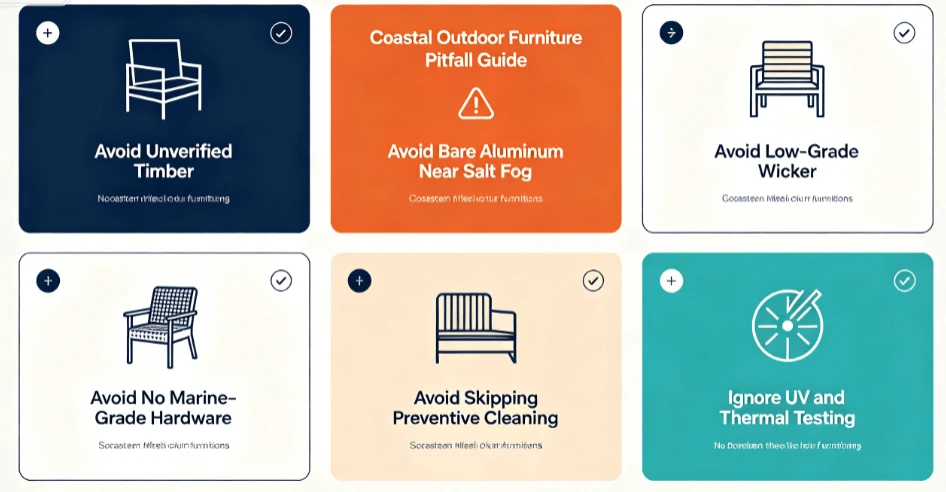
| ☀️ UV Degradation | 🌿 Natural Silvery Patina | ❌ Paint Fading & Chalking | ❌ Brittle after 3–5 Years |
| 🌡️ Surface Heat Comfort | ❄️ Cool / Neutral Touch | 🌋 Extremely Hot (>60°C) | 🌤️ Retains Ambient Heat |
| 💨 High Wind Stability | ⚖️ Heavy Structural Mass | 🍃 Lightweight (Needs Storage) | 🍃 Lightweight (Needs Storage) |
| 🔧 Structural Repairability | 🛠️ Fully Sandable & Renewable | ⚠️ Paint Touch-Up Only | ❌ Irreparable Once Snapped |
| ⏳ Commercial Service Life | 🏆 15 – 25+ Years | ⏱️ 5 – 8 Years | ⏱️ 3 – 5 Years |
To ensure raw timber complies with rigorous hospitality safety parameters, leading luxury brands insist on international testing frameworks such as the EN 581 standard for outdoor contract furniture and compliance with ISO 9001 quality management manufacturing protocols.
🎨 2. Architectural Aesthetic Prestige and Material Lifecycle Realism
Luxury resorts do not merely purchase seating; they invest in guest perception and visual storytelling.
Patina vs. Material Degradation
When synthetic wicker or coated metal wears down, it looks damaged. Scratched aluminum reveals bright raw metal underneath; unraveling resin wicker exposes underlying tubing. Both scenarios signal deferred maintenance and compromise a five-star resort's brand equity.
Teak ages with grace. Exposed to sun and rain, the surface timber slowly oxidizes, transforming from a warm golden-honey brown into a distinguished silvery-gray patina. This natural graying process is entirely superficial; the internal heartwood structural integrity remains untouched due to dense resin reserves. Resorts can either embrace this organic, ocean-inspired aesthetic or easily restore the golden hue via light sanding and teak cleaner.
Versatile Space Styling
Landscape architects often pair teak frames with high-performance upholstery to create focal relaxation hubs. Specifying a grade A teak outdoor sofa set 3 seater with waterproof fabric allows interior design themes to flow seamlessly onto expansive outdoor lanais.
Unlike metal frames that can look industrial or wicker sets that often feel casual, teak brings organic warmth that complements infinity pools, natural stone decks, and lush tropical flora.
📊 3. Financial Blueprint: Life Cycle Cost (LCC) and Commercial ROI
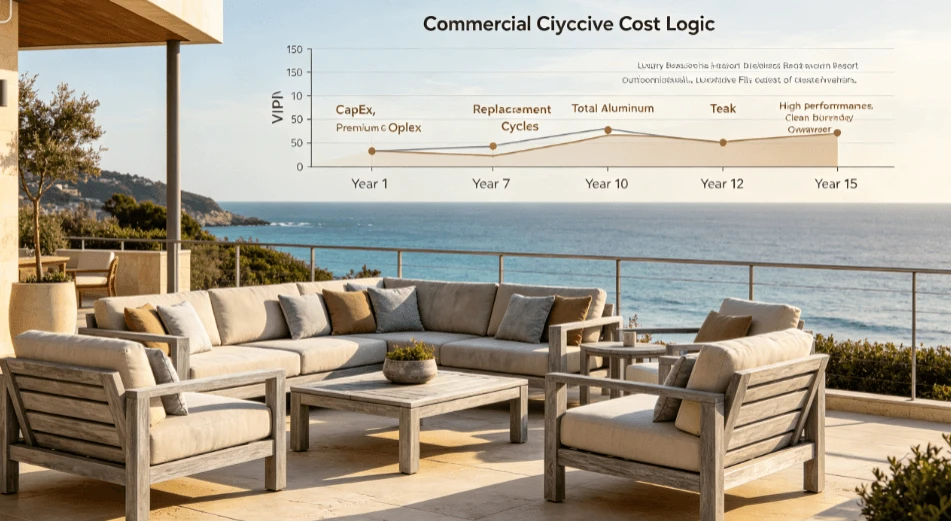
While initial procurement expenditures for timber are higher than metal or resin options, calculating the Total Cost of Ownership (TCO) over a 10-year operational horizon reveals a stark economic reality.
Capital Expenditure (CapEx) vs. Operational Refurbishment (OpEx)
In high-occupancy commercial properties, aluminum and wicker furniture typically require full replacement every 3 to 6 years due to structural looseness, broken weaves, or unsightly surface corrosion.
Grade A teak furniture easily lasts 15 to 25 years in continuous commercial service with basic preventative care.
Technical Timber Specifications & Grade Comparison
| Technical Specification | 🌟 Grade A Teak | 🟡 Grade B Teak | 🔴 Grade C Teak |
| 🌳 Harvest Origin | Mature Heartwood Core | Outer Heartwood Layer | Young Sapwood Layer |
| 📐 Grain Density & Alignment | Uniform, Straight & Dense | Moderate Grain Tightness | Soft & Uneven Grain |
| 💧 Natural Oil Content | Very High (>8%) | Moderate (3% – 5%) | Very Low (<2%) |
| 🔥 Kiln-Dried Moisture Level | 8% – 12% (Contract Grade) | 12% – 15% | >16% (High Warp Risk) |
| 🔩 Fastener Hardware Match | Grade 316 Stainless Steel | Stainless Steel / Brass | Zinc-Plated Steel |
| 🏨 Commercial Application | 🏖️ High-Traffic Oceanfront | ⛱️ Covered Patio / Semi-Outdoor | 🏠 Residential Indoor Only |
The financial data demonstrates that by Year 7, aluminum and wicker options surpass the cumulative cost of teak due to replacement cycles, freight fees, re-installation labor, and operational downtime during property turnovers.
Choosing the best weather resistant outdoor teak furniture for coastal climates converts a recurring operating expense into a durable capital asset.
🛡️ 4. Technical Specifications: Answering Wood Grade Science
Understanding why luxury beach resorts choose Grade A teak over aluminum or wicker furniture requires examining raw timber grading standards. Not all teak is created equal.
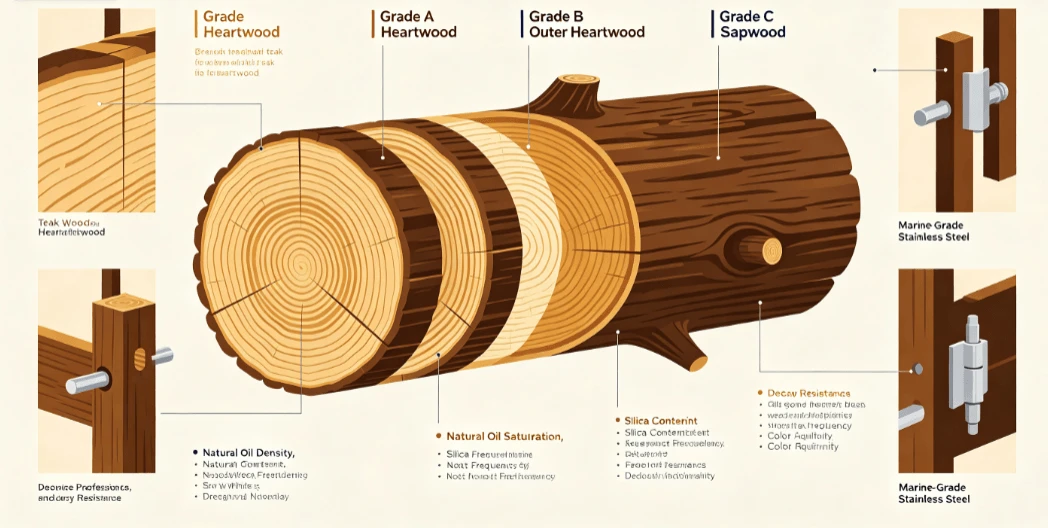
Heartwood vs. Sapwood
Grade A Teak: Harvested exclusively from the innermost heartwood core of mature trees (typically 30–50+ years old). It exhibits a uniform golden-amber color, close-grain density, high natural oil saturation, and high silica content. It is rot-proof, insect-resistant, and impervious to ocean salt air.
Grade B Teak: Cut from the outer heartwood layers. Lighter in color with occasional dark knots and lower oil content. Requires seasonal oiling treatments to survive coastal exposure.
Grade C Teak: Sourced from sapwood-the outer living layers of younger trees. Soft, unevenly colored, and completely lacking protective oils. It quickly warps, cracks, and rots when exposed to rain or salt fog.
10-Year Total Cost of Ownership (TCO) Comparison
| Financial Metric | 🪵 Grade A Teak | ⚙️ Powder-Coated Aluminum | 🧺 HDPE Synthetic Wicker |
| 💳 Initial CapEx (100-Key Resort) | $120,000 | $65,000 | $50,000 |
| 🔄 Replacement Frequency | Zero (20+ Years) | Replaced in Year 5 | Replaced in Years 4 & 8 |
| 📦 Cumulative Replacement Costs | $0 | $65,000 | $100,000 |
| 🛠️ 10-Year Cumulative OpEx Maintenance | $25,000 | $15,000 | $12,000 |
| 💵 Total 10-Year Expenditure | $145,000 | $145,000 | $162,000 |
| 🏷️ Year 10 Asset Residual Value | 📈 ~40% Valuation | 📉 Negligible / Near Zero | 📉 Zero (Landfill Disposal) |
To guarantee mechanical reliability under heavy commercial use, master joinery techniques must be employed. Mortise and tenon joinery reinforced with teak dowels allows the frame to naturally expand and contract with atmospheric humidity changes without splitting.
Hardware must consist of marine-grade stainless steel (Grade 316) or solid brass to prevent electrolytic corrosion within the wood fibers.
🌿 5. Sustainable Forestry Standards and Green Hotel Accreditation
Modern luxury travel consumers demand rigorous environmental stewardship from hospitality brands. Installing unverified timber risks severe reputational damage, legal liabilities under international import regulations, and lost points in green building certifications.
Resort developers should demand verified chain-of-custody documentation:
FSC Certification: Guarantees timber originates from responsibly managed plantations that preserve biodiversity, respect local labor rights, and prevent deforestation.
SVLK Certified: The Indonesian Legal Wood Availability System, ensuring every cubic meter of teak is legally harvested, traceable, and compliant with national environmental laws.
TÜV Rheinland Testing: Independent laboratory validation confirming physical load capacity, weather resistance, and safety compliance under extreme operational testing.
By integrating legally harvested, long-lasting timber, hotel groups earn valuable credits toward LEED Certification (Leadership in Energy and Environmental Design) under Materials and Resources categories, supporting broader corporate ESG goals.

🛠️ 6. Maintenance Guidelines for Oceanfront Properties
Maintaining an inventory of teak furniture in coastal properties requires a structured, simple protocol:
Unlike metal furniture requiring touch-up paints, or wicker requiring specialized pressure washers to clear trapped sand particles, teak cleaning takes minimal staff hours.
Pairing frames with solution-dyed acrylic or olefin fabric cushion covers with reticulated quick-dry foam cores ensures that rain showers or splash-zone water drain within minutes, keeping lounge areas open for guest use.
❓ FAQ
Q1: How does Grade A teak withstand direct salt spray compared to marine-grade aluminum?
Grade A teak contains natural rubber latex and dense oil reserves that make its wood fibers completely impermeable to sodium chloride penetration. Powder-coated aluminum, while rustproof, remains vulnerable to filiform corrosion and blistering whenever salt moisture penetrates microscopic chips or scratches in the paint finish.
Q2: What is the average commercial lifespan of Grade A teak in tropical beach environments?
In high-turnover luxury resort environments, Grade A teak furniture routinely achieves a service life of 15 to 25 years or more. Synthetic wicker and powder-coated aluminum options generally require full replacement every 3 to 6 years due to UV brittleness or surface oxidation.
Q3: Should resorts preserve the golden teak color or allow it to turn silver?
This decision depends on the architectural design vision. Allowing teak to naturally develop a silver-gray patina creates a sophisticated, coastal aesthetic and eliminates ongoing color maintenance. If a warm golden-honey look is preferred, housekeeping teams can apply a specialized teak protector once a year to preserve the original color tone.
Q4: How does cushion fabric selection impact the performance of a grade A teak outdoor sofa set 3 seater with waterproof fabric?
High-end commercial cushions utilize solution-dyed acrylic fabrics (such as Sunbrella or Agora) paired with reticulated open-cell polyurethane foam. Moisture passes directly through the foam core without absorbing, allowing the sofa set to dry rapidly after ocean spray or tropical downpours without mildew accumulation.
Q5: Why is teak superior to synthetic resin wicker in regions with extreme heat?
Synthetic resin wicker is made from polymers (HDPE or PVC) that soften under ambient heat and degrade when exposed to prolonged UV radiation, causing the woven strands to crack and unravel. Teak is a natural insulator that remains dimensionally stable and comfortable to touch even in high UV desert or tropical climates.
Q6: What certifications should resort procurement managers check before ordering teak furniture?
Procurement teams should verify FSC certification (Forest Stewardship Council) for legal, sustainable forestry practices, SVLK certified documentation for Indonesian legal timber compliance, and compliance testing under the EN 581 standard for commercial contract seating safety.
Q7: Is Grade A teak heavy enough to remain stable during severe coastal windstorms?
Yes. Grade A teak is a high-density hardwood with an average dried weight of approximately 650 to 700 kg/m³. Its substantial structural weight prevents sun loungers and dining tables from blowing across pool decks during sudden coastal squalls, reducing emergency storage labor for resort staff compared to lightweight aluminum sets.
Q8: What maintenance routine is required for teak outdoor furniture in beachfront properties?
Maintenance is simple: wash the frames twice a year using warm water mixed with mild soap and a soft-bristle brush to remove salt crust and airborne grime. Avoid pressure washing, which can raise the wood grain, and avoid sealing with varnish, which traps moisture inside wood fibers.
Q9: How does Grade A teak outdoor furniture support hotel green building accreditations?
Teak sourced from FSC-certified sustainable plantations stores atmospheric carbon throughout its long life cycle. Because its operational lifespan is three to five times longer than petroleum-based synthetic furniture, it drastically reduces landfill waste and contributes points toward LEED MR (Materials and Resources) credits.