
📉 The Lifespan Gap: Why Residential Umbrellas Fail in Commercial Space
Hospitality environments test shade equipment brutally.
While a consumer unit sits closed on a suburban back deck for most of the week, an outdoor patio umbrella at a resort pool or rooftop bar faces 10 to 14 hours of daily sun exposure, sudden coastal gusts, and continuous guest interaction.
Selecting a lightweight consumer parasol for a busy commercial terrace creates a costly operational loop.
When a sudden 30 mph gust strikes a resort pool deck, thin-walled frame ribs snap at their hinge joints.
Upgrading to a high-spec Pool Patio Umbrella built with reinforced aluminum profiles prevents unexpected structural failures, protecting guests and staff while keeping outdoor dining tables fully operational.

📊Commercial vs. Residential Umbrella Performance & Lifespan Matrix
| Performance Parameter | Residential Retail Model | Commercial Engineering Grade | Operational Impact on Venues |
| Average Service Lifespan | 1 to 2 Seasons (12–18 months) | 4 to 6+ Years (48–72+ months) | 60%+ reduction in procurement cycles |
| Wind Resistance Threshold | 15 – 20 mph (Gentle breezes) | 35 – 50+ mph (Certified wind loads) | Zero emergency closures during gusty winds |
| Daily Operational Hours | Occasional weekend use | 10–14 hours daily active duty | Sustains continuous wear without joint failure |
| Replacement Strategy | Disposable (Entire unit discarded) | Modular (Individual rib/canopy replacement) | Significantly lower long-term maintenance cost |
⚙️ Material Selection: Engineering Structural Longevity
The difference between a short-lived retail umbrella and a commercial asset lies in metallurgy and textile chemistry.
Residential units rely on hollow, thin-gauge sheet aluminum or soft treated woods. Under continuous stress, thin aluminum ribs bend permanently, while soft woods swell and crack from humidity.
Commercial-grade frames rely on heavy-duty 6063-T5 aluminum alloy structural extrusions. This architectural alloy delivers high tensile strength and elastic recovery, allowing the ribs to flex under heavy wind loads without permanent deformation.
To resist salt corrosion near coastal resorts, hardware, rivets, and hinge pins must be forged from 316 stainless steel.
For canopy textiles, standard printed polyester fades within 500 sun hours. Commercial shade systems utilize 100% solution-dyed acrylic fabric, lock-stitching color pigments directly into the fiber core to resist UV degradation for years.
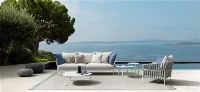
To shade sprawling lounge arrangements, operators often deploy a heavy duty square patio umbrella for outdoor seating or align parasols over an expansive outdoor sectional sofa set.
When high winds eventually wear down a heavy-use component, commercial suppliers provide dedicated commercial umbrella replacement parts and rib sets. This modular repair capability allows maintenance teams to fix a single arm without replacing the entire umbrella assembly.

📊 Material Durability & Structural Specification Benchmarks
| Component Section | Consumer Residential Grade | Commercial Hospitality Grade | Technical Performance Gain |
| Frame Metal | 0.8mm-1.2mm Thin Aluminum | 2.0mm-3.5mm 6063-T5 aluminum alloy | 3x higher bending yield strength |
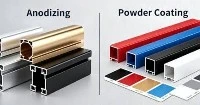
| Frame Finish | Basic Anodized / Paint | Qualicoat architectural powder coating | High resistance to chipping and UV chalking |
| Hardware & Pins | Zinc-plated mild steel | Marine-grade 316 stainless steel | Zero rust staining in high-humidity zones |
| Canopy Material | Printed Polyester / Olefin | Solution-dyed acrylic fabric | 5-Year non-fade UV colorfastness |
💼 Total Cost of Ownership (TCO) & Venue ROI
Focusing solely on initial purchase price creates a misleading financial picture.
Buying a low-cost Patio Table Umbrella for a restaurant terrace seems economical on paper. However, replacing cheap units every season causes recurring replacement expenses, shipping charges, and labor hours spent assembling new units.
Beyond direct hardware costs, umbrella failures disrupt revenue generation.
A broken umbrella renders an outdoor table unusable during sunny lunch peak hours.
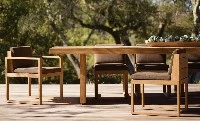
By upgrading to heavy-duty shade, venues keep every seat monetized, whether paired with an outdoor dining table setup or integrated alongside a commercial louvered pergola installation.
For flexible open-air lounge layouts where central posts are undesirable, deploying a heavy-duty cantilever umbrella keeps ground pathways clear while delivering long-lasting canopy coverage.

📊Multi-Year Operational & Financial Comparison
| Operational Factor | Repeated Residential Purchases | Single Commercial Grade Investment |
| Multi-Year Purchase Cycle | 3 to 4 replacement rounds required | Single procurement event for 4–6 years |
| Maintenance Labor Overhead | High (Frequent assembly, teardown, disposal) | Minimal (Periodic cleaning and bolt checks) |
| Risk of Guest Injury | High (Risk of frame collapse in gusts) | Extremely Low (Certified structural safety) |
| Terrace Revenue Protection | Unpredictable (Table downtime when broken) | 100% Reliable (Tables stay open year-round) |

🛡️ Global Quality Standards & Structural Certifications
When purchasing shade infrastructure for public commercial properties, architectural specifications require verified testing credentials.
Commercial manufacturers validate their product claims through independent testing laboratories:
TÜV Rheinland: Tests mechanical opening mechanisms, structural load capacity, and hinge shear stress under repeated cycles.
ISO 9001: Guarantees international quality management standards across manufacturing batches.
ASTM B117: Subject metals to 1,000+ hours of continuous salt fog to test corrosion resistance.
NFPA 701: Verifies flame retardancy standards required by municipal commercial building codes.
GREENGUARD Gold: Confirms low chemical emissions from fabrics and frame coatings.
OEKO-TEX Standard 100: Certifies canopy textiles are free from harmful heavy metals and toxic dyes.
An architectural frame coated with a fluoropolymer powder coating tested under Qualicoat standards will maintain its color depth without peeling or flaking, even after seasons of exposure to harsh salt air.
🧹 Maintenance Best Practices to Reach 6+ Years of Service
Even the sturdiest commercial parasol requires routine preventative care to maximize its operational lifespan:
Daily Wind Protocols: Train service staff to close and tie down canopies whenever wind speeds exceed recommended operational limits.
Monthly Hardware Inspections: Check pivot pins, cable tensioners, and base bolts for proper torque tightness.
Seasonal Fabric Care: Wash canopy textiles with mild soap and warm water to remove airborne grime, organic pollen, and salt crust before mould spores set in.
Off-Season Protection: During severe winter months or extended facility closures, store clean, dry canopies inside protective commercial storage sleeves.
❓ FAQ:
Q1: What is the average commercial grade patio umbrella lifespan in a hotel environment?
A true commercial-grade patio umbrella lasts between 4 and 6 years in continuous commercial hospitality use. With proper off-season storage and routine maintenance, high-spec aluminum frames often exceed 7 to 8 years of active service.
Q2: Why do residential patio umbrellas fail so quickly on restaurant terraces?
Residential umbrellas are designed for light, seasonal use in sheltered backyard environments. Their thin-walled aluminum or soft wood frames cannot withstand continuous wind vibration, high guest usage, and UV exposure present on commercial terraces.
Q3: Are commercial umbrella replacement parts easily available when components wear out?
Yes. Commercial shade systems are designed modularly. Quality commercial suppliers stock individual ribs, canopy covers, crank handles, runner hubs, and hardware sets so venues can repair individual components without purchasing a whole new umbrella.
Q4: Which canopy fabric offers the longest fade resistance for commercial umbrellas?
100% solution-dyed acrylic fabric is the commercial industry standard. Because color pigments are locked directly into the acrylic fibers during raw liquid state, it resists UV fading and structural fabric breakdown for 5 years or more.
Q5: How does salt spray affect umbrella hardware at coastal resorts?
Salt spray causes rapid oxidation, rusting, and pitting on standard zinc-plated or lower-grade steel fasteners. Commercial units use 316-grade marine stainless steel fasteners and anodized or powder-coated aluminum to prevent salt corrosion.
Q6: Can commercial patio umbrellas be anchored directly into concrete decks?
Yes. For maximum stability and spatial efficiency, commercial umbrellas can be mounted using flush in-ground concrete sleeves or heavy surface-mounted deck plates. This eliminates bulky above-ground bases and prevents tripping hazards in high-traffic dining zones.
Q7: What fire safety certifications are required for umbrellas used in commercial dining areas?
Most municipal commercial fire codes require canopy fabrics to carry NFPA 701 fire retardancy certification. This ensures the material will self-extinguish rather than feed an open flame in public dining areas.
Q8: What wind speed can a heavy-duty commercial umbrella handle before closing?
Engineered commercial umbrellas are rated to handle stable winds of 35 to 50+ mph depending on the frame size and mounting method. However, operators should always close canopies during extreme storm conditions or unexpected severe wind gusts.