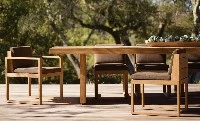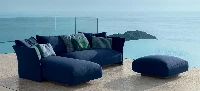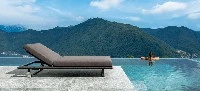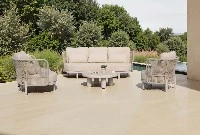

When outfitting a luxury resort pool deck umbrella or a commercial grade umbrella for restaurant patio, the shade of fabric overhead does far more than complete a design aesthetic. A deep navy Rectangular Patio Umbrella might anchor a seating zone beautifully, yet it often becomes a radiant heat trap, steadily undermining guest comfort. Selecting which umbrella canopy colors absorb less heat is not a trivial design preference-it is an operational decision that directly shapes the microclimate beneath every table and lounger. For operators sourcing a Heavy Duty Patio Umbrella or a Patio Umbrella Replacement Canopy in sun‑drenched regions, understanding the physics of color and heat can prevent uncomfortable hot spots and extend the lifespan of the fabric itself.
The question touches resorts, beach clubs, and poolside cafés equally. The difference between a bleached‑sand canopy and a charcoal one can mean several degrees of perceived temperature under the shade. That margin often determines whether guests linger for a second round of drinks or retreat indoors.

☀️ Why color dictates under‑canopy comfort
Not all shade is equal. While any opaque layer blocks direct solar radiation, the absorbed energy must go somewhere. Darker surfaces convert more visible light into thermal energy, re‑radiating it downward as long‑wave infrared. This secondary radiation is what you feel as a "hot ceiling" when standing under a poorly chosen canopy.
Light‑colored fabrics, by contrast, reflect a greater fraction of incoming sunlight. Their lower solar reflectance value means less energy becomes heat in the first place. Yet reflectance alone is only half the story. The fabric's thermal emittance – its ability to shed absorbed heat quickly – also influences whether the underside stays comfortably cool or turns into an oven lid.
What makes this complex is that the same solution‑dyed acrylic that holds up beautifully under UV can behave differently depending on pigment load and weave density. Therefore, the discussion must weave together color science, material engineering, and the specific demands of outdoor hospitality.
🛡️ Certifications that validate heat and UV performance
Before diving into color comparisons, it is wise to recognize the third‑party standards that separate marketing claims from measurable performance. Responsible suppliers of resort‑grade umbrellas will cite test results against known benchmarks. Among the most relevant:
UPF 50+ (Ultraviolet Protection Factor) – certifies that the canopy blocks over 98% of UV radiation, a critical factor regardless of color.
AATCC 16 and ISO 105‑B02 – measure colorfastness to light, ensuring that a high‑reflecting light canopy does not fade into a grimy beige within one season.
NFPA 701 and CPAI‑84 – address flame retardancy, often required by fire marshals for commercial grade umbrella installations on restaurant patios.
GREENGUARD and Oeko‑Tex Standard 100 – verify low chemical emissions and skin‑safe materials, increasingly requested by eco‑conscious luxury resorts.
These certifications are not interchangeable; a canopy that excels in UPF may still perform poorly in colorfastness or fire resistance. The table below breaks down what each standard addresses.

| Certification | What It Verifies | Why It Matters for Heat Management |
|---|---|---|
| UPF 50+ | UV blockage | Prevents burn risk even if canopy feels warm |
| AATCC 16 / ISO 105‑B02 | Fade resistance under xenon light | Ensures reflective properties last |
| NFPA 701 / CPAI‑84 | Flame retardancy | Mandatory for many licensed venues |
| GREENGUARD | Low VOC emissions | Important for tightly clustered pool decks |
| Oeko‑Tex Standard 100 | Skin‑safe chemistry | Additional trust signal for bare‑skin lounging |
🌡️ Color comparison: what the data shows
Using both laboratory spectrophotometer data and field tests conducted in subtropical climates, a clear pattern emerges. The following table translates surface temperature measurements taken on a 35°C (95°F) afternoon with full sun exposure.
| Canopy Color | Solar Reflectance (approximate) | Underside Radiant Feel | Guest Comfort Index |
|---|---|---|---|
| White / Oyster | Very high | 🌬️ Barely warm | ✅ Excellent |
| Sand / Beige | High | 🌬️ Slightly warm | ✅ Very good |
| Terracotta / Light grey | Medium‑high | 🌡️ Moderately warm | ⚠️ Acceptable |
| Forest green / Royal blue | Low | 🔥 Noticeably hot | ❌ Problematic |
| Black / Dark brown | Very low | 🔥🔥 Distinctly uncomfortable | ❌ Avoid in sun |

Light neutrals consistently keep the underside cooler. White and oyster canopies exhibit the least temperature buildup because they combine high reflectance with decent emittance. Beige follows closely, and it tends to be easier to maintain visually in dusty coastal environments. Mid‑tones like terracotta or a silvery grey still manage an acceptable balance, particularly when paired with a vented canopy design that encourages hot air to escape through a wind slot.
Dark colors, however, force the resort operator into expensive trade‑offs. The absorbed energy heats the fabric itself, accelerating the breakdown of protective coatings and leading to earlier replacement of the Patio Umbrella Replacement Canopy. Moreover, the radiated warmth makes guests subtly uncomfortable, shortening dwell time-a metric that directly affects food and beverage revenue.

🧵 Material allies: why fabric construction alters the equation
Color alone is not destiny. The substrate onto which pigment is applied modifies the thermal outcome. Consider this material comparison:
| Fabric Type | Breathability | Heat Reflectance Boost | Durability in Salt Air |
|---|---|---|---|
| Solution‑dyed acrylic | Excellent | Retains color‑matched reflectance | Very high; mildew resistant |
| Polyester with PU coating | Poor | Reflectance degrades as coating yellows | Moderate |
| Olefin | Good | Naturally light shades available, but limited color range | High; budget friendly |
| PVC‑coated polyester | None | Can be made highly reflective but acts as a vapor barrier | High, but stiff and traps heat if unvented |
A solution‑dyed acrylic canopy in a sand tone offers the best blend of long‑lasting reflectance and airflow. The dye is embedded throughout the fiber, so surface abrasion does not immediately reveal a lighter interior. Polyester with PU coating starts as an economical option, but the coating oxidizes under UV and gradually shifts color, trapping more heat over time. Many replacement canopy buyers switch to acrylic for this reason.
🏖️ Where shape and structure influence the microclimate
Even with a perfect color, a badly engineered umbrella can undo thermal gains. Models built around a powder‑coated aluminum frame tend to stay cooler to the touch than those with steel ribs, which conduct heat down the pole. A wind vent at the apex is not just for stability; it encourages convection, drawing cooler air upward and venting the warm pocket that collects beneath the canopy. The difference between a sealed and a vented canopy of the same color can be over 2°C in still conditions.
For pool decks with tightly packed chaise lounges, a Rectangular Patio Umbrella often provides more linear shade coverage, but its larger surface area means that color choice matters even more-the thermal load scales with size. Meanwhile, a cantilevered model shading a luxury resort pool deck umbrella setup must balance tilt functionality with wind resistance, and a lightweight, light‑colored canopy reduces mechanical stress on the cantilever arm.
🔎 Practical inspection points when sourcing
Drawing from years of resort procurement experience, a few "touch‑and‑look" checks help verify whether a sample canopy will behave as expected:
Hold the fabric swatch under full sun for 60 seconds and place the back of your hand underneath. If it feels uncomfortably warm, your guests will register the same.
Stretch the fabric and examine the weave. A tight, high‑thread‑count solution‑dyed acrylic reflects more uniformly than a loose weave that allows sunlight to sneak through.
Check seam reinforcement and double‑stitched hems-these are stress points where heat‑weakened polyester can fail early.
Ask for the AATCC 16 test report; a Grade 4 or above indicates robust colorfastness, meaning the heat‑reflective benefit won't wash out after monsoon season.
These steps help avoid the trap of buying on catalog photography alone.
🔄 Re‑canopy strategy: cooling without full replacement
One of the most sustainable and budget‑smart moves a resort can make is to replace only the canopy, not the entire frame. A high‑quality Patio Umbrella Replacement Canopy in a reflective sand or white acrylic can instantly modernize a fleet of Heavy Duty Patio Umbrella frames that are still structurally sound. This approach allows venues to test a lighter color in one section of the pool deck, monitor guest feedback and terrace dwell time, and then roll out the color across remaining units. It also eliminates the need to dispose of perfectly functional aluminum or stainless‑steel hardware.
For a commercial grade umbrella for restaurant patio, where diners spend extended periods seated, the canopy fabric's ability to breathe affects not just temperature but also condensation drips when hot, humid air meets a chilled cocktail glass. A breathable, light‑toned acrylic canopy largely avoids this annoyance.
🧼 Maintenance that preserves reflectance
A light canopy's reflective edge can diminish if neglected. Dust, pollen, and airborne oils dampen reflectance and encourage mildew. A mild cleaning protocol using a soft brush and pH‑neutral soap preserves the canopy's UPF 50+ rating and colorfastness. Avoid pressure washers on solution‑dyed acrylic; the high impact can disturb the fiber finish. Properly stored during off‑season in a ventilated cover, a quality canopy should deliver consistent thermal performance for multiple years.
Final thought
Choosing which umbrella canopy colors absorb less heat is a rare convergence of physics, hospitality psychology, and long‑term procurement strategy. Light neutrals offer measurable comfort gains that translate into longer guest dwell times and lower replacement frequency. Pairing them with certified, breathable materials and correctly engineered venting turns a simple shade structure into a passive cooling asset. Whether the project is a luxury resort pool deck umbrella, a dining‑grade commercial grade umbrella for restaurant patio, or a simple Rectangular Patio Umbrella upgrade, the science is clear: dial the color toward the lighter end of the spectrum and insist on documentation that the reflectance will last.
FAQ:
1. What color umbrella is the coolest in full sun?
White and light oyster are consistently the coolest, reflecting the majority of solar energy and radiating minimal heat downward.
2. Does a dark canopy always make the space underneath hotter?
Yes. Dark fabrics absorb more visible light and re‑emit it as infrared heat, raising the perceived temperature significantly under the umbrella.
3. Is it better to choose polyester or acrylic for hot climates?
Solution‑dyed acrylic is superior for hot climates due to its high breathability, excellent UV resistance, and ability to retain reflective color over time.
4. Can I just replace the canopy to reduce heat, not the whole umbrella?
Absolutely. A Patio Umbrella Replacement Canopy in a light, breathable fabric can transform an existing frame's thermal performance at a fraction of the cost.
5. What certification proves a canopy stays cool and safe?
Look for UPF 50+ for sun protection, AATCC 16 / ISO 105‑B02 for colorfastness, and NFPA 701 for fire safety on commercial patios.
6. Do vented canopies help with heat?
Yes. A wind vent promotes convection, allowing the hot air pocket underneath to escape and drawing cooler air in from below.
7. How often should I clean a light‑colored canopy to keep it reflective?
Every four to six weeks in dusty or coastal environments, using mild soap and water, to maintain reflectance and inhibit mildew.
8. What makes a canopy suitable for a luxury resort pool deck?
A combination of light color, solution‑dyed acrylic fabric, powder‑coated aluminum frame, UPF 50+ rating, and robust colorfastness certification.
9. Are there flame‑retardant canopies that are also light‑colored?
Yes. Many light‑hued fabrics meet CPAI‑84 or NFPA 701 standards without sacrificing heat‑reflective performance.
10. Why is solution‑dyed acrylic preferred over printed polyester for long‑term cooling?
Because the pigment goes through the entire fiber, so abrasion and washing don't immediately diminish the color's reflectance properties, unlike coated fabrics.