
Walk through any high-density city bistro or hotel terrace during a rainy afternoon. You will notice a recurring floor plan mistake.
When a cafe uses traditional round shade units, placing them side-by-side creates unavoidable diamond-shaped gaps between the canopies. Rain pours directly onto server pathways and table borders.
To maximize your venue's spatial yield efficiency, shade architecture must mimic your floor plan tiles.
Square shapes align perfectly flush against building facades, boundary glass walls, and neighboring canopy edges.
Investing in a commercial-grade Outdoor Patio Umbrella engineered with straight structural ribs allows your team to expand or contract shade grids dynamically as dining reservations grow.

☕ Standard Dimensional Footprints for Cafe Modules
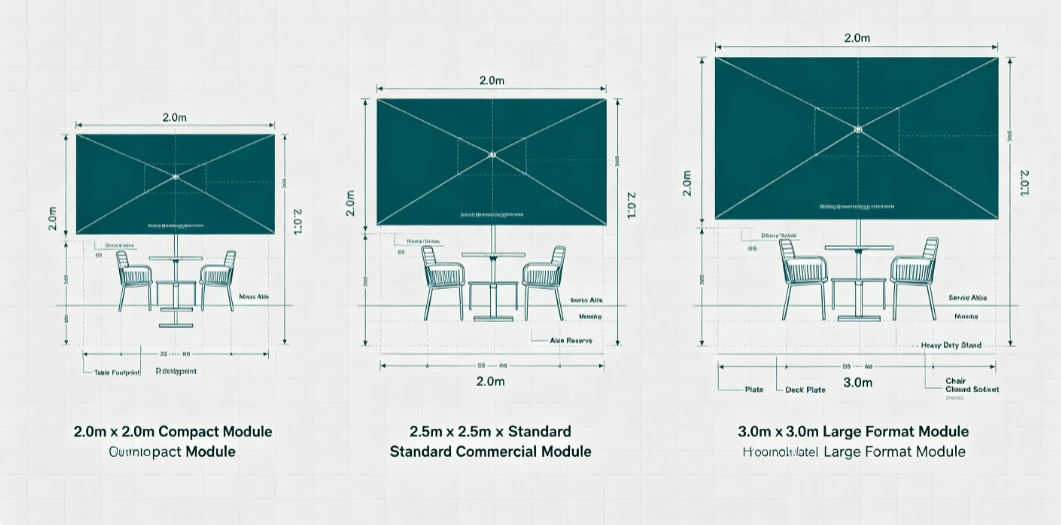
Commercial square parasols are engineered around standard restaurant furniture clearances.
Selecting the right canopy footprint requires mapping the shade boundary directly to your dining table footprint plus the required chair clearance behind seated guests.
1. The 2.0m x 2.0m Compact Module
Best Suited For: Narrow sidewalk seating, urban bistro footpaths, and tight 2-top table rows.
Spatial Benefit: Fits within strict municipal sidewalk encroachment limits while leaving ample aisle space for pedestrians.
2. The 2.5m x 2.5m Standard Commercial Module
Best Suited For: 4-top dining setups (90cm x 90cm square tables) and modular lounge blocks.
Spatial Benefit: The industry workhorse for modular tiling. Four units aligned in a 2x2 grid form a perfect 5.0m x 5.0m covered dining pavilion.
3. The 3.0m x 3.0m Large Format Module
Best Suited For: Banquettes, communal dining rows, and expansive hotel terraces.
Spatial Benefit: Reduces the total number of ground anchors needed while covering large surface areas with fewer structural posts.
📊Standard Square Umbrella Dimensions & Spatial Matching Matrix
| Canopy Size (Square) | Ideal Furniture Layout | Aisle Clearance Reserve | Recommended Mounting Base |
| 2.0m x 2.0m | Single 2-Top (70x70cm) / Sidewalk rows | 50cm to 60cm per side | Heavy-duty Patio Umbrella Stand |
| 2.5m x 2.5m | Single 4-Top (90x90cm) or two 2-Tops | 70cm to 80cm per side | In-ground flush ground socket |
| 3.0m x 3.0m | 6-Top / 8-Top communal benching | 90cm+ primary service corridor | Bolted deck plate or heavy ballast |
🌧️ Modular Tiling, Seamless Edge Alignment, and Drainage Connectivity
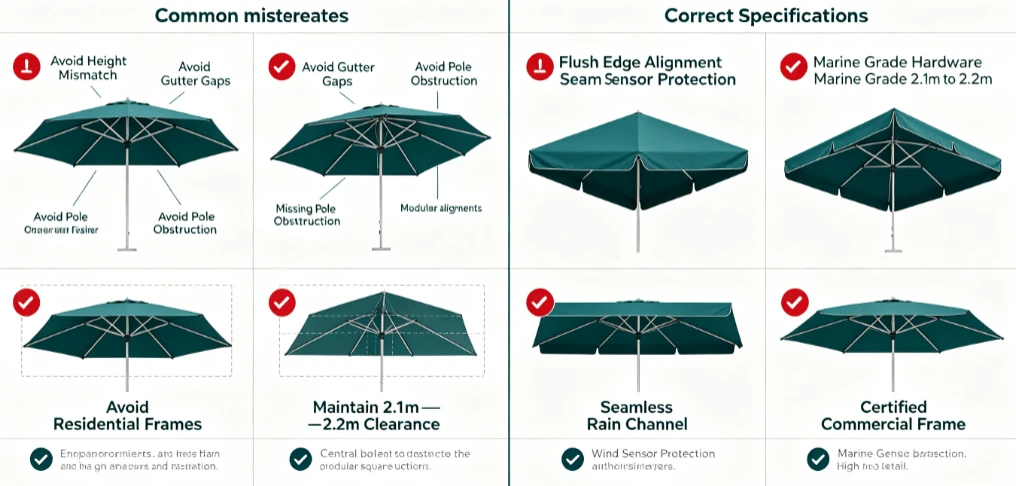
When square umbrellas sit edge-to-edge, canopy heights and valence lines must match with millimeter precision.
If umbrella heights vary, wind gusts cause overlapping frames to clash, damaging canopy ribs.
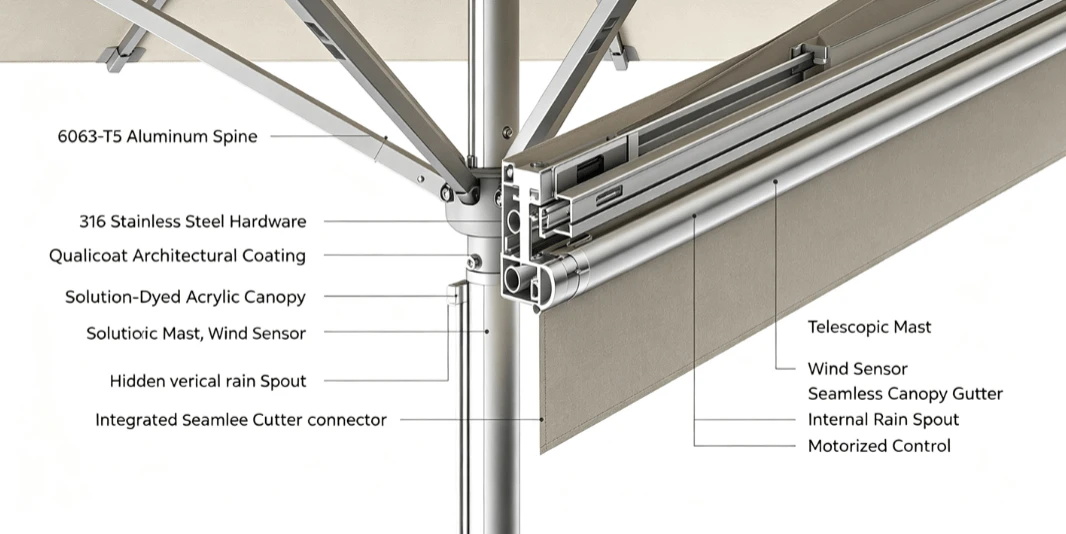
High-end commercial setups utilize an extruded telescopic mast that raises the canopy structure slightly while closing. This prevents the umbrella arms from hitting nearby dining tables and guest chairs during opening or closing procedures.
To achieve complete weatherproofing across tiled rows, commercial operators attach flexible seamless canopy gutters between adjacent frames.
Each rain channel connector catches water runoff between the square canopies, channeling storm water down hidden vertical spouts built inside the framework.
For venues requiring maximum shade flexibility along perimeter walls, installing a dual canopy side pole umbrella for dining provides two square canopies supported by a single central mast, doubling your covered area without adding floor clutter.
During unexpected afternoon storms, an automatic motorized umbrella with wind sensor can automatically retract or adjust its tension, protecting your capital investment while keeping operators focused on service.

📊Modular Alignment & Weather Protection Configurations
| Alignment Type | Structural Setup | Rain Protection Mechanism | Operational Advantage |
| Linear Row Tiling | 1xN continuous line along facade | Inter-canopy zip gutters | Shields sidewalk dining rows completely |
| Quad Pavilion Grid | 2x2 square cluster | Central cross-gutter system | Creates a large dining tent feel with modular flexibility |
| Offset Perimeter Layout | Single mast with dual square heads | Overlapping drip channels | Keeps walkways clear of ground bases |
🛡️ Structural Engineering, Materials & Certification Standards
Commercial outdoor furniture assets face constant exposure to UV radiation, wind shear, and corrosive salt air.
Using lightweight residential frames in a busy hospitality venue creates severe liability risks.
Structures must be built using structural 6063-T5 aluminum alloy profiles, which provide high tensile strength under bending stress without adding excessive structural weight.
To withstand coastal salt environments, steel mounting joints and hinge pins should be forged exclusively from marine grade 316 stainless steel to prevent pitting and orange oxide staining.
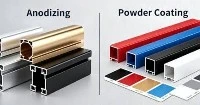
All metal surfaces require a thick fluoropolymer powder coating or anodized treatment compliant with Qualicoat architectural standards to prevent peeling, chalking, and sun bleaching.
When ground space cannot accommodate central posts, a cantilever configuration like the Best Cantilever Patio Umbrella moves the support column entirely outside the dining grid, allowing tables to slide together without post interference.
Canopy covers should be fabricated using 100% solution-dyed acrylic fabric, featuring high UV colorfastness and water column resistance.
🛡️ Mandatory Commercial Testing & Certification Standards
TÜV Rheinland: Verifies structural safety, joint load capacities, and mechanical opening mechanism durability.
ISO 9001: Certifies factory manufacturing consistency and quality control standards across production batches.
ASTM B117: Measures salt spray corrosion resistance across metallic hardware and fasteners.
NFPA 701: The essential fire retardancy certification required for public commercial dining canopies.
GREENGUARD Gold: Guarantees low chemical and volatile organic compound (VOC) emissions from fabrics and frame coatings.
OEKO-TEX Standard 100: Confirms that canopy textiles are tested free from harmful substances and toxic dyes.
📊 Structural Engineering & Certification Benchmarks
| Component | Standard Commercial Grade | Premium Heavy-Duty Grade | Industry Certification |
| Aluminum Spine | Standard extruded alloy | Reinforced 6063-T5 aluminum alloy | TÜV Rheinland Certified |
| Hardware Joints | 304 Stainless Steel | Marine grade 316 stainless steel | ASTM B117 1000hr Salt-Spray |
| Coating Finish | Standard Polyester Powder | Architectural Qualicoat Finish | ISO 2409 Adhesion Passed |
| Canopy Textile | Solution-dyed acrylic | Flame-retardant solution-dyed acrylic | NFPA 701 & GREENGUARD Gold |
🪑 Pairing Modular Shade with Commercial Dining Furniture
An optimized square shade grid works hand-in-hand with your commercial furniture layout.
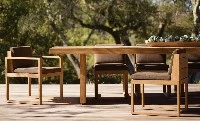
Under a 2.5m x 2.5m square parasol, arranging a heavy-duty outdoor dining table with matching stackable chairs ensures clean sightlines and comfortable walkway clearance height for waiting staff.
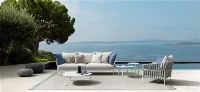
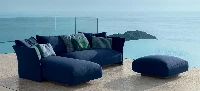
For casual lounge zones or hotel poolside decks, replacing standard dining sets with a deep-seated outdoor sectional sofa creates an inviting atmosphere beneath the canopy.
For venues seeking a permanent structural anchor that seamlessly integrates with modular umbrellas, building a commercial louvered pergola over the main bar area while using square parasols for satellite seating offers the ultimate flexible weather management solution.
❓ FAQ:
Q1: What is the most versatile square umbrella size for a standard commercial cafe patio?
The 2.5m x 2.5m (8.2ft x 8.2ft) size is the industry standard. It maps precisely onto standard 4-top table layouts, provides adequate clearance for servers, and tiles symmetrically into larger 2x2 or 1xN pavilion grids.
Q2: How do square umbrellas prevent rain from dripping between tiled units?
Commercial square umbrellas feature built-in alignment channels that accept flexible rain gutters. These gutters zip or clip between canopy edges, channeling rainwater away into internal frame drainage spouts.
Q3: What is the ideal clearance height under a commercial cafe umbrella?
The lower edge of the umbrella canopy frame should maintain a minimum ground clearance of 2.1 to 2.2 meters when fully open. This guarantees that tall guests and servers carrying food trays can walk beneath safely without head contact.
Q4: Why is 6063-T5 aluminum preferred over steel or wood for commercial umbrella frames?
6063-T5 aluminum alloy offers an optimal strength-to-weight ratio, high wind resistance, and natural rust immunity. Unlike wood, it will not warp, rot, or split under changing moisture conditions.
Q5: How do wind sensors work on motorized commercial umbrellas?
Integrated anemometer sensors monitor continuous wind speeds. When gusts exceed pre-set safety thresholds (such as 40 km/h), the automated control system automatically closes the canopy to prevent structural stress and wind damage.
Q6: What base mounting option saves the most floor space on a tight dining terrace?
Flush in-ground sockets or concrete deck plates provide the highest spatial efficiency. They eliminate bulky above-ground bases, removing tripping hazards and allowing table legs to sit directly adjacent to the support pole.
Q7: Can square cantilever umbrellas be tiled together as effectively as center-pole units?
Yes, provided the cantilever units are engineered with 90-degree square canopy geometry and uniform mast heights. Placing cantilever poles along the outer boundary allows the canopies to meet flush over the dining area without any center poles blocking table arrangements.
Q8: What commercial fire safety ratings are required for outdoor restaurant canopies?
Most municipal building codes and commercial landlord agreements require shade fabrics to comply with NFPA 701 (Standard Methods of Fire Tests for Flame Propagation of Textiles). Always verify fire certificates before installing shade equipment in public spaces.