


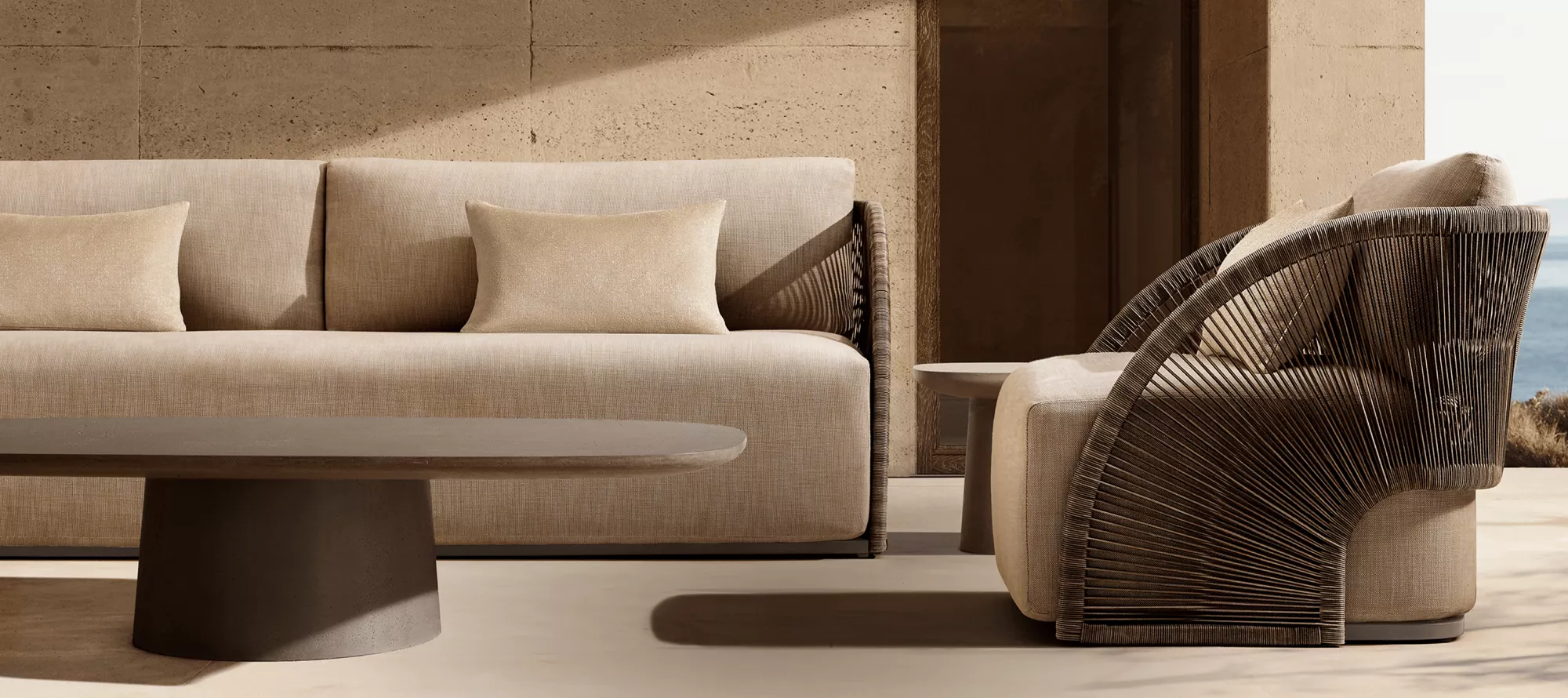
When managing high-stakes bulk procurement for commercial venues, selecting the wrong specification can devastate a brand's reputation and bottom line. Imagine placing a high-end Luxury garden sectional sofa on a windswept rooftop lounge, or arranging heavy-use Backyard modular patio furniture around an active poolside deck, only to face structural failures within months. To prevent costly liabilities, smart buyers partner with a certified Contract outdoor furniture supplier that understands the strict physics of commercial-grade manufacturing.

If you are sourcing Private label patio furniture directly from manufacturers, relying on vague "commercial-grade" claims is a massive risk. Instead, you must audit products based on verified international certifications. Specifically, understanding the engineering differences within the UL 4041 EN 581 BIFMA standards framework is critical to identifying furniture that can withstand heavy public abuse.
1. The Core Philosophies: Why One Size Doesn't Fit All 🧭
Not all certificates are born equal. The biggest trap is assuming a standard written for indoor corporate offices translates perfectly to an exposed seaside terrace.
For example, the ANSI/BIFMA X5.41 standard was developed primarily to regulate public-space seating inside commercial indoor environments, meaning it lacks exposure-testing depth. Conversely, EN 581-2 is Europe's dedicated outdoor standard, written explicitly for residential, contract, and camping environments.
Then there is UL 4041, an incredibly focused protocol written by UL Solutions specifically for the North American outdoor market to target mechanical hazards, structural strength, and corrosion risks.
📊 Regulatory and Geographic Scope Comparison
| 📋 Certification Metric | 🇺🇸 UL 4041 | 🇪🇺 EN 581 (Contract Class) | 🏢 BIFMA X5.41 (Outdoor App) |
| Primary Region 🗺️ | North American hospitality | European Union & export zones | Global commercial & corporate projects |
| Testing Philosophy | Focuses heavily on real-world stability, tip-overs, and corrosion | Mechanical shear testing and basic material durability benchmarks | Extreme structural abuse and high-frequency heavy usage |
| Auditing Frequency | Requires ongoing factory audits to maintain certification labels | Typically a one-time type testing certification | Manufacturer self-declaration or lab-witnessed validation |

2. Mechanical Torture Tests: Load Thresholds & Drop Forces 🏋️♂️
How do these standards actually try to break a chair? The differences lie in their load metrics. BIFMA's testing is notoriously brutal because it assumes an office lounge chair experiences heavy, 24-hour shifts. It utilizes intense static load testing and destructive drop tests.
However, UL 4041 goes a step further by evaluating extreme dynamic forces and environmental factors. Under UL 4041, products must undergo dynamic cyclic loading that simulates a heavy user repeatedly dropping their weight on the frame over a decade of use.
📊 Structural Strength & Load Thresholds
| 💥 Load Parameters | 🇺🇸 UL 4041 Standard | 🇪🇺 EN 581-2 Standard | 🏢 BIFMA X5.41 Standard |
| Static Proof Load ⚖️ | 400 lbs (Functional capacity) | 200 kg (~440 lbs) for contract level | Up to 600 lbs depending on weight category |
| Dynamic Drop Impact | Drops 225 lbs weight from a set height | Drops 75 kg weight repeatedly | Drops 225 lbs to evaluate impact resistance |
| Backrest Pull Test | Pulls backrest outward with sustained tension | Assesses joint fatigue at 300 Newtons | Demands 120 lbs to 150 lbs force resistance |

3. Stability, Tipping, and Weather Endurance 🌪️
The real danger in public spaces isn't just a frame collapsing-it is a chair tipping over when a guest leans over the armrest. This is where stability testing takes center stage. While BIFMA focuses on flat-floor office tipping, UL 4041 simulates uneven, yielding outdoor terrains like grass, gravel, and poolside slates to measure tipping resistance.
Furthermore, because outdoor frames are exposed to coastal humidity, UL 4041 demands verified corrosion resistance. Metal parts must pass intense salt spray aging chambers to ensure the raw structural integrity of materials-such as a 6063-T5 aluminum alloy frame-is not degraded by oxidation.
📊 Stability, Durability, and Environmental Tests
| 🌦️ Weather & Safety Metric | 🇺🇸 UL 4041 Standard | 🇪🇺 EN 581-2 Standard | 🏢 BIFMA X5.41 Standard |
| Multi-Surface Tipping 📐 | Mandatory testing on flat and mock-yielding surfaces | Basic weight-tilt tests on rigid platforms | Evaluates tilt-mechanisms and center of gravity |
| Corrosion Exposure 🌫️ | Requires strict salt-fog testing for raw metal frames | Vague chemical corrosion guidelines | Does not natively focus on outdoor corrosion |
| Pinch Points & Hazards | Heavy focus on finger traps and folding mechanisms | Standard dimensional clearances to avoid pinning | High focus on mechanical entrapments |
4. The Procurement Takeaway
Insider Quality Checklist: Never accept a supplier's verbal confirmation of "meeting standards." True compliance requires showing the original certificate containing the laboratory seal. Look for a complete passivation treatment note on welded areas if you are sourcing steel, or ensure any underlying polyurethane webbing is UV-stabilized.
Before transferring funds to an offshore manufacturer, demand third-party verified test reports from trusted international laboratories like the SGS Group, TUV Rheinland, or Intertek. If your market is North America, possessing UL 4041 testing ensures your products pass severe safety checks and will shield your business from costly product liability claims.
5. Global Sourcing FAQ 💬
Q1: Can BIFMA standards alone guarantee that an outdoor chair won't rust?
A: No. Standard BIFMA testing focuses on indoor structural wear. It does not measure long-term atmospheric degradation, whereas UL 4041 features rigorous corrosion checks.
Q2: Why is UL 4041 considered the safest benchmark for US commercial outdoor seating?
A: Unlike general standards, UL 4041 addresses risks specific to outdoor terrains, such as wind-tipping, sun-degraded plastics, and surface-yield issues.
Q3: How does EN 581 handle safety testing for public contract spaces compared to residential ones?
A: EN 581 divides furniture into three categories: domestic, contract (restaurants, hotels), and camping. Contract certification requires nearly double the static load thresholds of residential testing.
Q4: Does a higher load capacity automatically mean a chair passes commercial standards?
A: Not at all. High load capacity only measures vertical strength. It does not evaluate joint fatigue, dynamic drops, or lateral stability under real-world conditions.
Q5: What is the main difference in stability testing between UL 4041 and BIFMA?
A: UL 4041 applies weights to seat edges on non-flat surfaces to replicate outdoor terrain, while BIFMA testing primarily assumes hard, level indoor office floors.
Q6: Which international laboratory is certified to perform EN 581 testing?
A: Leading certification organizations like TUV Rheinland, SGS, and Intertek are fully equipped to issue official EN 581 compliance certificates.
Q7: What material is best suited to pass both UL 4041 and EN 581 corrosion tests?
A: Marine-grade 316 stainless steel and heavy-wall extruded aluminum alloys coated with architectural-grade thermosetting powder are the absolute best performers.
Q8: Do these standards apply to modular deep-seat cushions?
A: These standards primarily evaluate the load-bearing metal or wood frame structure, but they require that cushion components do not slip, fail, or cause sliding safety hazards.


