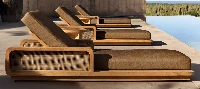

Desert hospitality spaces in Dubai, Riyadh, or Arizona test wooden assets daily. Relative humidity drops below 10%, daytime solar heat climbs past 45°C, and night brings sudden cooling.
If you need to know How to maintain teak furniture in dusty desert climates without drying out the wood?, focus on managing wood moisture and blocking windblown sand abrasion. Dry desert air pulls surface moisture out faster than interior cells can transfer it, triggering rapid surface shrinking, end-grain checking, and deep cracks.
Standard timber splits quickly here. High-density Grade-A teak heartwood holds up much better thanks to its natural rubber resins (caoutchouc) and micro-crystalline silica reserves (silica). Keeping these pieces in commercial service requires specific hydration routines and penetrating sealers built for extreme heat.

1. Physical Mechanics: Desert Air, Dust, and Thermal Shock
Wood constantly adjusts its internal moisture to match the local equilibrium moisture content. In tropical resorts, surrounding humidity keeps wood cells swollen. In dry deserts, hot winds pull moisture out of the outer wood layers faster than it can move from the core.
This imbalance creates physical tension. The shrinking exterior pulls against the moist interior, creating fine cracks along the wood grain. Daily solar heat expands the wood, and cold desert nights contract it. This diurnal thermal shock turns tiny surface checks into structural splits over time if left unprotected.
2. Visual Comparison: Arid vs. Tropical Timber Care
| 🌵 Climate Metric | ☀️ Desert / Arid Environment | 🌧️ Tropical / Humid Environment |
| Primary Threat | Surface desiccation, end-grain checking, windblown sand scouring | Mold growth, fungal rot, timber swelling |
| Humidity Range | 5% to 20% RH | 75% to 95% RH |
| Best Surface Protection | Water-based penetrating synthetic sealer | Micro-porous breathable sealer with biocide |
| Cleaning Routine | Daily dry dust blow; monthly soft wash | Bi-monthly anti-fungal washing |
| Sand Abrasion | Heavy (Quartz sand acts like coarse sandpaper) | Low to moderate dust build-up |
| Target Moisture Level | Kiln drying down to 8%–10% EMC | Kiln drying down to 12%–15% EMC |

3. Terrace Seating: Dust Management and Fabric Care
Open-air dining decks and rooftop lounges accumulate airborne dust in wood grain crevices daily.
Figure 1: Setting up solid teak garden chairs in desert spaces requires clear dusting routines to stop silica grit from grinding into joinery.
Resort crews maintaining dining areas filled with solid teak garden chairs need strict cleaning methods. Desert dust contains fine quartz particles. Rubbing dusty furniture with dry, rough cloths drags these hard grains across the surface, scratching finishes and wearing down natural timber oils.
Crews should clear loose dust with dry microfiber cloths or low-pressure air blowers before using water. Sun exposure also breaks down cushion backings over time.
Ordering teak outdoor sofa cushions replacement sets built with solution-dyed acrylic fabrics prevents severe solar bleaching. Quality replacements use reticulated open-cell foam inside, letting fine sand rinse out easily during routine washing without trapping grit inside the seat padding.
4. Protective Finishes in Desert Heat
| 🧪 Finish Type | 🌵 Desert Performance | 🧹 Labor Needed | 🛡️ Protection Method |
| Water-Based Teak Sealer | Best (Keeps internal moisture stable without drying out) | Reapply once a year | Synthetic polymers shield UV and seal pores |
| Traditional Teak / Linseed Oil | Fails (Oxidizes above 40°C; stays sticky) | Reapply every 2 months | Creates a tacky coating that traps windblown dust |
| Hard Polyurethane Varnish | Fails (Cracks as timber expands; peels off) | Full stripping required | Hard shell breaks when thermal shock occurs |
| Unsealed Raw Finish | Good (Forms a silver patina; minor surface checks) | Regular dusting and soft wash | Natural resin protects wood; surface slowly silvers |

5. Protecting Auxiliary Assets from Wind and Sand
Grounds team fixtures face direct wind and blowing sand along resort walkways and pool decks.
Figure 2: Installing commercial outdoor teak trash cans and planter boxes for hotel grounds offers durable timber performance against wind-driven sand.
Using commercial outdoor teak trash cans and planter boxes for hotel grounds creates a unified design across outdoor areas. However, planters hold damp soil inside while dealing with dry 45°C ambient air outside.
This moisture difference makes the inner boards expand while outer faces shrink. To keep panels flat, commercial planters require fitted internal plastic liners with bottom drainage.
Coating interior and exterior boards with a penetrating water-based sealer stabilizes the wood structure. Grounds teams should wash these fixtures using a pH-neutral teak cleaner and a soft-bristle brush monthly to remove built-up sand and mineral salts.

6. Shipping Logistics and Climate Transition
Shipping wood furniture from humid factory zones to dry desert project sites presents clear climate transition risks.
Figure 3: Designing teak outdoor sofa packaging and flat pack shipping efficiency lowers ocean freight overhead while guarding timber against climate shock.
When fresh teak furniture moves from humid ocean containers into dry desert air, sudden evaporation causes immediate timber stress. Checking teak outdoor sofa packaging and flat pack shipping efficiency requires looking at both factory drying processes and container space use.
Factories supplying dry regions must run automated kiln drying cycles to lower timber moisture down to 8%–10% equilibrium moisture content. Knock-down joinery design packs flat into tight cartons, optimizing container volume and keeping wood panels shielded in climate-buffered wrap until unboxing day.
On-site assembly teams connect precision parts using mortise and tenon joinery locked with wood dowels. This traditional interlocking structure lets frame components shift slightly during temperature changes without pulling screws loose.
7. Operational Desert Maintenance Schedule
| 🗓️ Frequency | 🔧 Task | 🧰 Tools & Materials | 🎯 Purpose |
| Daily / Post-Storm | Surface dust removal | Microfiber duster or low-pressure air blower | Removes silica grit before it scratches the grain |
| Monthly | Hydration wash | pH-neutral teak cleaner, soft-bristle brush | Rinses trapped sand and airborne salts from pores |
| Bi-Annually | Joint inspection | Hand hex keys & soft mallet | Checks frame stability after intense temperature cycles |
| Annually | Sealer coat refresh | Water-based penetrating sealer | Restores UV barriers and keeps internal moisture balanced |

8. Compliance & Structural Testing Standards
Commercial teak furniture specified for high-end resort projects should meet recognized international standards:
ASTM D143: Standard testing methods for timber specimens evaluating shear strength, Janka hardness, and bending resistance.
EN 581-1: European safety requirements for general contract outdoor furniture used in commercial venues.
EN 581-2: European mechanical safety and seating stability standards under heavy usage.
ISO 9001: Quality management certification guaranteeing precise kiln drying and exact joinery tolerances.
FSC certification: Forest Stewardship Council verification confirming timber originates from responsibly managed plantations.
SVLK timber legality: Indonesia's mandatory chain-of-custody standard ensuring 100% legal timber sourcing.
ISO 14001: Environmental management system certification controlling waste during timber processing.
REACH: European Union regulation verifying that sealers and finishes contain no heavy metals or hazardous chemicals.
FAQ:
Q1: How to maintain teak furniture in dusty desert climates without drying out the wood?
To maintain teak furniture in dry desert climates without drying out the wood, apply a penetrating water-based sealer once a year to lock in internal moisture. Clear surface dust daily with dry microfiber cloths or air blowers instead of dragging rough cloths over the grain. Wash pieces monthly using a mild teak cleaner and soft brush to flush out quartz dust, and verify timber was kiln-dried to 8%–10% moisture content before installation.
Q2: Why does traditional teak oil fail on furniture used in desert resorts?
Traditional teak oils rely on natural fats like linseed or tung oil that break down under intense sun exposure over 40°C. In dry desert regions, these oils remain sticky, trapping windblown quartz sand on the wood surface and forming an abrasive grit that damages the grain.
Q3: How can maintenance teams stop end-grain checking on large outdoor tables?
End-grain checking happens when board ends evaporate moisture faster than the center core. Maintenance crews can prevent deep splits by treating table ends with water-based penetrating sealers to slow surface evaporation. Placing outdoor tables under shaded structures or using breathable covers during mid-summer heatwaves also helps reduce direct thermal shock.
Q4: How often do resort grounds teams need to replace outdoor seating cushions in dusty zones?
Instead of replacing entire cushions every year, resorts can order replacement cushion sets made with solution-dyed acrylic covers and reticulated open-cell foam cores. Flushing cushions with clean water quarterly removes trapped dust. Quality cushion replacements last five to seven years in desert conditions before needing fresh fabric.
Q5: Can unsealed natural teak survive desert heat without splitting?
Yes. High-grade teak heartwood contains natural rubber resins and silica that resist deep structural rot and severe warping. Unsealed teak exposed to desert sun slowly develops a silvery patina. While minor surface hairline checking will appear during dry spells, the inner frame remains structurally sound for decades.