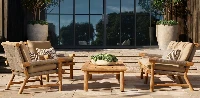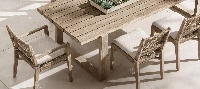

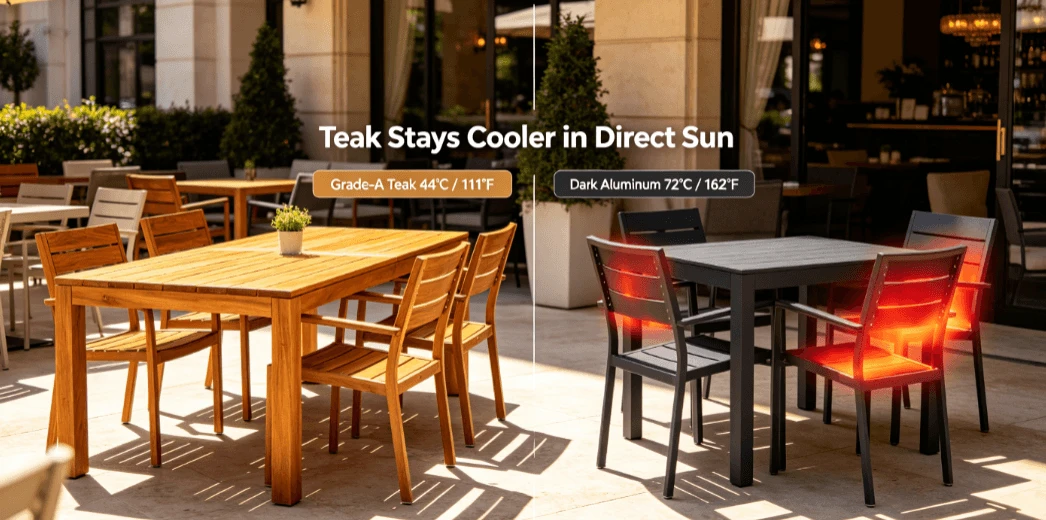
☀️ Executive Technical Summary for Commercial Buyers: When specifying outdoor seating for high-exposure commercial dining patios, thermal performance directly impacts guest occupancy and revenue per square foot. While metallic alloys rapidly store radiant solar energy and reach dangerous skin-scald thresholds (exceeding 65°C / 149°F), commercial-grade teak restaurant furniture utilizes a dense cellular matrix that insulates against ambient temperature spikes. This engineered natural dissipation ensures seats stay comfortable to the touch, drastically reducing guest turnover caused by thermal discomfort.
1. The Thermal Reality of Outdoor Commercial Dining
For hospitality procurement managers, luxury resorts, and high-end dining venues, selecting outdoor furniture involves far more than aesthetic alignment. Direct solar irradiance turns outdoor patios into severe thermal environments during peak afternoon dining hours.
When a guest sits on an outdoor chair exposed to midday sunlight, their impression of your establishment is immediately dictated by physical touch. If the seat pan or armrest has stored excessive solar radiation, it creates immediate tactile discomfort. In extreme cases, high surface heat on metal frames poses genuine skin safety risks.
While metals like steel and aluminum are celebrated for structural rigidity, their intrinsic physical properties make them thermal conductors. Conversely, high-grade teak restaurant furniture acts as a natural thermal barrier. Understanding these physical differences allows commercial project specifiers to protect both guest comfort and outdoor revenue streams.
2. Material Physics: Cellular Wood Structure vs. Metallic Thermal Conductivity
To understand why timber handles intense sunshine superiorly, we must examine material physics without relying on complex mathematical formulas.
Metals possess dense atomic lattices filled with free electrons. When sunlight strikes a dark or powder-coated aluminum surface, radiant energy converts rapidly into kinetic thermal movement. The metal absorbs heat uniformly and transfers it immediately to anything touching its surface.
By contrast, Grade-A teak (Tectona grandis) features a porous cellular micro-structure filled with natural air pockets. Air is an exceptional thermal insulator. Solar radiation striking a teak tabletop heat up only the top microscopic layer, while the natural oils (tectoquinone) and organic fibers dissipate heat laterally rather than storing it deep within the core.
🌡️ Real-World Thermal Performance Metrics
Under an ambient temperature of 35°C (95°F) with direct UV exposure over 180 continuous minutes, surface temperatures vary drastically across common commercial outdoor materials:
| Material Type | Surface Coating / Finish | 60-Min Sun Exposure (°C / °F) | 180-Min Peak Heat (°C / °F) | Touch Safety Rating |
| Grade-A Teak Wood | Natural Unfinished / Teak Oil | 41°C / 105.8°F | 44°C / 111.2°F | 🟢 Highly Safe |
| Powder-Coated Aluminum | Dark Matte Finish (Black/Charcoal) | 61°C / 141.8°F | 72°C / 161.6°F | 🔴 High Burn Risk |
| Powder-Coated Aluminum | Light Finish (White/Beige) | 50°C / 122.0°F | 58°C / 136.4°F | 🟡 Moderate Discomfort |
| 316 Stainless Steel | Brushed / Polished | 58°C / 136.4°F | 67°C / 152.6°F | 🔴 High Burn Risk |
| Wrought Iron | Black Anti-Rust Coating | 65°C / 149.0°F | 78°C / 172.4°F | 🔴 Severe Burn Hazard |
For high-turnover dining areas, space-saving teak outdoor folding chairs offer an ideal solution. They provide flexible layout configurations while maintaining a comfortable surface temperature even during unshaded lunch rushes.

3. Heat Retention & Cooling Dynamics in Commercial Outdoor Spaces
Absorption is only half the physical equation; heat retention and dissipation determine how long a patio remains unusable after direct sunlight subsides or shifts behind clouds.
Metallic seating acts as a thermal mass reservoir. Once aluminum or steel chairs absorb high thermal energy during peak hours, they retain that heat long after the sun begins to set. Radiant heat continues to emit from metal chair backs and seat pans, creating a uncomfortable micro-climate directly around the seated diner.
Wood, however, achieves thermal equilibrium with ambient shade rapidly. Because it stores low volumetric heat, teak surface temperatures drop within minutes of entering shadow or receiving a breeze.
This thermal adaptability makes teak the undisputed material of choice for high-volume venues. Furthermore, evaluating teak vs aluminum outdoor furniture for high humidity areas reveals that teak does not suffer from condensation scalds or internal tube corrosion when tropical heat mixes with coastal ocean air.
4. UV Degradation, Thermal Expansion, and Structural Longevity
Direct sun exposure attacks commercial furniture on two distinct fronts: thermal radiation and ultraviolet (UV) chemical breakdown.
Metal Challenges in High-Sun Environments
Thermal Expansion Stress: Metal frame joints expand at different rates than weld points and fasteners, leading to micro-fractures over repeated heating and cooling cycles.
Powder-Coat Degradation: Intense UV light breaks down chemical bonds in polyester coatings, causing chalking, discoloration, and peeling. Once the bare metal beneath is exposed, moisture triggers rapid oxidation.
Structural Deformation: Sheet metal tabletops buckle under extreme sun heat due to unmitigated linear expansion.
Teak Defense Mechanisms in High-Sun Environments
Natural UV Sheathing: Under UV exposure, teak's outer surface oxidizes naturally into a distinguished silver-grey patina. This patina serves as a protective shield against further sun erosion without compromising interior timber density.
Resilience to Checking: Because teak contains high natural rubber and oil content, the grain flexes slightly under heat without warping or splitting.
Stable Joint Integrity: High-end commercial joinery uses mortise-and-tenon construction secured with teak dowels, ensuring joints expand uniformly without loosening hardware.

5. Architectural Versatility: Cabanas, Pool Decks, and Rooftops
Commercial hospitality design requires seamless transitions between active outdoor dining and relaxed lounge zones. High thermal performance is especially critical around pool decks and beach clubs where guests touch furniture with bare skin or wet swimwear.
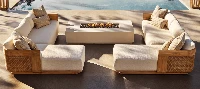
For luxury oceanfront resorts, specifying a custom teak outdoor sectional sofa for luxury swimming pool cabanas provides guests with safe, cool seating that stays comfortable all day. Combining these modular sectionals with a dedicated teak outdoor daybed sofa creates an inviting retreat where guests can lounge without fear of touching blistering metal frames or hot synthetic rattan.
🛡️ Commercial Certifications & Testing Standards
To ensure long-term performance under punishing outdoor conditions, commercial teak furniture must comply with global testing frameworks:
EN 581-1 / EN 581-2: European safety and mechanical strength standards for commercial outdoor seating and tables.
FSC Certification: Ensures all wood originates from responsibly managed forests adhering to environmental and social standards.
SVLK Certification: Indonesian Legal Wood Assurance System certifying sustainable timber sourcing and chain of custody integrity.
ISO 9227: Salt spray corrosion testing for stainless steel hardware embedded inside commercial teak joinery.
GREENGUARD Gold: Verifies low chemical emissions for furniture deployed in enclosed or semi-covered outdoor dining spaces.
6. Comprehensive Material Comparison Matrix
The matrix below contrasts Grade-A teak against popular metal alternatives across major commercial outdoor performance metrics:
| Performance Metric | Grade-A Teak Wood | Powder-Coated Aluminum | Stainless Steel (304/316) | Cast Wrought Iron |
| Direct Sun Touch Safety | 🌟🌟🌟🌟🌟 (Stays Cool) | 🌟🌟 (Heats Rapidly) | 🌟 (Scalding Risk) | 🌟 (Extreme Heat) |
| Heat Dissipation Speed | 🌟🌟🌟🌟 (Fast) | 🌟🌟 (Slow) | 🌟🌟 (Slow) | 🌟 (Extremely Slow) |
| UV Surface Degradation | Patina Oxidation (Protective) | Coating Chalking / Fading | Heat Discoloration | Coating Failure / Rust |
| Salt Air Corrosion Resistance | 🌟🌟🌟🌟🌟 (Immune) | 🌟🌟🌟 (Pitting Risk) | 🌟🌟🌟🌟 (Passivated) | 🌟 (Rust Prone) |
| Expected Commercial Lifespan | 25+ Years | 5 - 8 Years | 10 - 15 Years | 3 - 5 Years |
| Maintenance Need | Low (Optional Oil/Patina) | Medium (Touch-up Paint) | Medium (Metal Polish) | High (Anti-Rust Coating) |

7. Total Cost of Ownership (TCO) & ROI Analysis
When evaluating initial capital expenditure against long-term operational replacement costs, teak proves significantly more economical for commercial hospitality enterprises over a 10-year period.
Metal Seating Financial Reality: Lower initial purchase cost, but requires frame replacement every 3 to 5 years due to chipped powder-coating, thermal stress fractures, or unsightly heat discoloration.
Teak Seating Financial Reality: Higher initial investment offset by a 20+ year service life. Zero structural degradation from thermal cycles, zero rust risk, and minimal annual maintenance costs.
8. Maintenance Protocols for High-Exposure Teak Furniture
Maintaining commercial teak in peak condition requires minimal effort when proper operational protocols are followed:
Bi-Weekly Cleansing: Hose down tables and chairs with fresh water and mild soap to remove airborne environmental dust and ocean salt residues.
Seasonal Hardware Inspection: Ensure internal 316 stainless steel fasteners remain tight following seasonal humidity fluctuations.
Patina Management: Choose whether to maintain the natural honey-gold wood tone with breathable teak protector or allow the wood to mature naturally into its silvery UV-protective patina.
FAQ:
Q1: Does teak restaurant furniture get hot enough in direct summer sunlight to burn guests?
No. Unlike metals or synthetic plastics, Grade-A teak possesses a naturally low thermal conductivity rate and high cellular air density. Even under prolonged midday solar exposure exceeding 38°C (100°F) ambient temperatures, teak surface heat remains significantly below human skin thermal injury thresholds, making it completely safe and comfortable for bare-skin contact.
Q2: How does teak compare to powder-coated aluminum in coastal, high-humidity restaurant patios?
Teak holds a distinct advantage in coastal, high-humidity dining environments. Aluminum frames can trap salty moisture inside hollow tubing, causing internal corrosion or blistering beneath exterior powder coatings. Teak contains natural silica and water-repellent oils that resist salt air corrosion, mold, and humidity-induced swelling without requiring synthetic protective paints.
Q3: What international certifications should hospitality buyers verify when sourcing commercial outdoor teak?
Commercial buyers should verify FSC Certification or SVLK Certification for legal timber origin and sustainable forest management. For structural safety and commercial durability, furniture should meet European EN 581 standards. Additionally, internal joinery hardware should be tested under ISO 9227 salt spray standards to prevent internal fastener corrosion.
Q4: Will intense heat cause teak tables and chairs to warp or crack over time?
High-grade commercial teak exhibits minimal volumetric movement under heat because of its low grain shrinkage ratio and dense natural oil profile. When crafted with proper kiln-drying techniques (reducing internal moisture to 8%-12%) and traditional mortise-and-tenon joinery, teak expands and contracts uniformly, preventing major warping, splitting, or joint separation under extreme temperature fluctuations.