
High-traffic commercial lounges, luxury pool decks, and upscale residential terraces demand seating that balances structural durability with deep relaxation. When procurement managers specify a comfy outdoor sofa or arrange an expansive modular outdoor sofa footprint, they are investing heavily in guest experience. Yet, many operators watch their capital assets prematurely degrade because their maintenance teams treat outdoor textiles like indoor living room fabrics. Moisture retention, UV-induced polymer degradation, and improper chemical washes quickly turn the most comfortable outdoor sofa into a faded, structural liability.
To prevent this costly depreciation, property managers must understand how to properly maintain an outdoor sofa under real-world weather conditions.
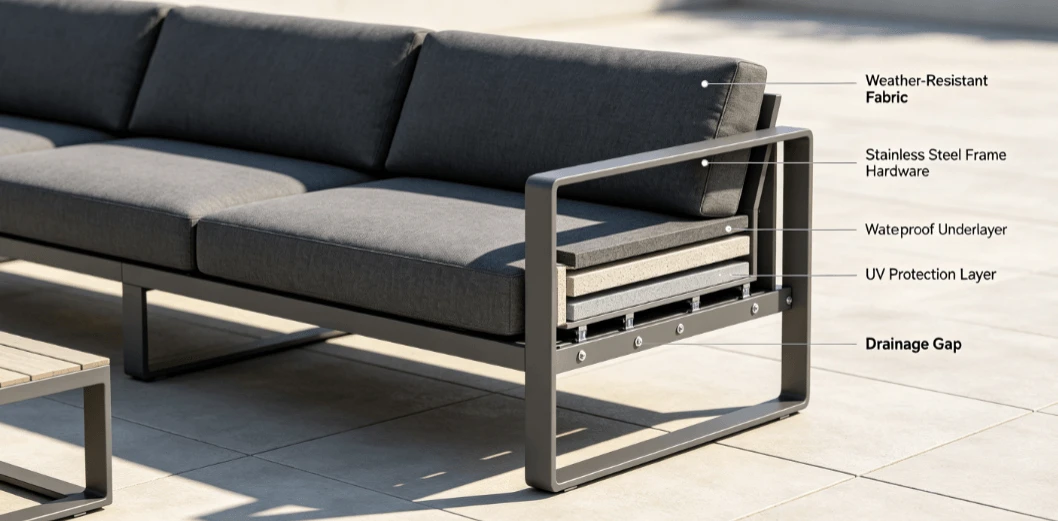
Cushion failures do not happen overnight; they occur when water gets trapped inside internal structural cells. Standard high-density foam absorbs water like a sponge, causing the internal wood or metal framing components to remain damp for extended periods. Once moisture settles into the inner core, microbial degradation destroys the structural integrity of the assembly from the inside out.
🛋️ Section 1: Core Architecture of Cushion and Foam Maintenance
High-performance outdoor cushions rely on specialized layering. Understanding how these materials react to water determines how long the seating layout will last.
💧 Advanced Moisture Evacuation and Reticulated Foam Management
Standard polyurethane cushioning fails outdoors because its closed-cell structure traps water. Premium commercial systems utilize quick-dry reticulated foam, which features completely open pores that allow water to drain away almost instantly.
Gravity Draining Protocol: After heavy rainfall, never leave cushions flat on the frame. Stand each cushion vertically on its zippered edge. This allows capillary action to pull water down through the open cells and out via the drainage seam.
Air Flow Spaces: Keep a clear 1-inch gap between the back cushion and the rear frame during storage to prevent stagnant, humid air pockets from forming.
⚠️ Pitfall Warning: The Plastic Wrap Trap
Never wrap outdoor foam cores in non-breathable plastic film to make them waterproof. While this may keep external water out initially, it traps ambient condensation inside the cushion shell. Temperature changes cause this trapped moisture to sweat, creating an unventilated greenhouse environment that rots the internal seams within months.
Performance Cushion Core Technical Properties
| Cushion Core Type | Pore Structure Design | Water Retention Rate | Air Flow Capacity | Expected Structural Lifespan |
| Quick-Dry Reticulated Foam | 🟢 Open Mesh Cells | < 2% After 30 Mins | High Continuous Flow | 8–10 Years |
| Standard Polyurethane Core | ❌ Closed Compact Cells | > 45% After 24 Hours | Stagnant/No Venting | 2–3 Years |
| Blended Polyester Fiber Fill | 🟡 Layered Strands | 20% Core Pooling | Medium Intermittent | 3–4 Years |
🪵 Section 2: Substrate Engineering and Frame Preservation
While cushion care is vital, the frame beneath carries the structural load. A beautifully maintained cushion is useless if the underlying support frame sags or suffers from structural joint failures. Large properties purchasing through a resort teak outdoor furniture wholesale channel need to manage different care cycles for wood and metal components.
1. Architectural-Grade Powder-Coated Aluminum Frames
Premium metal frames utilize extruded aluminum alloys protected by baked-on finishes. While impervious to rust, these frames are highly vulnerable to surface scratches that allow environmental elements to creep beneath the protective coat.
Oxidation Mitigation: Clean metal frames twice a year using a soft microfiber cloth and a mild pH-neutral detergent. Avoid abrasive stiff-bristle brushes, which create micro-scratches that trap corrosive airborne pollutants.
Galvanic Isolation Checks: Ensure all hardware connections feature proper nylon isolation washers. Direct contact between stainless steel bolts and aluminum frames triggers galvanic reactions that bubble the finish.
2. Tectona Grandis (Plantation Teak) Supports
Premium wooden platforms rely on high natural oil content to resist rot. Over time, UV exposure bleaches the wood, transforming the warm golden tones into a silver-grey patina.
Oxalic Acid Stripping: Apply a specialized oxalic acid wood cleaner once a year to dissolve graying surface cells and reveal the fresh wood beneath. Always scrub parallel to the natural grain.
Sealer Application: Once dry, apply a specialized hydrophobic wood sealer to lock in natural oils and prevent ambient water absorption.

Structural Frame Degradation and Care Thresholds
| Material Base Substrate | Primary Weather Threat | Structural Weak Spot | Recommended Care Cycle | Expected Lifespan Extension |
| Powder-Coated Aluminum | Industrial Acid Rain | Joint Weld Points | Every 6 Months | 15+ Years |
| Grade-A Premium Teak | Ultraviolet Ray Drying | End-Grain Checking | Annually | 25+ Years |
| Structural Woven Resin | Polymer Chain Scission | High-Stress Weave Knots | Quarterly | 8+ Years |

🧪 Section 3: Textile Chemistry and Stain Protection Protocols
The outer fabric barrier faces constant friction, sun exposure, body oils, and chemical spills. Managing large layouts, like a premium resort outdoor modular sectional sofa installation, requires a deep understanding of textile science.
Modern high-performance fabrics utilize solution-dyed acrylic yarns, where color pigments are mixed directly into the polymer melt before extrusion. This ensures the color runs completely through the fiber, providing excellent tensile strength retention and fade resistance.
Deep Bleach Cleans: For stubborn organic stains or deep mold patches, solution-dyed acrylics can safely handle a diluted bleach solution (1 cup bleach per gallon of water) without fading.
Fluoropolymer Re-treatment: Deep washing eventually strips away the factory stain-resistant barrier. After every major cleaning cycle, spray the dry fabric with an aftermarket fluoropolymer fabric protector to restore its water-repellent properties.
Commercial Textile Stain Mitigation Matrix
| Stain Type | Chemical Compound Agent | Mechanical Action Method | Protection Step |
| Suntan Oils / Lotion | Liquid Dish Soap / Degreaser | Soft Sponge Blotting | Warm Water Rinse |
| Bird Droppings / Organic | Diluted Chlorine Bleach Mix | Nylon Brush Scrubbing | Open Air Dry |
| Tree Sap / Resin | Isopropyl Alcohol | Microfiber Swab Dab | Re-apply Water Guard |

📜 Section 4: Global Structural and Environmental Validations
When commercial buyers evaluate outdoor furniture, they look past marketing buzzwords and demand verified laboratory testing data. High-quality outdoor furniture collections are validated using global testing frameworks:
ISO 4892-2 Weathering Standard: Verifies that synthetic textiles and performance fibers can withstand thousands of hours of intense xenon-arc light exposure without fading or becoming brittle.
OEKO-TEX Standard 100: Certifies that every yarn, button, and accessory used in the cushions is free from harmful chemical levels and safe for direct skin contact.
GREENGUARD Gold Standard: Evaluates interior and exterior furniture elements to ensure they meet ultra-low volatile organic compound emission limits.
SGS Group Mechanical Safety Testing: subjects structural sofa frames to rigorous vertical load, fatigue drop, and impact evaluations to confirm commercial contract compliance.
FSC Certification: Guarantees all wood components originate from responsibly managed forests that provide verifiable environmental and economic benefits.
❓ FAQ
Q1: Can a pressure washer be used safely to clean outdoor sofa cushions?
Absolutely not. Using a pressure washer on premium fabrics forces water deep into the weave, tearing internal seam threads and breaking down the protective coatings. The intense pressure can also warp the underlying cushion filling. Stick to a standard low-pressure garden hose combined with gentle hand-scrubbing.
Q2: What causes high-performance performance fabrics to pill, and how can it be stopped?
Pilling happens when fabric surface fibers rub against loose dirt and fine sand particles ground into the weave. This friction causes broken fibers to twist into small lint balls. You can prevent pilling by vacuuming or brushing away dry surface dust weekly before it settles deep into the textile fibers.
Q3: How do you protect an outdoor sofa frame from salt-air pitting along the coast?
Coastal installations require regular fresh-water rinses every two weeks to remove accumulated salt crusts. For long-term protection, apply a thin layer of specialized marine metal wax to the clean aluminum frame every three months to block salt ions from reacting with the finish.
Q4: Why should cushion covers be kept zipped closed during the washing machine cycle?
Washing machine agitation can stretch out open zipper tracks and distort the cushion shape. Leaving the zipper open allows the metal teeth to snag and pull the delicate interior threads of the fabric. Always zip the covers fully closed and turn them inside out before starting a gentle wash cycle.
Q5: Is it safe to leave performance outdoor cushions exposed during freezing winter weather?
While the fabrics can handle freezing temperatures, the internal cushion foam faces risks. If water enters the foam core and freezes, the expanding ice crystals can rupture the cell walls, destroying the cushion's support and resiliency. Store cushions indoors during prolonged freezing months.
Q6: How do you remove sticky tree sap from delicate fabric weaves without damaging the color?
Do not scrape dried sap, as this can snap the woven threads. Instead, dampen a clean microfiber cloth with pure isopropyl alcohol and press it firmly against the sap spot to dissolve the sticky resins. Once softened, gently wipe the residue away and rinse the area with clean water.
Q7: What is the main reason structural stainless steel fasteners develop surface rust?
Surface rust, often called tea staining, occurs when airborne pollutants settle on the hardware. This buildup blocks oxygen from reaching the metal, preventing the steel from forming its natural protective chromium oxide layer. Wiping hardware down regularly blocks this corrosive accumulation.
Q8: How can you tell if an outdoor sofa cushion contains true open-cell foam?
Pour a glass of water directly onto the middle of the cushion core. If it is true open-cell foam, the water will run straight through the core and drain out the bottom within seconds. If the water pools on top or takes hours to seep through, it is standard closed-cell or low-density blend padding.
Q9: Can heavy commercial pool cleaning chemicals cause damage to outdoor fabrics?
Yes. Strong pool chemicals like chlorine off-gas from nearby water features, which can break down fabric coatings and weaken synthetic fibers over time. Place lounge seating a safe distance from pool edges, and rinse the assemblies down with fresh water daily.