Quick Summary
Choose outdoor upholstery fabric by specifying its fiber, coloring route and finish, then assessing the complete cushion for the seating zone. Solution-dyed acrylic, outdoor-specified olefin and suitable polyester options deserve comparison at the exact fabric-code level. Prioritize documented colorfastness for exposed seating, workable care for dining areas and whole-cushion water management beside pools.
Separate fiber, coloration and finishing
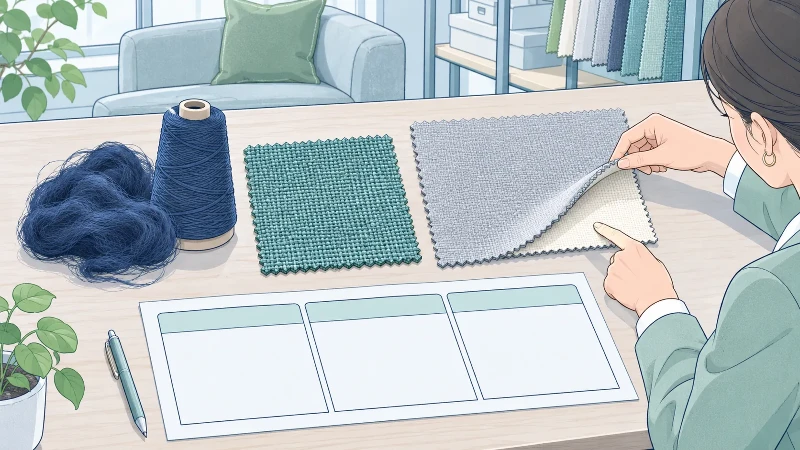
A quotation can describe a fabric as acrylic, solution-dyed and water-repellent without repeating itself. Acrylic identifies the fiber; solution-dyed describes a coloring route; water repellency concerns a different property, often associated with a finish. Each belongs in the specification.
In its explanation of solution-dyed fabric, Sunbrella describes color and UV-stabilized pigments incorporated into foundational fibers before yarn production. At the purchasing level, the distinction is color introduced into the fiber-forming material, rather than simply a color treatment applied later to yarn or fabric.
The production chemistry varies. The American Fiber Manufacturers Association's olefin resource describes polypropylene and polyethylene fibers and color added to polymer before or during melt spinning. "Solution-dyed" should therefore lead to a precise question: which fibers or yarns in this textile receive color during fiber production?
Finishing needs its own answer. Texsilk's finishing information separately describes solution-dyed olefin, a water-repellent treatment and an optional back coating. Knowing the coloring route does not tell you which finish or backing will arrive on the roll.
Build a shortlist across three fiber routes
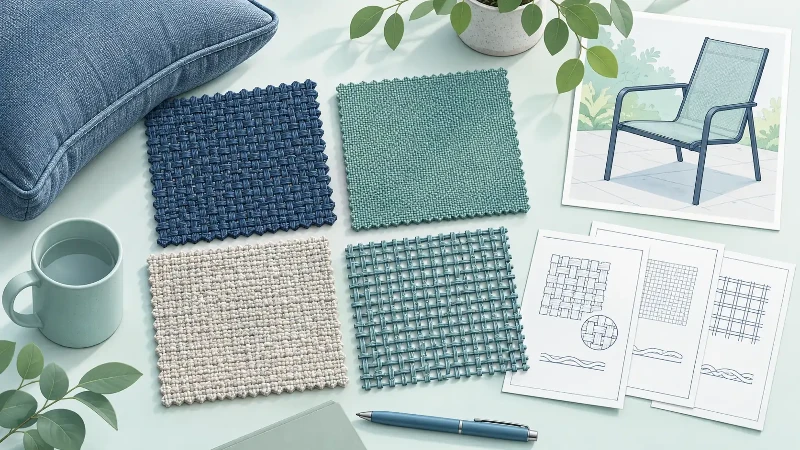
Compare outdoor upholstery textiles with a declared application, composition and construction. A fiber family is a useful starting point, but the sample and technical sheet turn it into a purchasable option.
| Fabric route | Reason to include it in the shortlist | Comparison that still matters |
|---|---|---|
| Solution-dyed acrylic | A color-focused starting point for exposed soft seating, with texture and weave choices to review. | Lightfastness evidence for the offered textile, preferred feel, construction and approved care. |
| Outdoor-specified, polymer-colored olefin | A candidate where low fiber moisture absorption is relevant to frequent wet use. | Outdoor suitability, weave and finish, followed by water management in the complete cushion. |
| Outdoor-specified polyester, including solution-dyed fabrics and blends | Keeps a desired pattern or construction in consideration rather than excluding it by fiber name. | Coloring of each component, backing and relevant performance evidence for that fabric code. |
These are reasons to investigate, not comparative performance ratings. A rough texture, unsuitable backing or impractical cleaning procedure can remove any candidate from the shortlist.
Solution-dyed polyester is a real option. For example, Brentano identifies its Raku upholstery fabric as a blend of solution-dyed acrylic and solution-dyed polyester. This establishes the existence of that combination; its properties should not be transferred to every polyester fabric or every acrylic blend.
Keep the comparison within the intended construction. A polyester mesh for a tensioned sling serves a different role from a soft woven cushion cover. Equally, two acrylic textiles can differ visibly in weave, texture and upholstery behavior. Select from samples appropriate to the furniture being made.
Decide when solution-dyed belongs in the specification
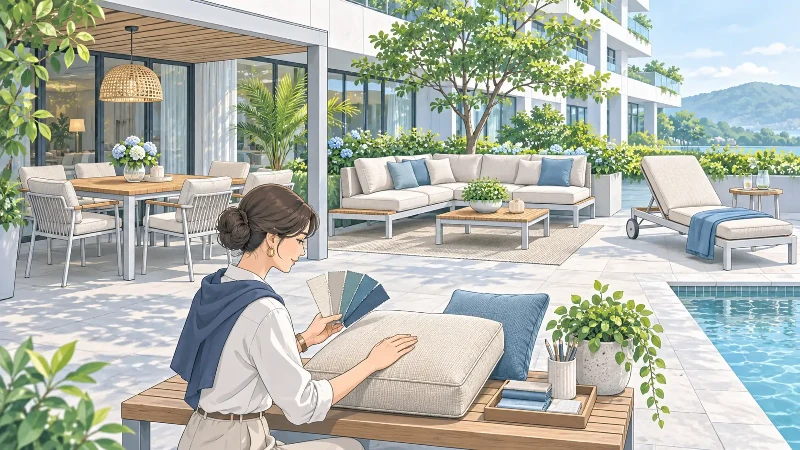
For furniture staying in strong daylight, a reasonable starting brief is to request solution-dyed outdoor fabric with relevant colorfastness evidence. That combines a defined coloring route with a way to assess the actual textile. The process label alone cannot settle how well the selected color will perform in service.
An alternative coloring route can still be considered against the same project requirements. Ask suppliers to identify it separately and compare the relevant results, construction, appearance and care. This allows an informed substitution decision without assuming that every conventionally dyed textile is unsuitable outdoors, or that every solution-dyed textile is equivalent.
For a covered dining area, the approved stain-removal procedure and seating feel may decide between otherwise acceptable options. For exposed cushions, color performance may carry more weight. Set these priorities before selecting colors so that the specification reflects the actual job the textile must do.
Let the seating zone determine the tradeoffs
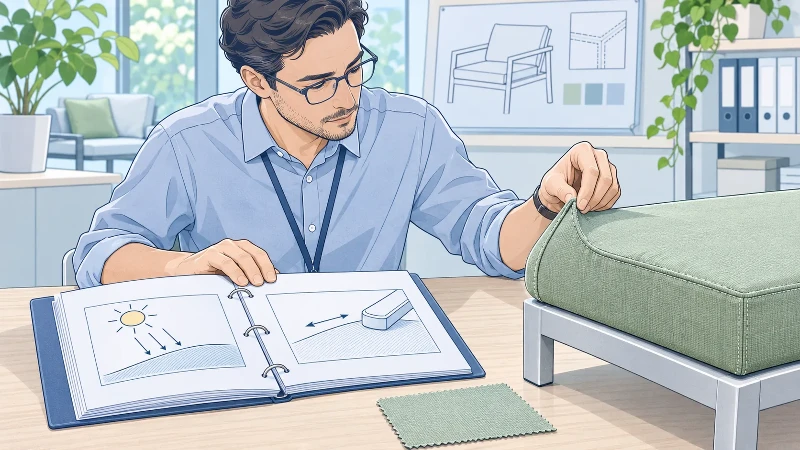
Different zones create different selection questions. Use this proposed purchasing framework to organize a project; it is not a set of certified fabric classes.
| Seating zone | Main decision | Practical comparison |
|---|---|---|
| Exposed lounge seating | Which textile balances documented color retention with the desired comfort? | Compare relevant lightfastness results and a sewn sample in the proposed color. |
| Poolside cushions | Can the assembly recover from the wet use expected on site? | Assess cover, seams, internal layers, filling and drainage together. |
| Outdoor dining | Can staff follow the permitted care procedure during service? | Review expected food and drink spills against the fabric and furniture instructions. |
| Covered or seasonally stored seating | Does the specification match actual exposure and storage? | Assess the stated conditions, including occasional weather exposure and the planned drying routine. |
For outdoor sofa sets, a larger seating sample helps the project team judge texture, cushion firmness and the way the upholstery sits over seams and edges. A small swatch is more useful for initial color selection than for approving those details.
For poolside sun loungers, assess the cushion assembly where the selected design includes one. Ask how those cushions will be removed, drained and returned to use, and inspect them as supplied. The fabric selection should fit that operating plan.
One project can use different fabric codes in different zones. Keep the distinctions in the furniture schedule and compare prices on equivalent scopes: a cover, an upholstered cushion and a complete seating item are different purchases. A lower quote becomes meaningful only when the included construction is clear.
Understand what the performance results answer
Lightfastness addresses fading
The Association for Contract Textiles' outdoor woven-fabric lightfastness guideline identifies routes for evaluating colorfastness to light. It also states that laboratory exposure hours do not directly correlate with field-exposure hours.
When reviewing a report, retain the test method, conditions, result and connection to the proposed textile. Do not convert exposure hours into a promised number of outdoor years. If the project also requires evidence of strength retention after weathering, request that separately; a fading result answers a color question.
Abrasion helps comparison within its limits
The ACT abrasion disclaimer explains that a higher flat-abrasion result does not necessarily predict longer service life. Twice the test count does not establish twice the life, and flat testing cannot represent every stress in upholstered seating.
Use abrasion evidence alongside the sewn sample. Review edges, seams and areas that contact the frame, where the finished construction creates conditions beyond a flat swatch. A large test number should not outweigh an unsuitable upholstery detail.
Surface wetting differs from water penetration
AATCC's spray-test scope distinguishes resistance to surface wetting from rain penetration. Beading on the face is therefore a narrower observation than waterproofness of a complete cushion.
Define the water question before accepting a demonstration. Initial wetting, water passing through the cover and the assembly's recovery after becoming wet are separate matters. The relevant evidence depends on which of these the project needs to control.
Assess the cushion and the care procedure together
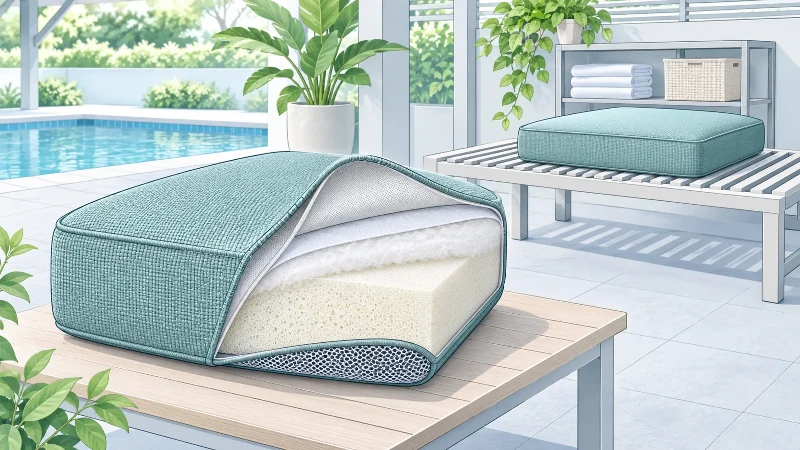
The cover is one part of the assembly. Urecel's QuickDry construction guidance describes cover material, internal layers, foam and drainage paths as distinct components. Its example supports examining these together; it supplies no universal drying time for outdoor cushions.
Have the furniture maker identify the actual cover backing, liner, wrap, filling and drainage provision. Agree how a complete sample will be wetted and what "ready for use" means for the site. Record the assessment conditions so that a shaded sample and one tested in warm, ventilated conditions are not treated as directly equivalent.
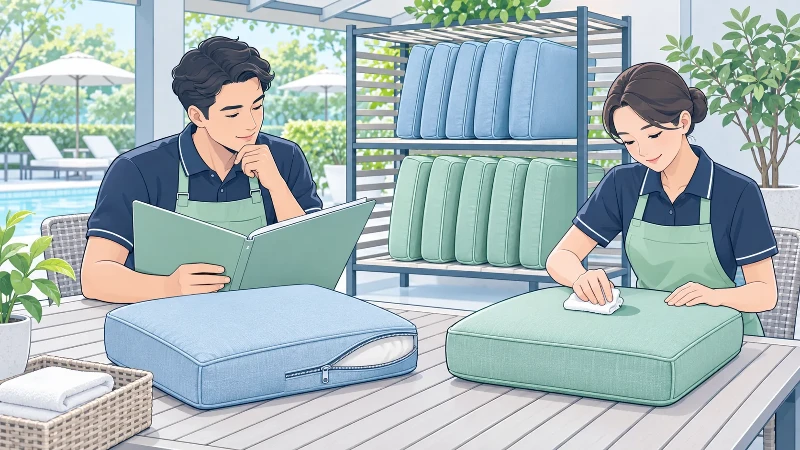
Care approval also depends on construction. Sunbrella's upholstery cleaning instructions distinguish fabrication and application, and advise checking with the furniture manufacturer before machine washing removable casings. A zipper makes a cover removable; it does not, by itself, establish washing permission.
Before approving fabric for outdoor cushions, let operations review removal, cleaning, rinsing and drying arrangements. Where maintenance takes seating out of use, include spare-cushion needs in the purchasing discussion. Carry the approved method into the daily outdoor restaurant furniture care routine.
Carry the selection into the order
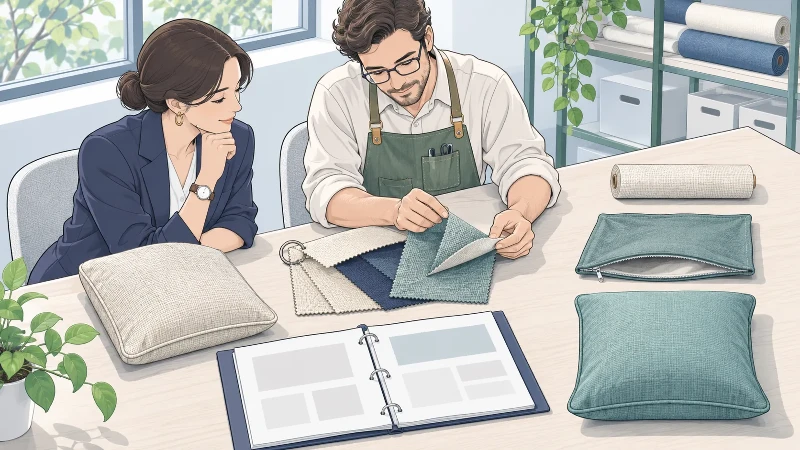
Keep the fabric maker, collection, article code, color, composition, coloring route, finish and backing beside the approved sewn reference. Include the visible face and pattern direction when they affect fabrication. A proposed substitute should return to those fields for review.
State whether the quote covers fabric, covers alone or complete cushions, and retain the performance and care documents used for approval. Review the commercial outdoor furniture warranty scope at this point as well: the evidence used to choose a textile and the remedy available after a problem are separate purchasing questions.
Safety Constraints & What NOT to Do
Authorize bleach, solvents, heat treatment or machine washing only from instructions applicable to the selected fabric and finished furniture. Resolve conflicting instructions before issuing the care procedure, accounting for adjacent finishes, thread and internal cushion materials. Neither a fiber name nor solution-dyed coloring provides blanket cleaning permission.
If the project requires fire performance, submit the specified fabric, backing and filling combination for the applicable project review. A colorfastness result provides no fire approval. Obtain evidence appropriate to the required assembly and use rather than extending a textile claim into an unrelated safety conclusion.
Small specification errors worth catching
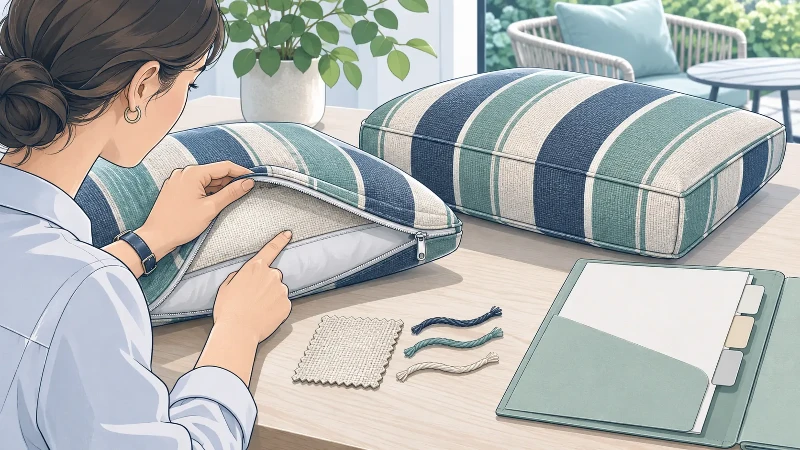
In a blend, one component may be described as solution-dyed while the coloring of the remaining yarns is unstated. Resolve that omission before approving an equivalent.
Check backing changes even when the face looks unchanged. Also inspect pattern scale and direction over the sewn cushion: a small flat swatch cannot reveal how a stripe meets at a seam or how texture reads across the full seat.
FAQs
Can the same fabric be used for cushions, slings and umbrella canopies?
Approval needs to cover each application. Loose cushion covers, tensioned slings and canopies have different construction requirements, so an outdoor-use description does not establish interchangeability. Ask the fabricator to accept the exact textile for the intended product before substitution.
Can customer-supplied fabric replace the standard upholstery?
Obtain the fabricator's acceptance of the textile and construction. Agree usable width, pattern direction, backing, seam details and quantity allowance, then define responsibility for supply and fabrication. Acceptance of a swatch should not be assumed to approve the whole cushion or preserve all original warranty terms.
How should phased orders handle color consistency?
Retain the exact article and color code, approved reference and agreed acceptance criteria. Ask how production-lot variation, collection changes and later orders will be managed. A matching code cannot be treated as a guarantee that fresh upholstery will look identical to seating already exposed outdoors.
Does a fabric warranty cover the finished cushion?
Check the terms for the products actually supplied. Fabric, foam, thread, stitching, fabrication and labor may fall under different coverage or exclusions. Identify the responsible party and claim route for the relevant components before ordering; a fabric warranty alone does not establish complete-cushion coverage.