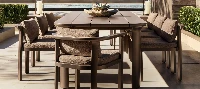

Procuring teak furniture for boutique hotels, commercial terraces, or luxury rental estates requires far more than evaluating surface polish or grain aesthetics. The invisible divider between furniture that lasts twenty years and pieces that crack within three months is the moisture control process inside the timber. Unseasoned teak retains interior water pockets that expand and contract under outdoor weather shifts, causing severe checking, warped frames, and glue joint failure. Learning how to verify proper thermal dehydration guarantees that your commercial investment maintains structural stability across all seasons.

1. The Physics of Timber Seasoning: Why Air-Drying Fails Commercial Standards
When raw teak trees (Tectona grandis) are harvested, the timber is saturated with biological moisture. Freshly cut teak logs often exceed 50% internal moisture content, holding water within both cellular cavities (free water) and cell walls (bound water).
Before timber can be machined, shaped, or doweled into commercial frames, this water must be extracted in a controlled thermal environment.
Relying on traditional outdoor air-drying is insufficient for commercial outdoor manufacturing. Air-drying only reduces surface moisture down to ambient humidity levels (typically 18% to 25% in humid tropical climates). When air-dried furniture is packed into ocean freight containers or deployed in arid resort deserts, the timber rapidly loses remaining core water, causing violent shrinkage, stress fractures, and frame twist.
This brings procurement managers to a vital technical question: how to tell if outdoor teak furniture is kiln-dried properly?
Industrial kiln-drying subjects timber to computer-controlled steam and heat chambers for 30 consecutive days. By gradually lowering relative humidity while elevating temperatures, water slowly migrates from the core out through the surface without rupturing interior cell structures.
When sourcing seating for high-density outdoor venues, combining well-seasoned wood with a teak outdoor 2 seater sofa delivers a compact, stable foundation that will not warp or split under heavy guest turnover.

2. Five Practical Methods: How to Tell If Outdoor Teak Furniture Is Kiln-Dried Properly
Quality assurance teams and commercial buyers can employ five field-tested diagnostic methods during factory audits or shipment intake to verify whether teak has undergone thorough kiln dehydration.
💧 Method 1: The Digital Moisture Meter Test (The Gold Standard)
The most definitive method involves using a calibrated pinless capacitance moisture meter or a two-pin resistance meter.
The Acceptable Standard: For global commercial export, outdoor teak must register between 8% and 12% moisture content across both surface planes and deep core cuts.
Red Flag Readings: Any reading above 14% indicates incomplete kiln drying. Readings above 18% mean the wood was merely air-dried or rushed through a shortened heating cycle.
🔬 Method 2: End-Grain Surface Inspection
Examine the cross-cut ends of table legs and armrest joints. Properly kiln-dried timber exhibits clean, tight grain lines.
Micro-Checking: Small, hair-thin hairline surface cracks (under 0.5mm wide) along natural grain rings are normal reactions to timber breathing.
Severe Checking: Deep splits penetrating into the timber core signal that the kiln cycle was rushed at excessively high heat, creating intense internal stress.
📜 Method 3: Weight-to-Volume Ratio & Acoustic Resonance
Water adds significant weight to raw timber. An unseasoned teak table feels excessively heavy and cold to the touch because trapped interior water conducts ambient temperature.
Furthermore, knock firmly on a solid timber section with your knuckles:
Kiln-Dried Wood: Emits a clear, crisp, resonant ring indicating dense, dry cellular structure.
Unseasoned Green Wood: Produces a dull, thudding sound due to damp, water-logged cell cavities.
📐 Method 4: Mortise and Tenon Joint Flushness
Inspect the precision of structural connection joints. Kiln-dried timber maintains dimensional tolerances within fractions of a millimeter. If mortise and tenon joints show uneven gaps, lifted glue lines, or offset dowel pins prior to outdoor deployment, the timber was assembled while wet and began shrinking post-production.
☀️ Method 5: Thermal & Humidity Acclimatization Testing
Place a sample chair or table in direct sunlight for 48 hours. Properly dehydrated teak experiences negligible dimensional movement. Unseasoned wood quickly reveals surface checking, cupping along flat planks, and sticky natural oil exudation forced out by trapped steam.
3. Drying Quality Across Outdoor Furniture Product Categories
Evaluating timber dryness is especially critical when specifying complex mixed-material setups or specialized commercial pieces.
For example, when outfitting a poolside dining terrace, a teak patio umbrella table must handle unique structural forces. The center umbrella hole acts as a focal point for wind leverage and moisture exposure. If the tabletop planks are not kiln-dried to 8%-12% moisture content, solar heat will cause the slatted top to warp, binding the umbrella pole inside the center ring.
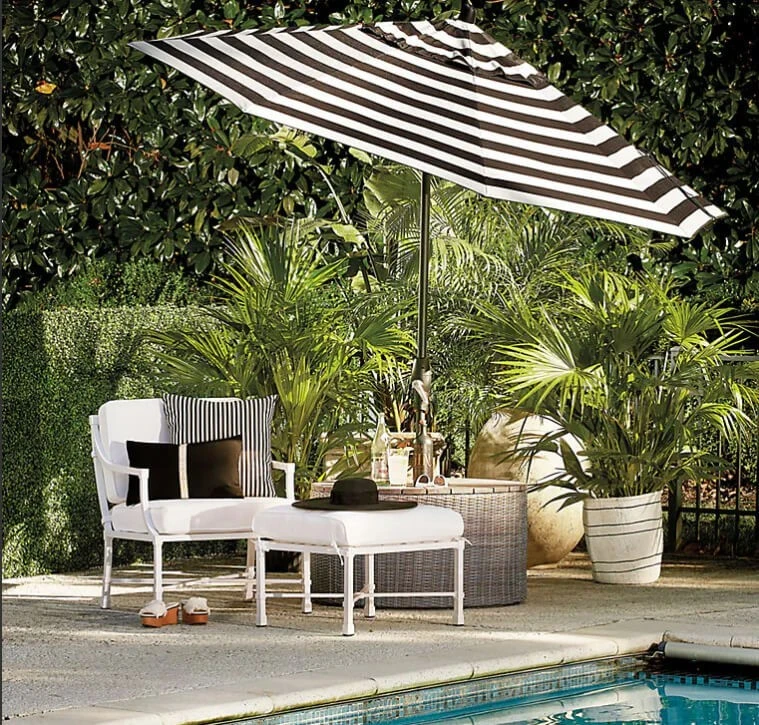
Similarly, luxury hospitality venues frequently invest in a luxury teak outdoor sofa for high end short term vacation rentals to maximize guest comfort ratings and online review scores. Vacation rental properties face continuous outdoor use, unpredictable weather shifts, and minimal daily maintenance by guests.
Deploying poorly dried timber in these high-end settings risks frame warping that destabilizes seat decks, causing cushions to fit unevenly or slide out of position.
Furthermore, high-end outdoor sofas must be paired with outdoor teak furniture with quick dry foam cushions. If unseasoned wood off-gasses internal moisture under dense seat cushions, trapped dampness causes mold spores to migrate into the cushion undersides, damaging high-resilience foam layers.
4. Technical Comparison: Kiln-Dried vs. Air-Dried vs. Unseasoned Teak
To clarify technical differences for commercial procurement teams, the table below outlines physical, operational, and financial performance metrics across seasoning methods:
📊 Timber Seasoning Method Performance Matrix
| Technical Parameter | Industrial Kiln-Dried Teak (30-Day Cycle) | Traditional Air-Dried Teak | Unseasoned "Green" Teak |
| Moisture Content Range | 🟢 8% to 12% (Uniform Core to Surface) | 🟡 18% to 25% (Surface dry, wet core) | 🔴 >35% (Saturated cell walls) |
| Dimensional Stability | 🟢 High (Minimal expansion/contraction) | 🟡 Moderate (Warps in dry heat) | 🔴 Extremely Poor (Severe twisting) |
| Ocean Freight Risk | 🟢 Zero mold/warping in containers | 🟡 Moderate condensation risk | 🔴 Severe container sweat & mold |
| Fungal & Insect Immunity | 🟢 High (High heat sterilizes pests) | 🟡 Medium (Pests can survive) | 🔴 Low (Attracts mold & termites) |
| Commercial Lifespan | 🟢 20 to 50+ Years | 🟡 3 to 5 Years | 🔴 < 1 Year before structural failure |
| Maintenance Need | 🟢 Minimal (Occasional washing) | 🟡 High (Frequent oiling/sanding) | 🔴 Unusable for commercial venues |
5. Factory Kiln-Drying Schedules & Moisture Control Procedures
Understanding what happens inside an industrial drying kiln helps commercial buyers evaluate manufacturer capabilities during factory audits.
A professional 30-day kiln schedule for Grade-A teak follows four strictly controlled phases:
Pre-Equalization Phase (Days 1–7): Timber is placed in high relative humidity (85%) at 40°C to equalize surface moisture without causing surface shock or checking.
Core Water Extraction Phase (Days 8–20): Kiln temperatures slowly increase to 55°C while humidity drops to 45%. Free water evaporates smoothly from interior vessel cavities.
Conditioning & Stress Relief Phase (Days 21–27): Moisture levels reach 10%. Steam bursts are injected to relieve internal tension within the wood grain, preventing post-machining warping.
Final Equalization Phase (Days 28–30): Kiln conditions match target destination Equilibrium Moisture Content (EMC), bringing timber to a stable 8%-12% moisture range.
🛠️ Moisture Inspection Equipment Comparison for B2B Buyers
| Tool Type | Operating Principle | Detection Depth | Best Use Case in Quality Audits |
| Pinless Capacitance Meter | High-frequency electromagnetic signals | Up to 20mm deep | Non-destructive surface & core checks |
| Two-Pin Resistance Meter | Electrical resistance between steel pins | 5mm to 15mm deep | Deep timber end-grain moisture audits |
| Core Sampling Oven Dry Test | Laboratory weight loss measurement | Full cross-section | Definitive laboratory verification |

6. International Compliance, Certifications, and Quality Audits
Commercial buyers must ensure that kiln-dried furniture meets recognized global manufacturing standards before issuing purchase orders.
🛡️ Essential Industry Certifications for Teak Furniture
FSC Certification (Forest Stewardship Council): Guarantees that raw teak logs are ethically harvested from responsibly managed plantations.
SVLK (System Kayu Legalitas Indonesia): Mandatory Indonesian timber legality verification confirming full supply chain traceability.
ISO 9001: Certifies that factory drying kilns, moisture calibration logs, and machining tolerances follow systematic quality management protocols.
EN 581-1 / EN 581-3: European mechanical safety and stability benchmarks for commercial outdoor tables and seating.
BIFMA X5.5: American National Standard testing table impact resistance, load capacity, and joint durability under heavy commercial usage.
7. Financial TCO: How Kiln Drying Protects Venue Profitability
For commercial property owners, purchasing properly kiln-dried furniture is a strategic financial decision that minimizes Total Cost of Ownership (TCO).
The ROI Equation for Hospitality Venues
Deploying improperly dried furniture leads to rapid financial losses:
Direct Costs: Frequent replacement of cracked tables, warped sofas, and split chairs every 24 to 36 months.
Indirect Operational Costs: Staff time spent handling guest complaints, managing furniture repairs, and storing damaged pieces during peak dining hours.
Brand Reputation: Negative online reviews citing unstable dining tables or splintered lounge chairs in luxury rental estates.
Investing in verified 8%-12% kiln-dried teak eliminates premature structural failures, delivering a trouble-free service life of twenty years or more.
FAQ:
Q1: What happens if teak furniture is kiln-dried too fast at excessively high heat?
Rushing the kiln cycle at high temperatures causes a severe defect called "case hardening." The outer wood shell dries and shrinks rapidly while the inner core remains wet. This creates intense internal stress that causes deep internal honeycomb cracking and severe structural splitting once the furniture is placed under solar heat outdoors.
Q2: What is the ideal wood moisture content for commercial outdoor teak furniture?
The international gold standard for commercial outdoor teak is an interior moisture content between 8% and 12%. This range matches the natural Equilibrium Moisture Content (EMC) of most global outdoor environments, ensuring that timber frames remain dimensionally stable through seasonal humidity changes.
Q3: Can a visual inspection alone prove whether teak furniture was kiln-dried properly?
Visual inspection provides helpful clues-such as checking for tight joinery, absence of severe end-grain splits, and clean grain lines-but it cannot measure interior water levels. QA inspectors should always use a calibrated digital moisture meter to check core timber sections before accepting commercial shipments.
Q4: Does properly kiln-dried teak still require protective waterproof sealants?
No. Grade-A teak contains abundant natural rubber resins and tectoquinone oils that naturally repel liquid water. Kiln drying stabilizes the interior wood cell structure so these natural oils remain locked inside. While applying breathable teak protectors can preserve the warm honey-gold color, unsealed kiln-dried teak safely weathers into a protective silver-grey patina without losing structural strength.