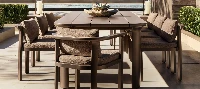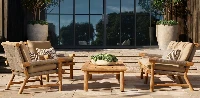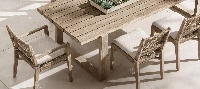

🌲 Executive Procurement Summary for Hospitality Operators: When sourcing wooden outdoor tables, dining chairs, or modular sectional lounges for luxury resorts, high-density cafes, or oceanfront estates, the grade of timber determines whether your investment lasts two decades or fails after two seasons. The debate between heartwood and sapwood is not merely a matter of visual coloration-it is a matter of organic chemistry, structural physics, and long-term operating costs. Heartwood, cut exclusively from the mature center of the teak log, contains natural oils and rubber resins that render it completely immune to moisture, UV photo-oxidation, and fungal decay. Sapwood, the living outer layer, lacks these protective compounds and swiftly fails under commercial outdoor exposure.

1. Understanding Timber Anatomy: Heartwood vs. Sapwood Mechanics
To evaluate timber quality, hotel procurement officers and landscape architects must understand how a teak tree (Tectona grandis) grows.
A living tree consists of two distinct functional zones within its trunk cross-section:
Sapwood is the living outer layer surrounding the trunk. Its biological function is to transport water, sap, and starch from roots to leaves. Because these cells remain active, sapwood is saturated with moisture, sugars, and organic proteins. When dried and crafted into furniture, these stored starches serve as an open invitation to mold spores, termites, and wood-boring beetles.
Heartwood, located in the deep interior of mature trees, represents converted inactive wood cells. As the tree matures over 30 to 50 years, inner sapwood cells undergo a biochemical metamorphosis. The tree deposits dense secondary metabolites-specifically tectoquinone, natural rubber resins, and crystalline silica-into the cellular cavities.
This brings us directly to the foundational procurement question: why is heartwood teak superior to sapwood for commercial outdoor furniture?
Simply put, heartwood provides a naturally petrified internal structure that rejects moisture, repels destructive insects, and resists structural warping without needing synthetic chemical sealants or annual lacquering.
2. Botanical Physics: Chemical Density, Tyloses, and Natural Resins
Why does heartwood remain structurally sound after decades of continuous exposure to torrential rainfall and scorching equatorial solar radiation? The answer lies in microscopic botanical structures called tyloses.
During heartwood formation, protoplasts from adjacent ray cells balloon through pits into the vessel lumens, effectively clogging the wood's internal plumbing network. These microscopic blockages lock interior resins inside while blocking external liquid water from migrating inward.
🔬 Organic Preserving Compounds in Teak Heartwood
Tectoquinone Content: A naturally occurring anthraquinone compound that acts as a potent fungicide and insect repellent, eliminating termite and rot risks without artificial chemical pressure treatments.
High Silica Density: Teak heartwood absorbs mineral silica directly from tropical soil, embedding microscopic glass-like crystals into the grain that dull wood-cutting blades and block pest boring.
Natural Rubber Resins: Heartwood contains up to 5% natural latex resins by weight, keeping the timber elastic enough to expand and contract uniformly without splitting under fluctuating ambient humidity.
Because sapwood lacks tyloses and contains almost zero tectoquinone, using it in outdoor applications invites rapid moisture absorption, grain swelling, and internal wood cell rupture.

3. Comparative Analysis: Heartwood vs. Sapwood Performance Specs
Commercial venues require objective performance metrics before issuing purchase orders. The following matrix contrasts the physical and chemical characteristics of Grade-A heartwood against Grade-C sapwood timber:
📊 Physical & Performance Specification Comparison
| Physical / Chemical Property | Grade-A Heartwood Teak | Grade-C Sapwood Teak | Commercial Impact on Venue |
| Trunk Location | Inner core (30+ year old trees) | Outer living ring (Young trees) | Determines structural density |
| Natural Oil Content | 🟢 Extremely High (4% - 5%) | 🔴 Low to Non-Existent (<0.5%) | Water repelling capability |
| Starch & Sugar Levels | 🟢 Virtually Zero | 🔴 Extremely High | Biological food source for rot/pests |
| Density (at 12% Moisture) | 🟢 ~650 kg/m³ to 720 kg/m³ | 🔴 ~450 kg/m³ to 520 kg/m³ | Resistance to heavy commercial impact |
| Equilibrium Stability | 🟢 Minimal Volumetric Shrinkage | 🔴 High Tendency to Warp/Splinter | Structural joint integrity over time |
| Weathering Outcome | 🟢 Ages to Silvery-Grey Patina | 🔴 Turns Black, Splints & Rots | Aesthetics & surface comfort |
| Expected Service Life | 🟢 20 to 50+ Years | 🔴 1 to 3 Years | Total Cost of Ownership (TCO) |
4. Engineering Custom Teak Outdoor Furniture for High-Traffic Commercial Venues
When purchasing commercial patio setups, procurement teams frequently request custom teak outdoor furniture tailored to specific architectural blueprints, layout dimensions, and guest traffic patterns.
However, custom design is only as durable as the raw materials and structural joinery beneath the fabric cushions.
Specifying a grade A teak frame outdoor sofa with ocean grade stainless steel hardware ensures that structural frame joints resist shear forces caused by guest movement while avoiding corrosion bleeding around fastener holes.
📐 Key Structural Joinery Standards
Deep Mortise and Tenon Joints: Interlocking wood components secured with wood dowels, eliminating reliance on surface brackets.
D4 Polyurethane Adhesive: Industrial-grade waterproof adhesives compliant with international moisture exposure standards.
Drainage Channels: Slatted frame bases designed to shed water rapidly, preventing moisture accumulation under seat cushions.
Property operators seeking high-end poolside lounging often browse an outdoor teak couch sale to outfit sprawling resort decks. However, buyers must confirm whether discounted line items utilize 100% solid heartwood or sneak pale sapwood into non-visible frame under-structures.
5. Identifying Sapwood Fraud: Visual Inspection & Factory Audits
Because Grade-A heartwood commands a premium price, unverified suppliers sometimes incorporate sapwood into hidden furniture sections-such as table underside aprons, leg interior faces, or inner sofa framing-to cut manufacturing costs.
🛡️ How Commercial Buyers Inspect Raw Teak Quality
Color Uniformity: Authentic Grade-A heartwood exhibits a warm golden-brown color with tight grain lines. Sapwood appears distinctly pale white, light yellow, or grey.
Waxy Tactile Feel: High oil content gives raw heartwood a distinct waxy or slick surface feel upon hand inspection, whereas sapwood feels chalky and dry.
Weight and Density Audits: Heartwood pieces weigh substantially more than identical volume sapwood components due to higher wood cellular density.
Stain Disguise Inspection: Be cautious of overly dark synthetic chemical stains on cheap teak. Suppliers sometimes spray dark stains to mask white sapwood streaks. Inspect raw, un-stained end grains during factory audits.
📊 Commercial Teak Timber Grade Classification
| Grade Level | Wood Type Included | Oil / Silica Ratio | Commercial Suitability | Visual Characteristics |
| Grade A | 100% Center Heartwood | Maximum (>4%) | 🟢 Commercial Hospitality | Golden-brown, tight straight grain, oily surface |
| Grade B | Outer Heartwood / Sapwood Mix | Moderate (~2%) | 🟡 Light Residential Use | Variable tone, occasional knot holes, lighter streaks |
| Grade C | Predominantly Outer Sapwood | Extremely Low (<0.5%) | 🔴 Unsuitable for Outdoors | Pale cream/white streaks, dry feel, rapid splitting |
6. Sustainable Sourcing, Forest Certifications, and EU Market Compliance
Environmental responsibility and legal compliance remain paramount for international buyers importing commercial outdoor furniture into European and North American markets.
Obtaining a valid sustainable teak wood outdoor furniture certification for EU market access guarantees that timber is legally harvested from government-managed plantations rather than illegal old-growth rainforest logging.
🏛️ Crucial Regulatory Frameworks
FSC Certification: Ensures wood products originate from responsibly managed forests that provide environmental, social, and economic benefits.
SVLK (System Kayu Legalitas Indonesia): Stringent legal timber assurance standard required for exporting teak furniture to global commercial markets.
EU Timber Regulation (EUTR) / EUDR: Mandates strict due diligence from importers to eliminate deforestation-linked timber from supply chains.
ISO 9001 Quality Assurance: Guarantees systematic factory production control, kiln-drying precision, and moisture monitoring before shipping.

7. Financial TCO & Return on Investment (ROI) for Hotel Operators
To justify the initial capital outlay for Grade-A heartwood outdoor furniture, procurement directors must present a Total Cost of Ownership (TCO) financial analysis to venue owners.
💰 Financial Scenario: 50-Seat Hotel Terrace Setup
Option A: Cheap Sapwood / Mixed Timber Furniture
Initial Cost: Lower upfront price (~40% cheaper than Grade A).
Replacement Cycle: Fails every 2 to 3 years due to joint warping, rot, and sapwood splintering.
15-Year TCO: Requires 5 full replacement purchases, plus continuous staff labor costs for repairs, varnishing, and off-season storage.
Option B: 100% Grade-A Heartwood Teak Furniture
Initial Cost: Higher upfront investment.
Replacement Cycle: Zero replacements needed over 15 to 20+ years.
15-Year TCO: Single initial investment with virtually zero maintenance labor costs, yielding up to 60% lower cumulative expenditure over time.
FAQ:
Q1: Why does heartwood teak resist weather while sapwood turns soft and rots?
Heartwood contains high concentrations of natural tectoquinone oils, rubber resins, and silica deposited during tree maturation. These organic compounds block water absorption and act as a natural toxic barrier against fungi and wood-boring insects. Sapwood lacks these natural preservatives and consists of open, living cells filled with sugars that attract mold, rot, and insects when exposed to rain and soil moisture.
Q2: Can sapwood be treated with chemical sealants to match heartwood durability?
No. While chemical pressure treatments or synthetic surface polyurethane sealants can temporarily retard moisture ingress in sapwood, they do not change the fundamental cellular structure of the wood. Rain and UV exposure inevitably degrade surface coatings, allowing moisture to reach the inner sapwood cells. Once water penetrates untreated interior sapwood, internal rotting and structural splitting occur rapidly from within.
Q3: How can commercial buyers verify that furniture is made from 100% heartwood before issuing payment?
Commercial buyers should request third-party factory inspection reports, timber origin certificates (such as SVLK or FSC Chain-of-Custody), and un-finished raw wood photos before final oiling or coating. Furthermore, auditing density specs, requesting end-grain cut samples, and enforcing strict contract penalties against sapwood mixing protect procurement investments.
Q4: Does heartwood require annual varnishing or lacquering in commercial outdoor venues?
No. Grade-A heartwood should never be coated with hard polyurethane lacquers or thick varnishes, as these trap surface moisture underneath. When exposed to outdoor sunlight and rain, heartwood naturally develops a handsome silver-grey patina that serves as its own protective skin. Simple washing with mild soapy water and a soft brush once or twice a year is all that is required to maintain structural integrity.