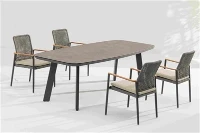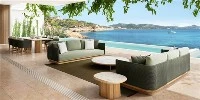

Commercial Safety & Compliance Summary: While solid timber is naturally combustible, premium Grade A teak possesses an extraordinarily dense cellular structure (density $> 650 \text{ kg/m}^3$), high natural silica content, and tight grain boundaries that create a slow, predictable charring rate rather than rapid ignition. For outdoor commercial resort environments, untreated raw teak typically achieves a Class B or Class C rating under ASTM E84 tunnel testing. When paired with fire-retardant (FR) treated timber topcoats, CAL 133 compliant barrier fabrics, and Quick Dry Foam, teak furniture assemblies fully satisfy stringent fire safety regulations enforced by resort local Authorities Having Jurisdiction (AHJ) and commercial building codes worldwide.
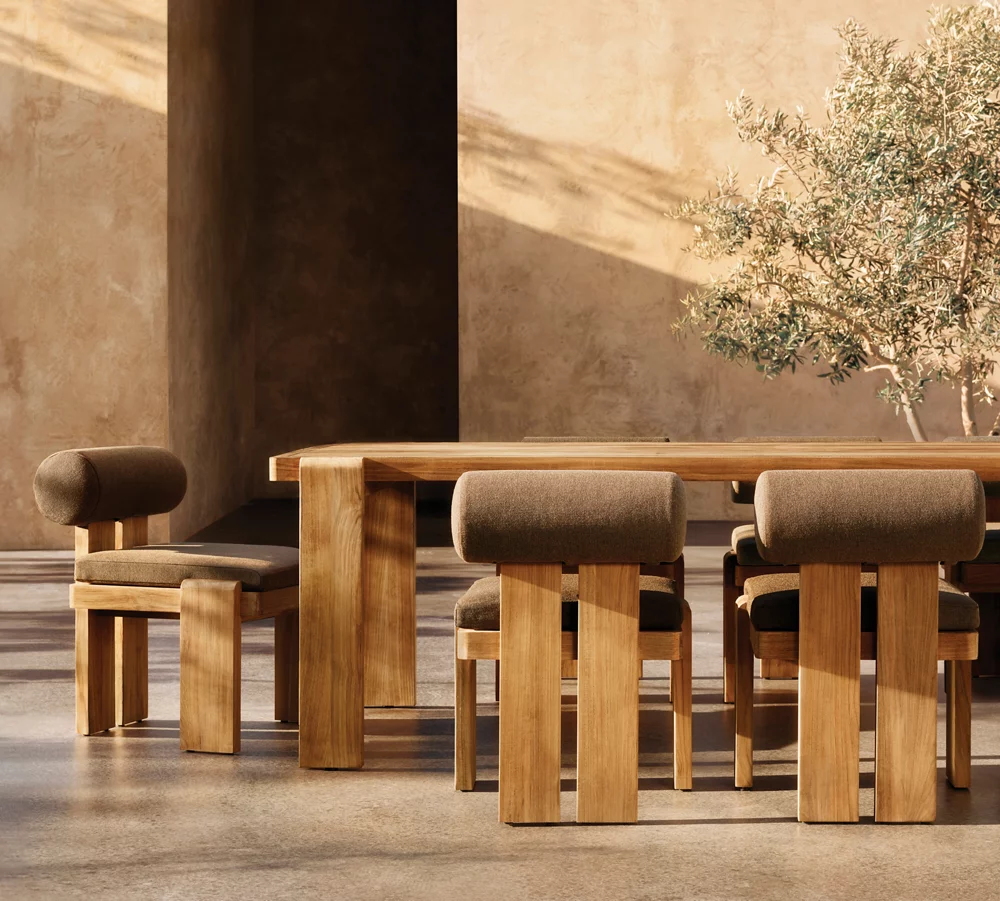
🧯 The Physics of Fire Resistance in Commercial Teak Furniture
When architectural specs land on a procurement desk for a multi-million dollar coastal resort or high-rise rooftop lounge, fire safety sits alongside weather resistance as a non-negotiable benchmark. Resort developers routinely ask: Is Grade A teak outdoor furniture fire-resistant and fire-code compliant for commercial resorts? Answering this requires separating raw material combustion physics from fully engineered commercial furniture compliance.
Wood burns. That is an indisputable chemical fact. However, not all woods burn at the same rate, nor do they present the same risk profile under heat exposure.
Cellular Density and Silica Content: Nature's Flame Retardant
Standard softwoods like pine or low-density hardwoods like eucalyptus ignite rapidly because their porous cellular matrix allows oxygen to feed open flames. Premium Grade A teak behaves differently due to three distinct biochemical traits:
High Silica Concentration: Tectona grandis harvested from mature plantations absorbs inorganic silicon dioxide from the soil. This silica precipitates within the wood vessels, creating an inorganic mineral barrier that resists flame penetration.
Natural Rubber and Oleoresins: While plant oils might sound flammable, the dense latex and oily resin distribution in mature teak heartwood limits air permeability within the timber grain.
Char-Layer Insulation: When exposed to direct flame, teak forms a dense, carbonaceous surface char. This char layer acts as an thermal insulating blanket, slowing oxygen diffusion to the unburnt interior wood and drastically reducing the burning rate.
For high-traffic hospitality venues, incorporating a solid teak outdoor dining table on an open-air dining terrace provides a sturdy, heavy structural anchor that naturally resists wind-blown embers and localized heat sources compared to synthetic resin wicker or hollow aluminum frames.
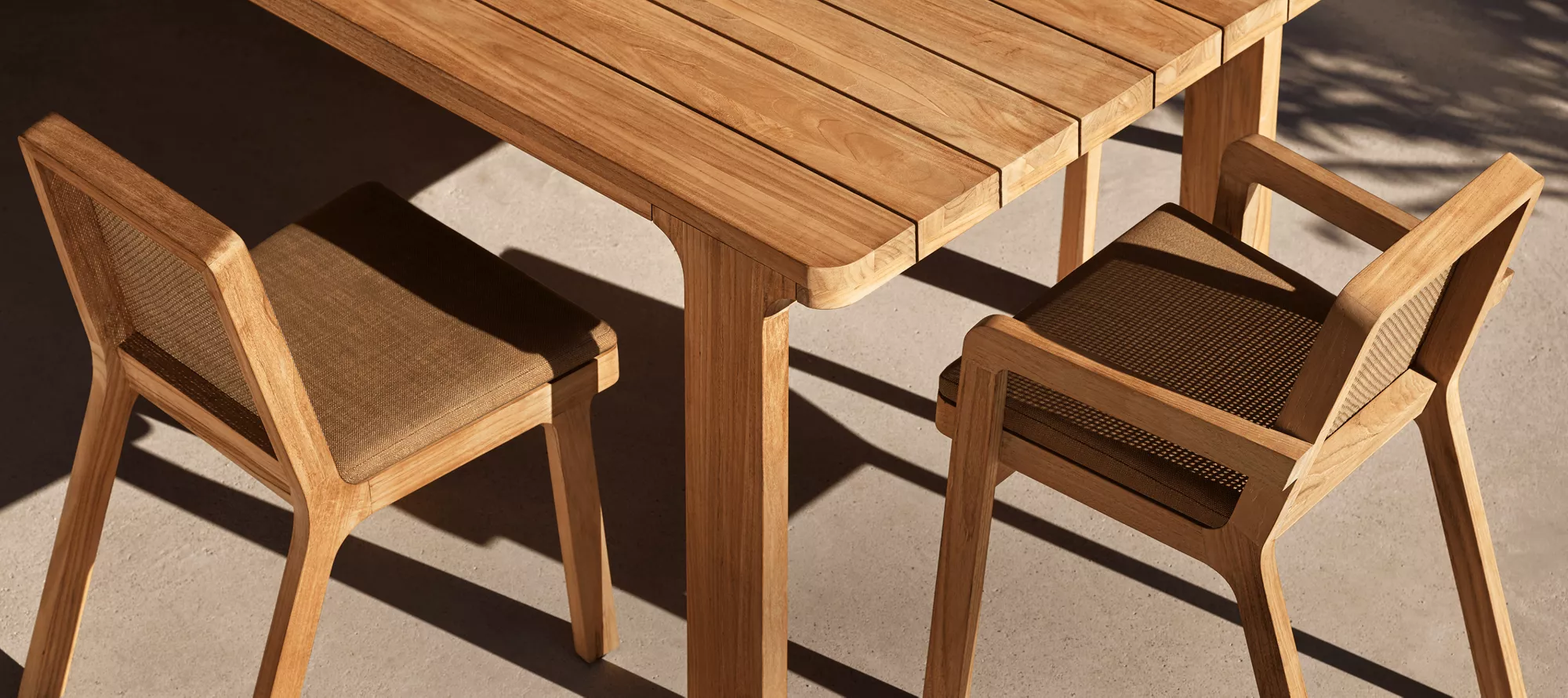
📜 International Fire Codes Governing Resort Outdoor Spaces
Fire compliance for outdoor furniture in commercial hospitality properties is regulated by strict municipal and international standards. Depending on whether furniture sits on a ground-level open pool deck, a covered loggia, or an enclosed rooftop lounge, different codes apply.
Understanding ASTM E84, NFPA 260, and CAL 133 Standards
Local fire marshals-often referred to in commercial contracts as the Authority Having Jurisdiction (AHJ)-do not evaluate timber frames in isolation. They review the complete upholstered assembly.
ASTM E84 / UL 723 (Surface Burning Characteristics): Measures the Flame Spread Index (FSI) and Smoke Developed Index (SDI) of building materials. Untreated Grade A teak typically scores an FSI between 45 and 75, placing it solidly in Class B flame spread.
NFPA 260 / UFAC Class I: Tests the cigarette ignition resistance of upholstery cover fabrics used in commercial seating.
CAL 133 (California Technical Bulletin 133): A full-scale composite fire test for furniture used in high-hazard public occupancies. Seating assemblies must withstand a open-flame burner test without exceeding strict heat release rates.
BS 5852 (Crib 5 Testing): The standard benchmark across British and European hospitality markets, requiring seating components to self-extinguish when exposed to a wooden crib flame source.
When hotel developers order from a teak outdoor furniture factory direct for hospitality projects, requesting pre-certified component packages streamlines the AHJ sign-off process prior to hotel commissioning.
📊 Commercial Timber & Fire Resistance Comparison
Evaluating structural materials for outdoor commercial decks requires balancing thermal safety, mechanical durability, and long-term aesthetic aging.
📊Structural Material Performance Under Thermal Load
| Structural Material | Material Density (kg/m3) | ASTM E84 Flame Class | Ignition Point | Post-Fire Structural Integrity |
| Grade A Teak | 650 – 750 | Class B (Class A with FR) | $> 350^\circ\text{C}$ | High (Slow charring protects structural core) |
| Grade C Teak / Sapwood | 450 – 550 | Class C | $\sim 280^\circ\text{C}$ | Low (Rapid burn along soft sapwood vessels) |
| Powder-Coated Aluminum | 2,700 | Class A (Non-combustible) | Structural softening at $500^\circ\text{C}$ | Medium (Warps and collapses under sustained heat) |
| Pressure-Treated Pine | 400 – 500 | Class C | $\sim 260^\circ\text{C}$ | Very Low (High resin content accelerates flame) |
| Synthetic PE Wicker | 900 – 950 | Class C / Unrated | $\sim 200^\circ\text{C}$ | Zero (Melts, drips, and emits toxic black smoke) |
🛋️ Fire-Retardant Cushion Engineering for Teak Seating
A teak frame rarely fails a fire inspection on its own; 90% of commercial fire code infractions in hospitality settings stem from non-compliant foam and upholstery combinations. Specifying a comfortable teak outdoor couch with cushions requires an integrated fire-barrier specification.
The Role of Fire Barriers and Quick Dry Foam
Standard polyurethane foam acts as solid fuel during a fire, melting into a highly flammable liquid. To achieve full fire-code compliance for open-air or semi-covered resort spaces:
Fire-Retardant Interliners: A thin, flexible barrier fabric made from woven para-aramid or fiberglass fibers is wrapped between the outer fabric and inner foam core. This prevents open flames from contacting the foam.
Quick Dry Foam Integration: Commercial-grade open-cell Quick Dry Foam allows water to drain rapidly while incorporating combustion-modified additives that self-extinguish when the primary heat source is removed.
Solution-Dyed Upholstery: Premium commercial fabrics like solution-dyed acrylic fabric or Olefin fabric are treated with inherent flame retardants during fiber extrusion, ensuring the chemical protection cannot wash away during seasonal rain or pool deck pressure washing.
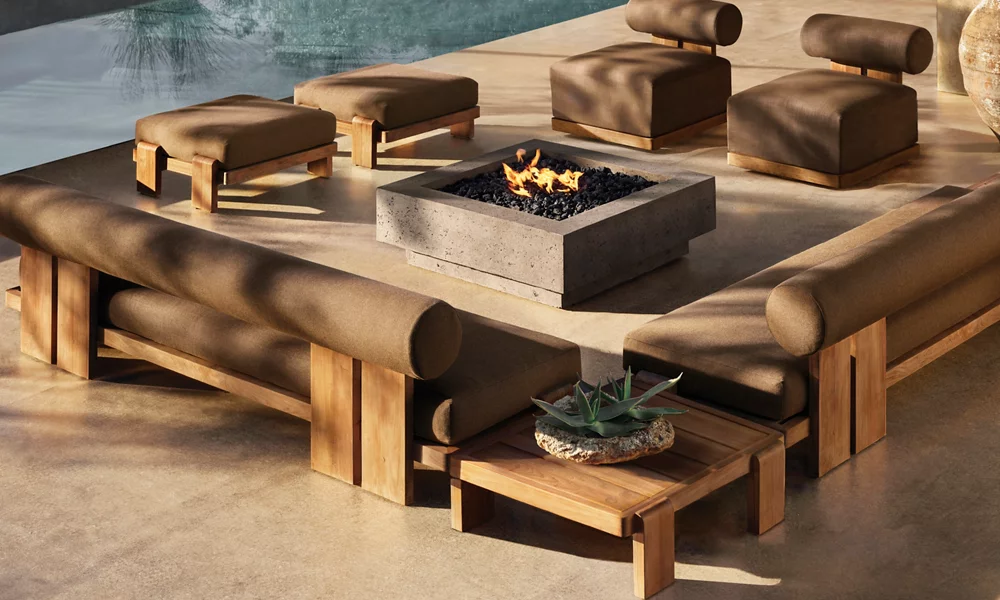
For expansive outdoor lounges, specifying a spacious L shaped outdoor teak sectional sofa with built in side table creates a luxurious social hub. Ensuring the entire cushion assembly meets BS 5852 Crib 5 or CAL 133 standard eliminates fire hazard risks around outdoor fire pits or patio heaters.
📋 Fire Safety Testing Standards & Compliance Matrix
Navigating regional building regulations demands clear documentation from accredited independent laboratories.
📊International Fire Testing Protocols for Hospitality Furniture
| Certification Standard | Governing Testing Body | Regional Compliance | Specific Fire Hazard Evaluated |
| ASTM E84 | SGS testing / Intertek | North America / Global | Tunnel flame spread and smoke density of bare timber. |
| CAL 133 | Bureau of Household Goods | United States (Public Spaces) | Full-scale flaming ignition test of upholstered seating. |
| BS 5852 (Crib 5) | FIRA / SGS testing | UK, Middle East, Asia-Pacific | Wooden crib flame source test on complete cushion assemblies. |
| NFPA 260 | National Fire Protection | North America | Smoldering cigarette resistance of upholstery fabrics. |
| EN 1021-1/2 | European Committee | European Union | Match and smoldering cigarette ignition equivalent tests. |
| UL 94 | Underwriters Laboratories | Global | Flammability of plastic feet glides and synthetic hardware. |
🛠️ Flame Retardant Treatments: Factory-Applied vs. Field Application
When an AHJ fire marshal inspects a resort project before issuing an occupancy permit, they require certified proof of fire resistance. Resort operators can achieve compliance through two primary engineering routes: factory-impregnated timber pressure treatments or surface-applied intumescent coatings.
Vacuum Pressure Impregnation vs. Clear Intumescent Finishes
Factory-applied vacuum pressure impregnation forces inorganic fire-retardant salts deep into the porous heartwood vessels of teak. However, this process can alter the natural golden-brown hue of raw teak.
Alternatively, high-end resorts utilize clear, outdoor-rated intumescent topcoats. When exposed to heat exceeding $200^\circ\text{C}$, this clear chemical finish expands into a thick, non-combustible carbon foam layer, blocking oxygen from reaching the teak timber.
📊Fire Retardant Application Methods for Teak Furniture
| Application Method | Flame Spread Reduction | Aesthetic Impact | Weather Durability | Re-Application Cycle |
| Natural Untreated Grade A Teak | Class B (FSI 45–75) | None (Natural Golden Grain) | Lifetime | None Required |
| Pressure Impregnated Salts | Class A (FSI 0–25) | Slight darkening/greying | High (Resists rain leaching) | 7–10 Years |
| Intumescent Clear Topcoat | Class A (FSI 0–25) | Clear matte or satin finish | Medium (Requires UV inhibitors) | 3–5 Years in High UV Zones |
| Topical Field Spray (Post-Market) | Class B/C Improvement | Risk of white residue/streaks | Very Low (Washes off in rain) | Re-apply after every rainy season |
Fire Marshal Inspection Rule: Never rely on post-market aerosol fire sprays applied on-site by hotel staff. AHJ inspectors strictly require factory-issued certificates of compliance backed by independent laboratory test reports from recognized testing bodies like SGS testing or TUV.
🛡️ Factory Quality Control, Certifications, and Sustainable Sourcing
Procuring fire-compliant teak furniture requires total supply chain transparency. A genuine commercial manufacturer maintains strict quality management and environmental compliance systems from forest extraction to final container packing.
Legal Timber Traceability: All commercial teak logs must be harvested from legally managed state plantations verified under SVLK compliance (Sistem Verifikasi Legalitas Kayu) or FSC certification to ensure environmental stewardship and wood density standards.
Manufacturing Precision: Production facilities operating under ISO 9001 standards guarantee that mortise and tenon joints are machined within sub-millimeter tolerances, eliminating air gaps within frame joints that could harbor smoldering embers.
Low-Emissions Compliance: Interior and transitional outdoor furniture assemblies should hold GREENGUARD Gold certification, verifying that fire-retardant coatings and adhesives do not off-gas harmful Volatile Organic Compounds (VOCs) into guest spaces.
❓ FAQ:
1. Is untreated Grade A teak considered fireproof for commercial hotel use?
No wood is completely fireproof. However, untreated Grade A teak is naturally fire-resistant due to its high density, high silica content, and natural oil distribution. It achieves a Class B flame spread rating under ASTM E84 testing without any chemical additions, making it far safer than softwoods or synthetic polymers.
2. Can outdoor teak furniture pass CAL 133 or BS 5852 Crib 5 fire tests?
Yes. Passing CAL 133 or BS 5852 Crib 5 depends on the complete seating assembly. When a solid teak frame is paired with fire-retardant interliners, combustion-modified foam, and FR-treated outdoor upholstery, the complete unit easily satisfies commercial hospitality fire codes.
3. Do fire-retardant chemical treatments leach out when teak furniture is exposed to rain or pool water?
Factory-applied vacuum pressure treatments and exterior-grade intumescent topcoats are formulated to resist water leaching. However, cheap topical sprays applied post-purchase will wash away during rain. Always specify factory-applied, exterior-rated FR treatments for outdoor resort decks.
4. What documentation do I need to present to a hotel fire marshal (AHJ) for outdoor furniture approval?
You must provide a official Certificate of Compliance containing test results from an accredited laboratory (e.g., SGS testing or Intertek) verifying that the timber meets ASTM E84 surface burning standards and the cushion assemblies pass CAL 133, BS 5852, or NFPA 260.
5. Are fire-retardant treatments required for open-air hotel pool decks?
Requirements vary by municipal jurisdiction. Open-air ground-level pool decks often allow Class B untreated teak timber provided cushions pass smoldering tests (NFPA 260). However, covered loggias, enclosed courtyards, and rooftop lounges almost universally mandate Class A timber finishes and full CAL 133 cushion compliance.
6. Does applying a clear intumescent fire-retardant coat alter the appearance of natural teak?
Modern commercial-grade intumescent finishes are formulated as clear matte or satin topcoats that preserve the natural golden grain of Grade A teak. They contain UV inhibitors that protect both the wood color and the flame-retardant chemical matrix from sun degradation.
7. How does teak perform around resort fire pits and outdoor patio heaters?
Solid teak frames exhibit excellent dimensional stability near radiant heat sources. Unlike synthetic wicker, which softens and warps under heat, or metal, which absorbs extreme heat and poses a burn risk to guests, teak remains cool to the touch while resisting heat deformation.
8. Will fire-retardant cushion interliners make outdoor resort sofas uncomfortable or stiff?
No. Advanced commercial fire barrier cloths (such as para-aramid or specialized silica-woven interliners) are micro-thin and highly flexible. They are installed directly beneath the outer fabric without altering the plush feel or ergonomic support of the underlying foam core.