
Every commercial resort manager knows the sharp, stomach-dropping sound: a sudden metallic crack on a gusty afternoon, followed by a heavy market umbrella tumbling across a poolside deck.
Beyond ruined guest experiences, uncertified outdoor shade structures pose severe bodily injury risks and massive insurance liabilities. This is precisely why hotel groups, outdoor dining chains, and commercial specifiers now mandate ASTM F3512 Commercial Umbrella Certification before signing any procurement agreement.

🌪️ The Physics of Wind Risk in Commercial Outdoor Spaces
High-wind events are not rare in commercial settings. Rooftop bars, coastal resorts, and open patio spaces generate localized microclimates where wind velocity spikes without warning.
A standard residential umbrella acts like a sailboat sail during a gust. Without engineered relief valves and continuous frame stress testing, the uplift force can easily tear the frame from its anchors.
If you are specifying a high-performance Wind Resistant Patio Umbrella for a commercial property, relying on subjective manufacturer claims like "windproof" is a dangerous mistake. You need standardized laboratory proof.
🔬 What Exactly is the ASTM F3512 Standard?
Developed by ASTM International, ASTM F3512 is the primary recognized standard specification for commercial market umbrellas.
Unlike generic factory stress tests, ASTM F3512 mandates full-scale wind tunnel physical testing. The umbrella is mounted inside a controlled aerodynamic channel where calibrated fans generate continuous airflow and turbulent gusts.
During this test, engineers measure four critical structural stress indicators:
Canopy Deflection: How much the ribs flex before permanent deformation occurs.
Joint Shear Stress: The maximum force the runner hub and tilt mechanisms can endure before cracking.
Pole Bending Moment: Evaluating a reinforced aluminum center pole umbrella against severe lateral snapping forces.
Anchoring Integrity: Assessing the required minimum weight for a Patio Umbrella Stand to prevent overturning.

📊ASTM F3512 Physical Testing vs. Standard Residential Testing
The difference between commercial safety compliance and retail grade shade lies in testing rig rigor:
| Testing Parameter | Standard Residential Inspection | ASTM F3512 Commercial Standard | Commercial Impact for B2B Buyers |
| Test Environment | Static weight hanging / Fan simulation | Calibrated dynamic wind tunnel | Real-world turbulence accuracy |
| Wind Velocity Benchmark | Unregulated (Often 15–20 mph) | Verified commercial umbrella wind speed rating 45 mph minimum | Safety compliance for open coastal resorts |
| Structural Focus | Canopy fabric tear resistance | Rib-to-hub shear joint & pole bending | Eliminates sudden structural snapping |
| Tilt Mechanism Stress | Visual check only | Continuous cyclic torque testing | Prevents hinge failure under load |
| Anchoring Verification | Suggested base weight range | Calculated minimum ballast requirement | Mitigates guest injury liability |
🛡️ Structural Anatomy of an ASTM F3512 Compliant Umbrella
Passing rigorous wind tunnel evaluations requires specialized heavy-duty material engineering from the ground up.
1. Frame & Rib Engineering
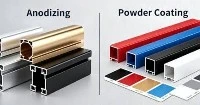
Standard steel or thin aluminum aluminum tubing buckles under dynamic wind sheer. Compliant umbrellas utilize heavy-gauge anodized aluminum or flexible fiberglass ribs. Fiberglass acts like a fishing rod-bending under extreme pressure to absorb wind energy, then snapping back into shape without deformation.
2. Center Pole Wall Thickness
A standard center pole often fails at the table-latch junction. A commercial-grade center pole features internal structural ribs and reinforced wall thickness to withstand sustained torque forces.
3. Canopy Canopy Venting & Fabric
Fabric selection directly influences air passage. Premium solution-dyed acrylic textiles like Sunbrella fabric offer exceptional hydrostatic head pressure resistance and superior UV colorfastness, while multi-tiered wind vents release trapped air pressure underneath the canopy.
4. Cantilever Geometry Dynamics
Offset shade presents unique challenges. When testing the Best Cantilever Patio Umbrella, engineers evaluate asymmetrical canopy rotation and boom arm sway under heavy gusts to ensure the rotational locking mechanisms hold firm.

⚖️ Material Selection Matrix for High-Wind Environments
Choosing the right materials ensures long-term ROI for commercial grade patio furniture installations:
| Component | Ideal Material Choice | Performance Advantage | Certification / Standard Benchmark |
| Pole Structure | High-tensile marine grade aluminum | Corrosion resistance & high yield strength | Salt spray tested / ASTM B117 |
| Rib System | High-flex solid fiberglass | High rib deflection threshold without breaking | ASTM F3512 Section 6 |
| Canopy Fabric | Marine-grade solution-dyed acrylic | 98% UV protection & zero color fading | OEKO-TEX Standard 100 |
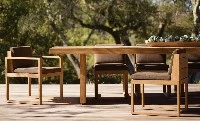
| Eco Frame Option | Sustainably harvested FSC certified wood | Premium aesthetic with dense hardwood grain | FSC Chain of Custody |
| Hardware | 316 Stainless Steel | Zero rust in saline/pool environments | ISO 3506-1 |
🏢 Third-Party Verification & Industry Inspection Bodies
Manufacturers cannot self-certify for ASTM standards. Reliable B2B suppliers submit their products to accredited independent testing laboratories to obtain official verification reports.
Key international testing bodies providing certification and auditing include:
SGS: Conducts comprehensive mechanical stress testing and material durability audits.
TÜV Rheinland: Validates structural safety, wind load resistance, and mechanism fatigue.
Intertek: Specializes in performance testing, UV degradation, and weatherproofing standards.
BIFMA standards: Ensures overall commercial furniture safety, durability, and structural adequacy.
When sourcing shade equipment for major hotel chains, always ask your supplier for direct lab test documentation bearing these official logos.

💡 Procurement Checklist: How to Verify Commercial Umbrella Safety
Before placing a bulk order for your outdoor venue, walk through this quick verification checklist:
📜 Request the Full Lab Report: Ensure the report explicitly mentions ASTM F3512 rather than vague internal factory tests.
🏋️ Verify Ballast Requirements: Check the tested weight rating for the base to ensure your installation matches the lab conditions.
🌪️ Check Wind Speed Ratings: Confirm a verified continuous wind speed rating alongside gust tolerance thresholds.
🛡️ Review Warranty Terms: Commercial warranties should cover both frame structural integrity and fabric fade resistance for at least 3 to 5 years.
FAQ:
Q1: What wind speed must an umbrella withstand to pass ASTM F3512?
While ASTM F3512 specifies physical testing procedures rather than a single pass-fail wind number, high-end commercial market umbrellas are tested to maintain structural integrity up to a continuous commercial umbrella wind speed rating 45 mph or higher.
Q2: Is ASTM F3512 certification legally mandatory for commercial properties?
While local building codes vary, insurance underwriters and risk management teams for major hotel chains increasingly mandate ASTM-certified outdoor shade to protect against liability claims caused by flying equipment.
Q3: How does a cantilever umbrella perform differently under ASTM F3512 wind testing?
Cantilever designs experience high rotational torque because the support pole is positioned off-center. ASTM F3512 evaluates arm flex, swivel joint resistance, and base counterweight ratios to prevent tipping or joint snapping.
Q4: What base weight is required to maintain ASTM F3512 compliance?
Base weight depends on canopy size and wind exposure. Generally, freestanding market umbrellas require a Patio Umbrella Stand weighing between 100 lbs and 200+ lbs, or permanent inground sleeve mounts for maximum stability.
Q5: Who performs physical wind tunnel testing for ASTM F3512?
Testing must be performed by accredited independent laboratories such as SGS, TÜV Rheinland, or Intertek equipped with specialized aerodynamic wind tunnels.
Q6: Does ASTM F3512 cover canopy fabric fade or water resistance?
ASTM F3512 focuses primarily on structural wind performance and physical mechanics. Fabric performance (such as UV fastness and water repellency) is evaluated under separate standards like AATCC 169 or ISO 105.
Q7: Can wooden frame umbrellas pass ASTM F3512 testing?
Yes, provided high-density hardwoods or laminated timber are used. Specifiers often choose FSC certified wood frames engineered with reinforced stainless steel joints to pass stress requirements.
Q8: What is the difference between static load testing and dynamic wind tunnel testing?
Static testing applies stationary weights to structural joints. Dynamic wind tunnel testing subjects the complete umbrella to turbulent, fluctuating air streams that replicate natural gust dynamics and lift forces.
Q9: How can procurement managers spot fake ASTM test claims?
Always request the original PDF lab test document from the supplier. Verify the lab report number, date, test protocol description, and contacting the issuing body (e.g., SGS) if authentication is necessary.