
A common question floating around commercial architecture forums and hospitality design groups on LinkedIn is simple: When the blades shut, is a waterproof louvered pergola truly 100% waterproof?
A client operating a luxury rooftop lounge in Miami recently reached out to us. They had purchased a cheap, residential-grade patio shade structure from a local distributor. During a typical tropical downpour, water didn't just drip; it actively sheeted through the blade joints, ruining $10,000 worth of designer upholstery. This is a classic industry nightmare. It proves that in the outdoor living sector, a shadow of a design flaw translates directly to financial loss.
For an outdoor pergola, managing water is not just about shutting the roof; it is about managing fluid dynamics, capillary pressure, and material tolerances under intense load.
The Anatomy of Louver Waterproofing: Blades vs. Gaskets
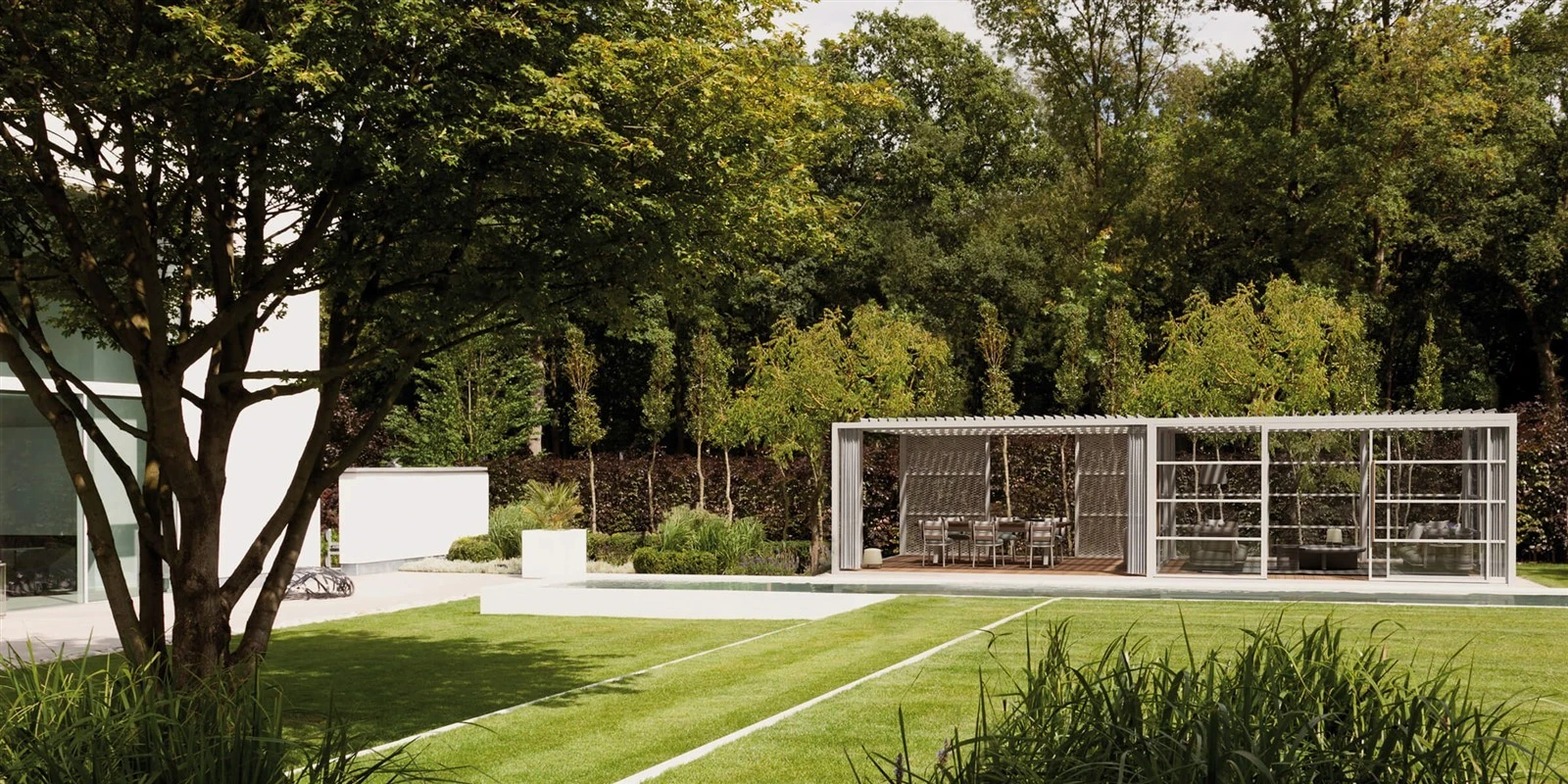
To understand where leaks happen, you must understand how a premium louvered roof pergola seals. When the motorized system closes the roof, two structural lines of defense are activated: the aluminum profile overlap and the rubber sealing barrier.
Not all louvers are engineered equally. Let's break down the structural differences between retail-grade DIY units and professional-tier architectural systems:
📊 Structural Waterproofing Comparison
| Engineering Feature | Retail/DIY Pergola Kits | Howvin Commercial-Grade Systems |
| Aluminum Profile | Light-gauge 1.2mm roll-formed aluminum | 6063-T5 aluminum alloy (2.0mm - 3.0mm thickness) |
| Blade Design | Flat, single-wall overlapping slats | Double-walled aerodynamic interlocking blades |
| Seal Mechanism | Metal-on-metal contact or cheap PVC strips | Co-extruded EPDM rubber strips with UV inhibitors |
| Gutter Architecture | Narrow perimeter tracks, prone to debris blocks | Deep internal drainage system with high-velocity downspouts |
| Heavy Rain Action | Surface tension forces water backward into seams | Double-channel gutters capture overflow immediately |
🌧️ The Heavy Rainstorm Reality Check: Where Leaks Actually Happen
Let's tackle the elephant in the room: What happens during a massive storm? Do the joints and rubber strip edges actually leak or drip?
The honest answer depends entirely on two factors: structural rigidity and gutter volume capacity.
1. Blade Seams and Surface Tension 💧
During an extreme downpour, water creates a film across the roof. If the roof profile utilizes single-wall blades, high winds can push water backward through the seams via capillary action. In contrast, premium systems utilize double-walled interlocking blades. When closed, the tongue of one blade nests deeply into the groove of the next, creating a labyrinth seal that forces water to drop directly into the integrated internal eave gutters rather than penetrating the indoor space.
2. Gasket Degradation and Compression 🛡️
The edges of the rubber strips are the most critical point of failure over time. Cheap PVC or low-grade silicone seals harden under UV exposure, crack, and lose their elasticity within 12 to 18 months. When the louvers close, these degraded seals leave microscopic gaps where water drips.
Commercial manufacturing solves this by using high-density EPDM gaskets, the same material used in automotive windshield seals. EPDM maintains its compression memory for over a decade, ensuring a tight, pressurized seal every single time the system is closed.

🛡️ Engineering Standards & Certifications for Outdoor Structures
When sourcing a weatherproof gazebo or commercial pavilion, you cannot rely on a supplier's marketing claims. You need documented verification from independent, international testing houses.
A high-performance waterproof louvered pergola must pass rigorous hydrostatic and wind-driven rain tests.
📊 Waterproofing Performance vs. Rain Intensity
| Rain Classification | Rainfall Rate (mm/Hour) | System Behavior & Drainage Load | Required Certification Status |
| Light/Moderate Rain | < 15 mm/hr | Standard surface runoff; 100% sealed. | CE compliance certified |
| Heavy Rainstorm | 15 mm - 50 mm/hr | Internal gutters operate at 40% volume capacity. Zero drip. | SGS audited water tightness |
| Tropical Downpour | > 100 mm/hr | Deep double-channel gutters route high velocity flow. | Tested by TUV Rheinland / Intertek |
Every structural component should also feature premium surface treatments like a certified powder coating (such as Qualicoat standard approvals) to prevent micro-pitting along the water channels, which can disrupt smooth drainage flow and cause water stagnation.
🛠️ Step-by-Step Waterproofing Maintenance Guide
Even the most advanced engineered structure requires basic preventative maintenance to ensure it remains completely watertight over years of service.
Clear the Drainage Tracks: Inspect the internal perimeter gutters every quarter. Leaves, twigs, and bird debris will reduce the water evacuation velocity, causing the gutters to overflow inward during sudden cloudbursts.
Inspect Gasket Seating: Run a physical check along the EPDM rubber strips. Ensure no sections have been dislodged by high wind pressures or trapped debris.
Calibrate the Close Limit Switch: Motorized units rely on precise electronic limit switches. If the motor stops even 2 degrees short of full closure, the necessary compression on the rubber gaskets won't be achieved, leading to seam dripping.
Apply Silicone Lubricant: Once a year, apply a light coat of marine-grade silicone spray to the rubber seals to maintain elasticity and prevent the blades from sticking during intense summer heat.
🏢Sourcing the Right Structure: Custom Engineering vs. Mass Production
For global B2B procurement managers, sourcing outdoor shade systems requires balancing architectural aesthetics with extreme structural performance. Working with a dedicated Outdoor furniture OEM manufacturer allows you to customize the structural gauge, column positions, and downspout capacities to match localized weather profiles.
Whether you are acting as a Contract outdoor furniture supplier for a massive resort development or upgrading a residential portfolio, ensuring that the manufacturer utilizes verified 6063-T5 aluminum alloy and advanced extrusion techniques is the only way to promise a true, leak-free outdoor experience to the end-user.
💬 FAQ: What Commercial Buyers Ask
Q1:Can a louvered pergola completely replace a solid concrete roof for waterproofing?
For outdoor use, yes. A properly engineered double-walled system behaves identically to a solid roof when closed, routing 100% of water through internal columns. However, it is not designed to be an airtight indoor ceiling; minor humidity or micro-misting can occur in hurricane-force conditions.
Q2:What happens to the water on top when I open the louvers after a rainstorm?
High-end designs feature a built-in anti-condensate/anti-drip drainage channel on the edge of each blade. When you open the roof, the blades tilt in a manner that forces standing surface water to slide backward into the gutter system rather than dumping directly onto the patio below.
Q3:How much hourly rainfall can a commercial louvered system handle before leaking?
Our commercial systems are tested to handle up to 120mm of rainfall per hour. Beyond this extreme threshold, the risk is not the blade seals leaking, but rather the internal downspouts reaching maximum volumetric capacity.
Q4:Why do some aluminum pavilions make a ticking sound during rain?
Ticking or clicking sounds are caused by thermal expansion and contraction of the aluminum profiles or improper tensioning of the drive mechanism. Premium systems utilize nylon-wrapped pivot pins and insulated buffer brackets to completely dampen operational acoustics.
Q5:Do tinned or galvanized steel fasteners rust and compromise the waterproof seals?
Yes, using low-grade carbon steel screws will cause galvanic corrosion when touching aluminum, weakening the structural joints and destroying the EPDM seals. Always insist on marine-grade 316 stainless steel fastening hardware.
Q6:Can these systems be integrated with automated rain sensors?
Absolutely. Commercial installations heavily utilize integrated rain sensors. The moment a single drop of moisture is detected, the automated controller overrides manual settings and seals the interlocking louvers, protecting the outdoor space even when the property is unattended.