
⚙️ Engineering & Procurement Summary for Hospitality Directors: While timber grading dominates most buying discussions, the structural lifespan of outdoor teak furniture is governed by the quality of its internal metal fasteners, brackets, hinges, and glides. Low-grade steel hardware corrodes rapidly when exposed to rain, salt air, and wood acids, leaving reddish-black rust bleeds and causing catastrophic joint failure long before the timber decays. Specifying marine-grade 316 stainless steel fasteners-supplemented by solid brass threaded inserts and nylon isolation washers-ensures structural integrity across severe oceanfront, poolside, and sub-zero winter environments.

1. The Hidden Failure Point: Why Metal Hardware Outlives or Destroys Teak Timber
When commercial property managers procure premium wooden furniture for oceanfront resorts, rooftop lounges, or high-density outdoor venues, they rightfully evaluate timber origin, grain tightness, and moisture content.
However, field audits reveal a striking industry reality: over 70% of premature structural failures in outdoor teak furniture stem not from timber decay, but from metal hardware degradation.
When inferior metal screws are driven into dense tropical teak, two immediate degradation threats emerge:
Chemical Bleed Staining: Teak heartwood naturally contains organic tannic acid. Low-grade carbon steel or poorly plated zinc fasteners react with this acid, producing dark iron tannate streaks that penetrate deep into the timber grain, permanently ruining the furniture's aesthetic.
Crevice Corrosion & Thread Failure: Trapped moisture inside joinery pockets creates anaerobic pockets where low-grade stainless steels lose their protective passive oxide layer. The metal corrodes from within, shearing off under normal guest weight loads.
This technical challenge brings us directly to the foundational procurement standard: what hardware materials like 316 stainless steel should be used in quality teak furniture?
Understanding the metallurgical differences between fastener alloys determines whether a hotel terrace setup delivers twenty years of trouble-free service or requires costly hardware replacement after a single beach season.

2. Metallurgy Analysis: 316 Marine-Grade Stainless Steel vs. 304 Grade vs. Alternative Metals
To specify the correct hardware components, procurement teams must understand metal composition. Not all stainless steel is created equal.
🌊 The Molybdenum Difference in 316 Grade
The critical differentiator in 316 stainless steel is the addition of 2% to 3% molybdenum. Molybdenum alters the atomic structure of the alloy, dramatically increasing its resistance to pitting and crevice corrosion in high-chloride environments (such as coastal sea spray and salt-chlorinated swimming pools).
304 Grade Stainless Steel: Contains 18% chromium and 8% nickel. While suitable for inland residential spaces, 304 steel suffers from tea staining-a superficial reddish-brown surface oxidation-within 3 to 6 months of coastal exposure.
316 Marine Grade Stainless Steel: Contains 16% chromium, 10% nickel, and 2-3% molybdenum. It maintains a clean, corrosion-free passive surface layer even when continuously subjected to harsh ocean air, salt spray, and heavy precipitation.
Solid Brass: Highly resistant to atmospheric corrosion and rust, making it an excellent choice for decorative accent hardware and internal threaded bushings. However, solid brass possesses lower tensile strength than 316 steel and can develop a green verdigris patina over time if unsealed.
3. Comparative Matrix: Hardware Materials for Outdoor Teak Furniture
Evaluating fastener materials requires balancing physical strength, chemical resistance, aesthetic stability, and total lifecycle costs:
📊 Fastener & Hardware Performance Comparison
| Material Category | Pitting Resistance (PREN Rating) | Resistance to Wood Tannic Acid | Tensile Strength (MPa) | Coastal & Salt Pool Performance | Expected Life in Commercial Use |
| 316 Marine Stainless Steel | 🟢 High (PREN ~23–25) | 🟢 Immune (No Bleeding) | 🟢 High (~620 MPa) | 🟢 Exceptional (Zero Tea Stain) | 20+ Years |
| 304 Grade Stainless Steel | 🟡 Moderate (PREN ~18–19) | 🟢 Resistant (Minor Stain Risk) | 🟢 High (~515 MPa) | 🔴 Poor (Tea Staining in 3–6 Months) | 3–5 Years (Coastal) |
| Solid Architectural Brass | 🟡 N/A (Non-Ferrous) | 🟢 Excellent | 🟡 Moderate (~340 MPa) | 🟢 High (Forms Protective Verdigris) | 10–15 Years |
| Zinc-Plated Carbon Steel | 🔴 Low (PREN < 10) | 🔴 Severe Black Ink Staining | 🟡 Moderate (~400 MPa) | 🔴 Catastrophic (Rusts in Weeks) | < 1 Year |

4. Hardware Integration Across Commercial Teak Furniture Collections
When designing high-traffic hospitality layouts, different furniture categories place unique mechanical demands on hardware systems.
🛋️ Deep Seating & Modular Lounge Configurations
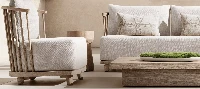
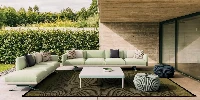
For sprawling pool decks or oceanfront outdoor bars, specifying a modular teak outdoor curved sectional sofa requires heavy-duty structural connector brackets underneath the frame.
Using 316 stainless steel interlocking plates keeps curved sections tightly aligned, preventing frame separation when guests sit on module boundaries.
To elevate evening ambiance in luxury resort lounges, property owners increasingly choose a customizable outdoor teak sofa with integrated LED accent lighting.
In these advanced architectural builds, hardware selection extends to electrical conduits, stainless steel wire routing channels, and IP67 waterproof junction boxes mounted discreetly inside the wood base to ensure zero water ingress during heavy rainstorms.
🍹 High-Traffic Dining & Bar Seating
In commercial café setups or rooftop bars, a teak outdoor counter stool experiences continuous lateral forces, footrest impact, and frequent dragging across stone pavers.
Footrest ring protectors and corner bracing brackets must utilize 316 stainless steel or solid brass to prevent footwear scuffs from wearing down raw timber edges.
❄️ Sub-Zero Winter Exposure Considerations
Procurement officers managing ski resorts or northern retreat properties frequently ask: how long does untreated teak furniture last outdoors in winter snow?
While Grade-A teak heartwood easily withstands sub-zero freezing temperatures and heavy snow pack for 25+ years without rotting, low-grade hardware will fail rapidly under winter conditions. Freezing water trapped around cheap steel screws expands, cracking inferior metal fasteners or splitting surrounding wood joinery.
Equipping frames with 316 stainless fasteners and nylon isolation buffers ensures that freeze-thaw cycles do not compromise mechanical joints.

5. Advanced Joinery Hardware: Threaded Inserts, Glides, and Concealed Fasteners
Quality commercial furniture manufacturing avoids driving wood screws directly into timber for knock-down (KD) assembly joints. Repeated assembly, seasonal wood movement, or heavy guest weight quickly strips raw wood threads.
🛠️ Key Hardware Engineering Features for Commercial Teak
Internal Threaded Inserts: Solid brass or 316 stainless steel helical threaded inserts are pre-driven into the teak heartwood. Machine bolts then thread directly into metal rather than raw timber, allowing furniture to be assembled and disassembled repeatedly without wearing out screw holes.
High-Density Nylon Glides: Table and chair leg bases should be fitted with non-marking, high-density nylon or 316 stainless steel glide feet. These elevate the end grain 5mm off wet patio stones, preventing capillary water absorption into leg ends.
Die-Cast Brass Furniture Hinges: Sun loungers and drop-leaf dining tables require heavy-duty drop hinges. Solid die-cast brass or 316 cast stainless hinges deliver smooth articulation without sagging under commercial use.
📋 Hardware Engineering Specifications Checklist
| Structural Component | Commercial Engineering Standard | Sub-Standard Alternative | Operational Failure Risk |
| Knock-Down (KD) Joints | 316 Machine Bolts + Brass Inserts | Direct Wood Screws | Thread stripping & loose wobbling frames |
| Leg Foot Base | Nylon Glide Feet with 316 Pins | Raw Wood On Ground | Capillary water rot & leg end splitting |
| Lounger Back Hinges | Cast 316 Stainless / Solid Brass | Stamped 304 / Zinc Hinges | Hinge bending, rust binding, frame drop |
| Sectional Connectors | Heavy-Gauge 316 Steel Plates | Plastic Clips / No Clamps | Sectional sofa drift & guest trips |
6. Testing Standards, Corrosion Certifications, and Quality Audits
Before approving commercial production runs, quality assurance managers must review certified laboratory testing documentation for all metal hardware lots.
🛡️ Essential Corrosion & Safety Certifications
ASTM B117 / ISO 9227 Salt Spray Testing: Operating hardware in a continuous 5% salt fog chamber at 35°C. Grade 316 stainless steel fasteners must achieve over 1,000 hours of continuous exposure without showing red rust or pitting.
XRF Alloy Spectrophotometry: Non-destructive elemental analysis verifying that stainless steel batches contain the required 2–3% molybdenum and 10% nickel content prior to assembly.
EN 581-1 / EN 581-2: European mechanical safety and strength standards testing hardware joint stability under repeated horizontal and vertical impact forces.
BIFMA X5.5: American National Standard verifying table and seating structural load capacities under commercial hospitality usage.

7. Financial ROI: Why Marine-Grade Hardware Protects Property Margins
Investing in 316 marine-grade hardware increases raw manufacturing costs slightly, but it dramatically reduces total lifecycle operating expenses for venue owners.
The Cost of Cheap Fasteners
Using cheap fasteners in commercial outdoor furniture creates significant hidden expenses:
Stained Timber Losses: Rust bleeds permanently stain light golden teak wood, requiring expensive chemical cleaning or full timber replacement.
Maintenance Labor: Hotel engineering staff spend dozens of hours replacing rusted screws, tightening loose joints, and untangling bound lounger hinges.
Guest Safety Liability: Loose or corroded hardware can lead to sudden structural joint failure, posing guest injury risks and insurance claims.
Specifying 316 marine stainless steel hardware protects both the physical furniture asset and the venue's operational bottom line.
FAQ:
Q1: Is 304 stainless steel acceptable for indoor-outdoor covered patios away from the ocean?
While 304 stainless steel can perform adequately in inland, fully covered dry environments, it remains vulnerable to ambient humidity and wood tannic acid over time. For commercial hospitality applications where furniture is washed down regularly or exposed to seasonal humidity shifts, specifying 316 marine-grade steel remains the safest choice to guarantee zero rust staining or joint degradation.
Q2: Why does iron tannate rust staining occur on teak wood, and how can it be removed?
Iron tannate staining occurs when moisture brings low-grade carbon steel or iron particles into contact with the natural tannic acid inside teak heartwood, creating dark blue-black ink-like spots. If this occurs, the black stain can be chemically neutralized using an oxalic acid wood cleaner applied along the grain, followed by thorough rinsing with clean water.
Q3: Are solid brass fasteners stronger than 316 stainless steel fasteners?
No. While solid brass offers excellent natural corrosion resistance and zero rust staining, it has lower tensile and shear strength than 316 stainless steel (roughly 340 MPa for brass versus 620 MPa for 316 steel). For primary structural joints, load-bearing frames, and heavy table legs, 316 stainless steel is superior. Solid brass is best reserved for internal threaded bushings, decorative caps, and low-stress latches.
Q4: How do nylon isolation washers prevent galvanic corrosion in outdoor furniture?
Galvanic corrosion occurs when two dissimilar metals (such as an aluminum frame bracket and a stainless steel bolt) touch in the presence of an electrolyte like rainwater or sea spray. Placing non-conductive nylon isolation washers between different metal components breaks the electrical circuit, preventing localized galvanic corrosion and extending hardware lifespan.