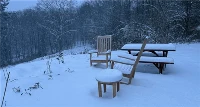

❄️ Extreme Weather Resilience Summary: For commercial resort developers, mountain hotel operators, and luxury estate managers, determining whether outdoor furniture can survive year-round weather exposure is essential for minimizing seasonal labor costs and storage overhead. When evaluating can outdoor teak furniture be left outside in rain, snow, and freezing winter weather?, wood science confirms that premium Grade-A teak naturally resists sub-zero temperatures, intense rainfall, and ice accumulation. Thanks to its exceptionally dense cellular structure, high natural rubber resin content, and organic protective oils, properly kiln-dried teak timber will not warp, rot, or split when left outdoors through severe winter blizzards.

1. The Physics of Freeze-Thaw Resistance: Why Teak Defies Winter Weather
To understand why teak survives sub-zero temperatures while common woods fail, mechanical engineers examine timber cell density and internal moisture behavior during thermal freezing cycles:
When liquid water penetrates raw wood and freezes, it expands by approximately ten percent. In porous timbers like pine, cedar, or low-grade hardwoods, this internal ice expansion generates massive hydrostatic pressure, fracturing wood grain fibers and creating deep surface cracks.
Cellular Density and Porosity: Grade-A teak heartwood features an exceptionally tight grain pattern with high volumetric mass (six hundred to six hundred and fifty kilograms per cubic meter). This dense cell arrangement prevents free surface water from soaking deep into the timber core.
Natural Rubber Resins and Silica: Teak trees naturally produce high concentrations of tectoquinone, natural latex rubbers, and silica content. These organic compounds create a hydrophobic internal barrier that repels liquid water, ensuring driving rain rolls off slatted surfaces.
Controlled Moisture Content: Export-grade teak undergoes rigorous computer-controlled kiln drying down to an equilibrium moisture content of eight to twelve percent. Because internal cellular water is safely extracted prior to manufacturing, there is no trapped moisture available to freeze and split structural frames.
2. Rain, Snow, and Acid Deposition: Safeguarding Joints and Hardware
Prolonged exposure to freezing rain and heavy snowfall puts immense stress on mechanical joinery and hardware fasteners.
📐 Structural Integrity of Traditional Joinery
Cheap outdoor furniture assembled with surface screws and plastic brackets frequently collapses under heavy snow loads because freezing moisture corrodes metal fasteners and weakens screw threads.
In contrast, specifying mortise and tenon joinery commercial teak outdoor furniture ensures supreme mechanical stability.
By interlocking solid wood tenons inside precision-milled mortise pockets locked with wooden dowels, the joinery expands and contracts uniformly with seasonal temperature changes without shearing. Furthermore, elite factories utilize marine-grade polyurethane adhesive to completely seal internal joint cavities against water ingress.
🛡️ Hardware Corrosion Resistance
While teak timber is immune to rot, metal hardware components can rust if exposed to acid rain and melting snow. Premium commercial teak collections utilize exclusively 316 marine-grade stainless steel hardware.
Unlike standard galvanised iron, grade 316 stainless steel contains molybdenum, providing absolute resistance against salt spray corrosion, de-icing chemicals, and prolonged atmospheric moisture.

3. Structural Comparison: Teak vs. Alternative Outdoor Materials in Winter
Understanding how different materials react to extreme frost and moisture helps procurement officers make informed investments:
📊 Sub-Zero Winter Performance & Longevity Comparison
| Material Category | Resistance to Sub-Zero (-20°C) Frost | Structural Impact of Heavy Snow Accumulation | UV & Moisture Degradation Risk | Required Winter Storage Action | Expected Commercial Lifespan |
| Grade-A Teak Heartwood | 🟢 Impervious (Zero structural cracking) | 🟢 Exceptional (Handles heavy snow loads) | 🟢 Zero Rot (Weathers to silver patina) | 🟢 Can remain outdoors 365 days | 🟢 25 to 50+ Years |
| Powder-Coated Aluminum | 🟢 Excellent (No frost damage) | 🟡 Good (May flex under heavy snow drift) | 🟡 Paint chips expose metal to oxidation | 🟡 Optional cover recommended | 🟢 10 to 15 Years |
| Synthetic PE Wicker | 🔴 Brittle in freezing cold | 🔴 Poor (Plastic strands snap under snow) | 🔴 Plasticizers degrade in frost/UV | 🔴 Must be stored in climate control | 🔴 3 to 6 Years |
| Softwood / Pressure Pine | 🔴 High risk of freeze-thaw split | 🟡 Moderate (Warps under moisture weight) | 🔴 High fungal rot & mold growth | 🔴 Requires dry indoor storage | 🔴 4 to 8 Years |

4. Soft Goods & Cushion Protection: The Weak Link in Winter Weather
While solid teak frames easily endure freezing blizzards, soft outdoor cushions require distinct seasonal care protocols.
🛋️ Deep Seating Configurations in Winter
When managing an outdoor teak sofa with ottoman set on an open resort terrace, property managers must separate timber maintenance from fabric care. Leaving plush seat cushions exposed under winter snow causes moisture to freeze inside inner foam layers, leading to mildew proliferation and fabric discoloration.
To ensure long-term cushion hygiene without replacing entire lounge sets, commercial properties often source a high density foam cushion replacement for outdoor teak sofas engineered with open-cell reticulated foam.
Reticulated quick-dry foam features a porous honeycomb structure that allows rainwater to drain through instantly rather than trapping moisture inside.
🌧️ Best Practices for Winter Cushion Management
Off-Season Cushion Removal: Store seat and back cushions in a ventilated dry storage room during winter months.
Solution-Dye Acrylic Covers: Specify solution-dyed acrylic fabric (such as Sunbrella or Agora) for cushion covers. Solution dyeing embeds color pigments deep inside synthetic fibers, preventing fading from winter sun glare off fresh snow.
Breathable Protective Covers: If indoor cushion storage space is limited, protect entire sofa assemblies using custom-fit solution-dyed polyester covers equipped with bottom ventilation mesh to prevent condensation sweat.
5. Commercial Procurement: Online Sourcing & Quality Verification
For international hospitality directors looking to buy teak outdoor furniture online, verifying timber grade and factory weatherproofing standards prior to issuing purchase orders is paramount.
When evaluating digital supplier catalogs, commercial buyers should demand documented proof of timber kiln-drying logs, certification of legal sourcing, and structural warranty coverage for sub-zero climate zones.

6. Climate-Specific Winterization Protocols
Different geographical zones expose outdoor furniture to distinct atmospheric stresses. Tailoring seasonal maintenance to regional climates maximizes furniture longevity:
📊 Regional Winterization & Care Matrix
| Geographical Climate Zone | Environmental Stressors | Recommended Frame Action | Cushion Care Protocol | Spring Maintenance Steps |
| Alpine / Heavy Snow (Ski Resorts) | Heavy snow pack, sub-zero freeze, UV snow reflection | Leave outdoors; tilt chairs to drain melting snow | Store cushions indoors in dry storage | Wash with mild soapy water; clear dirt |
| Coastal / Oceanic (Pacific NW, UK) | Continuous driving rain, high humidity, moss growth | Leave outdoors; ensure legs do not sit in standing water | Store cushions or use breathable rain covers | Clean algae with soft bristle brush |
| Arid Cold Desert (Nevada, Gobi) | Extreme night freeze, intense daytime UV, dry air | Leave outdoors; check table leaf extension joints | Store cushions to avoid windborne grit | Apply natural teak protector if desired |
| Sub-Tropical Mild Winter (Florida) | Intermittent rain, warm sun, ambient humidity | Leave outdoors year-round | Leave outdoors; use water-repellent covers | Standard quarterly rinse & sweep |
7. Laboratory Testing, Standards, and International Certifications
Commercial-grade outdoor teak furniture must comply with rigorous international safety, durability, and environmental regulatory frameworks:
🛡️ International Testing Standards & Certifications
EN 581-1 & EN 581-2: European safety, strength, and structural stability standards specifically governing commercial contract outdoor furniture for hotels and public spaces.
EN 350-2: European standard certifying timber natural durability. Grade-A teak heartwood achieves Class 1 Durability (the highest possible rating for rot resistance).
ASTM B117: Standard Practice for Operating Salt Spray (Fog) Apparatus, verifying that stainless steel hardware withstands over five hundred hours of aggressive saline fog exposure.
FSC Certification: Forest Stewardship Council certification confirming that timber originates from responsibly managed plantations meeting environmental and social standards.
SVLK Compliance: Indonesia's mandatory timber legality assurance system certifying fully traceable, legal teak harvesting.
ISO 9001: International standard for quality management systems governing precision joinery tolerances and industrial moisture control.
FAQ:
Q1: Can teak outdoor furniture stay outside in freezing winter weather without a protective cover?
Yes, solid Grade-A teak furniture can remain outdoors exposed to snow, ice, and sub-zero temperatures without a cover. Teak's high density and natural oils prevent moisture absorption, eliminating the risk of frost cracking. However, using a breathable furniture cover keeps the timber clean, reducing spring maintenance and protecting against soot or falling tree sap.
Q2: What causes teak furniture to turn silver-grey during winter, and does it hurt the wood?
The silver-grey patina is a natural oxidation process caused by rain and ultraviolet solar radiation breaking down surface wood pigments. This surface patina is purely cosmetic and does not compromise the structural integrity or decay resistance of Grade-A teak heartwood. If desired, the original golden-brown color can be restored using a dedicated teak cleaner and soft scrub brush.
Q3: Why should teak furniture never be wrapped tightly in non-breathable plastic tarps during winter?
Wrapping teak tightly in non-breathable plastic tarps traps ground humidity and condensation underneath the plastic. This dark, humid microclimate encourages surface mildew and black mold growth on the wood. Always use breathable fabric covers with built-in air vents or leave the furniture uncovered.
Q4: Are outdoor teak sofa cushions safe to leave outside during snowstorms?
No, outdoor cushions should not be left exposed under heavy snow. While cushion fabrics like solution-dyed acrylic are water-resistant, melting snow can seep into zipper seams and saturate the inner foam core. Trapped water inside frozen foam breaks down cushion structure and fosters mildew. Store cushions indoors or inside a sealed weatherproof storage box during winter.