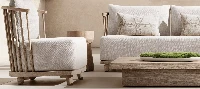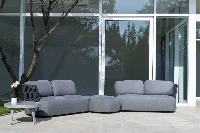

A luxury resort's poolside cabana is booked for a VIP wedding party in fifteen minutes. Suddenly, a guest spills an entire glass of red wine across a pristine, cream-colored daybed cushion.
In the traditional hospitality model, this minor accident triggers a major operational headache: the entire cushion assembly must be hauled off, re-ordered from a regional supplier, or sent to a local upholsterer. The result? Weeks of downtime, an empty lounger during peak season, and hundreds of dollars spent replacing undamaged high-density core foam.
This exact nightmare is why procurement directors and resort operations managers frequently ask us a critical question: Do contract outdoor furniture
manufacturers offer interchangeable slipcover systems with heavy-duty hidden zippers?
The short answer is yes-leading B2B manufacturers actively engineer these modular solutions specifically for high-turnover commercial spaces.
When buying high-end hotel outdoor furniture, switching from fixed upholstery to engineered interchangeable slipcover systems cuts long-term maintenance costs by up to 70%, drastically reduces labor, and keeps outdoor spaces operating at maximum revenue capacity.

1. The Commercial Reality: Why Fixed Cushion Covers Drain Resort Profits
In residential settings, an outdoor sofa cushion might see gentle use on weekends. In hospitality environments, hotel outdoor patio furniture endures unrelenting stress: continuous UV exposure, saltwater spray, chlorine, sunscreen oils, spilled cocktails, and relentless daily wear.
When cushions feature permanently sewn-in covers or flimsy consumer-grade zippers, even minor surface damage ruins the entire unit. Below is a realistic operational comparison between traditional fixed cushion designs and modular commercial covers:
Traditional Fixed Cushions vs. Modular Interchangeable Slipcover Systems
| Evaluation Metric | Traditional Fixed Covers | Modern Modular Slipcover Systems |
| Average Replacement Time | 4 to 8 weeks (Factory re-order) | 3 to 5 minutes (On-site swap) |
| Replacement Cost Factor | 100% (Foam core + Fabric + Labor) | 15% to 25% (Fabric cover only) |
| Sanitization & Washing | Surface spot-cleaning only | Commercial machine washing / Bleach-safe |
| Seasonal Style Flexibility | Impossible without total reinvestment | Instant fabric color/pattern swaps |
| Corrosion Resistance | Low (Standard metal zippers rust) | High (YKK marine-grade zippers) |
| Cushion Lifespan | 2 to 3 seasons average | 5 to 8+ seasons with core reuse |

2. The Anatomy of a Contract-Grade Hidden Zipper System
Not all zippers are built for heavy commercial use. Standard nylon or metallic zippers installed on residential patio furniture quickly corrode when exposed to salt air, or jam when fine sand gets trapped inside the teeth.
To deliver a reliable, seamless appearance on a high-end lounge outdoor sofa, commercial manufacturers implement specific engineering standards for zipper construction and seam alignment.
💧 Weatherproofing Flaps & Water Barriers
A raw zipper track acts as an open channel for rainwater. Commercial systems use overlapping fabric welts (often called zipper garages or storm flaps) that fold over the zipper teeth. This overhang sheds surface water away from the closure while hiding the hardware from view, preserving sleek, modern aesthetic lines.
🤐 Heavy-Duty Zipper Teeth
Instead of cheap metal tracks that oxidize, contract manufacturers utilize YKK marine-grade zippers made from molded polymer resin (such as Vislon #10 gauge). These teeth do not rust, bind, or degrade under direct saltwater spray or extreme UV heat.
🧵 Double-Stitched Reinforced Seams
Hospitality staff pull and stretch covers aggressively during housecleaning shifts. Heavy-duty covers feature double-needle topstitching along all stress points, backed by high-tenacity bonded polyester thread to prevent seam popping over years of use.

3. Real-World Commercial Scenarios for Hotel Operators
To understand the practical value of these systems, let's look at three typical operational environments where modular slipcovers outperform traditional fixed upholstery.
Scenario A: The Beachfront Resort & Pool Deck 🏖️
Poolside daybeds endure constant exposure to body oils, high-SPF sunscreens, and chlorinated water. Traditional fabrics absorb these oils, producing dark, unsightly watermarks that attract dirt.
With removable covers crafted from solution-dyed acrylic, staff can strip off stained covers at the end of the day, run them through a commercial laundry cycle with diluted bleach, and reapply them before breakfast service without losing a single day of lounger rental revenue.
Scenario B: High-Traffic Rooftop Bars & Lounges 🍸
Rooftop venues generate significant revenue from night-time beverage service, but spilled wine, dark spirits, and dropped food are daily occurrences.
By stocking an extra 10% reserve of custom outdoor sofa covers in back-of-house storage, floor managers can swap out a stained cushion cover in under three minutes during peak operating hours. The guest sees flawless furniture, and service continues without interruption.
Scenario C: Seasonal Design & Brand Pivots 🏨
Luxury hotel brands frequently update their color palettes between summer and winter seasons-transitioning from vibrant ocean blues to warm autumn terracottas.
Rather than purchasing entirely new furniture, purchasing modular cover sets from a qualified outdoor furniture manufacturer china allows properties to refresh their entire outdoor aesthetic at a fraction of the capital expenditure.

4. Technical Certifications & Durability Standards
Procurement managers should never rely solely on marketing claims. Commercial-grade outdoor fabrics and zipper assemblies must hold verifiable third-party testing certifications to guarantee safety, fire resistance, and structural longevity.
Essential Testing Standards for Contract Outdoor Cushion Covers
| Certification / Test Standard | Testing Scope & Objective | Commercial Requirement Threshold |
| SGS certification | Fabric tensile strength, seam slippage, and tear resistance | Minimal seam movement under 200N force |
| CAL 117 fire retardancy | Smolder resistance for commercial indoor/outdoor seating | Pass Class 1 cigarette ignition test |
| AATCC 16 lightfastness testing | Resistance to UV degradation and color fading | Grade 4.0 minimum after 1,500-2,000 hours |
| EN 581 contract durability standards | European safety, strength, and stability for contract furniture | Full compliance for public commercial spaces |
| OEKO-TEX Standard 100 | Harmful substance testing for skin contact safety | Certified free from toxic heavy metals & PFAS |
| ISO 9001 quality management | Factory manufacturing process control & consistency | Verified factory audit compliance |
5. Buyer Pitfalls & Common Mistakes (How to Avoid Costly Traps)
While modular slipcovers offer clear operational advantages, improper spec writing during the procurement phase can lead to frustrating field failures. Here are the four most common traps hotel buyers encounter-and how to avoid them.
❌ Trap 1: Specifying Standard Metal Zipper Slides
The Mistake: Choosing standard brass or zinc slider pulls to save on unit costs.
The Consequence: Within six months of ocean air exposure, galvanized corrosion locks the slider in place, tearing the surrounding fabric when forced.
The Solution: Always mandate non-corrosive polymer sliders or marine-treated stainless steel pulls wrapped in protective fabric pull-tabs.
❌ Trap 2: Ignoring Cushion Core Water Ingress
The Mistake: Assuming a water-resistant fabric cover keeps the inner foam completely dry.
The Consequence: Water eventually penetrates through stitching needle holes during heavy storms, causing internal mold growth, foul odors, and core rotting.
The Solution: Pair removable outer covers with internal reticulated quick-dry foam or line the foam core with an ultra-thin, breathable TPU waterproof liner.
❌ Trap 3: Poor Dimensional Tolerances (Saggy vs. Impossible Fit)
The Mistake: Ordering covers without accounting for fabric stretch or foam compression density.
The Consequence: Covers that are too loose create unsightly wrinkles and retain puddle water; covers that are too tight rip along hidden zipper seams during insertion.
The Solution: Require the factory to maintain precise CAD digital patterning, reserving 1.5% dimensional shrinkage allowance for laundered fabrics.
❌ Trap 4: Forgetting Spare Parts Archiving
The Mistake: Purchasing custom furniture without locking in future fabric and cover re-order guarantees.
The Consequence: When covers need replacing three years later, the manufacturer has discontinued the dye lot or destroyed the pattern templates.
The Solution: Partner with an established manufacturer that guarantees pattern digital archiving for a minimum of 5 to 10 years.

6. Zipper & Construction Material Comparison
To select the ideal slipcover configuration for your venue, use this hardware breakdown to guide your technical tender specifications:
Hardware & Construction Specifications for Commercial Projects
| Component Feature | Standard Grade (Avoid) | Commercial Contract Grade (Recommended) | Heavy-Duty Marine Grade (Best for Beachfront) |
| Zipper Type | Nylon Coil (#5) | Molded Plastic Vislon (#8) | YKK marine-grade zippers (#10 Vislon) |
| Pull Tab Material | Stamped Aluminum | Stainless Steel | Polymer Resin with Fabric Pull-Cord |
| Seam Construction | Single Stitching | Double Top-Stitched | Double-Stitched + Heat-Sealed Taping |
| Flap Width | 0.5 inches (Exposed) | 1.0 inch (Concealed) | 1.5 inches (Double-Fold Storm Guard) |
| Fabric Grade | Piece-Dyed Polyester | Solution-Dyed Polyester | Solution-dyed acrylic (300+ GSM) |
7. Working with a Specialized Chinese Contract Manufacturer
Sourcing directly from an experienced outdoor furniture manufacturer china provides significant engineering and customization advantages for large-scale hotel projects.
Leading B2B producers offer comprehensive OEM/ODM customization services, including:
Digital Pattern Archiving: Storing exact CAD cushion cut files under your property's master project code, allowing seamless, single-click replacement cover reorders years after initial installation.
Custom Fabric Matching: Sourcing specialized textiles from world-class mills (such as Sunbrella, Agora, or Axvision) to meet precise brand color standards.
In-House Quality Control: Testing every zipper lot under simulated salt-spray, UV exposure, and tensile pull tests before full-scale assembly.
FAQ:
Q1: Can commercial outdoor slipcovers be washed in standard hotel laundries?
Yes. When constructed from high-grade solution-dyed acrylic or solution-dyed olefin, covers can be washed in commercial machinery using standard detergent and cold water cycles. For stubborn organic stains on light-colored fabrics, a diluted chlorine bleach solution (up to 1:10 ratio) can be safely applied without causing color fading. Always close the hidden zippers fully prior to washing to protect the teeth from snagging during tumbling.
Q2: How do hidden zipper flaps prevent water from penetrating the inner cushion core?
Hidden zipper flaps utilize an overlapping fabric overhang (typically 1.0 to 1.5 inches wide) sewn directly above the zipper track. As rainwater flows down the cushion side walls, gravity directs the water over the smooth exterior flap, completely bypassing the zipper teeth underneath. Combining this with hydrophobic sewing thread ensures water runs off rather than seeping into internal foam layers.
Q3: What zipper gauge size is recommended for heavy-duty commercial daybed cushions?
For large commercial daybeds, sectional sofas, and thick lounge cushions, a #10 gauge Vislon polymer zipper is strongly recommended. The larger teeth provide high lateral strength, preventing the track from bursting open under the heavy weight of multiple guests or during tight cover installation.
Q4: Will metal zipper sliders rust in coastal or high-humidity resort environments?
Standard metal sliders made from aluminum alloys or untreated zinc will oxidize and lock up within months when exposed to salt-laden sea air. To prevent this, contract specifications should require marine-grade molded plastic sliders or electroplated 316 stainless steel pulls designed specifically for high-salinity outdoor conditions.
Q5: How much money do hotels save by using interchangeable slipcovers versus full cushion replacements?
On average, replacing only the fabric slipcover costs 15% to 25% of the price of a complete replacement cushion assembly (which requires buying new reticulated foam, internal liners, and labor). Furthermore, shipping lightweight fabric covers costs a fraction of the freight fees associated with shipping heavy, bulky foam cushion sets.
Q6: How do contract slipcover fabrics comply with hotel fire safety codes?
Commercial outdoor seating used in public spaces, indoor-outdoor lobbies, or high-rise rooftop bars must meet strict smolder ignition standards. Premium contract fabrics pass tests such as CAL 117 fire retardancy and NFPA 260 without relying on toxic chemical sprays that wash off over time.
Q7: Do manufacturers archive pattern templates for future replacement orders?
Top-tier contract furniture manufacturers maintain digital CAD cutting files for every custom project. By referencing your original project purchase order number, the factory can cut and sew exact-fit replacement covers years later without requiring you to ship old cushions back for physical measurement.
Q8: What is the best foam structure to pair with removable hidden-zipper slipcovers?
Pairing removable slipcovers with reticulated quick-dry foam offers the best long-term performance. Reticulated foam features an open-cell structure that allows air and water to flow straight through. If moisture enters the cushion during an extreme downpour, the open-cell core dries rapidly once the hidden zipper is opened slightly to increase airflow.