
1.The Hospitality Spatial ROI Dilemma
Hospitality procurement is rarely about aesthetic preference. For a hotel project manager or procurement director launching a five-star property, outdoor furniture is a capital expenditure asset that must actively drive revenue per available square meter while withstanding extreme physical abuse.
A flawed procurement choice doesn't just look bad-it creates operational bottlenecks. If a housekeeping crew takes fifteen minutes to adjust a single poolside setup, or if UV rays degrade a fabric color within one season, the resort loses both operational efficiency and brand prestige.
Building a bulletproof hotel outdoor furniture procurement list requires balancing guest ergonomics with commercial-grade engineering.
When designing high-yield guest environments-whether creating expansive open-air patio sectionals for a rooftop sunset deck, positioning wind-resistant sun umbrellas across an oceanfront terrace, or selecting stackable dining sets and high-back bar stools for a high-turnover beach club-every piece of furniture must serve a distinct operational purpose.
For large-scale properties, generic residential furniture will fail within months under continuous commercial use. Procurement teams must focus exclusively on commercial grade patio furniture that features verified structural integrity. This deep-dive guide maps out the essential specifications, engineering standards, and deployment strategies required to execute an flawless commercial purchasing plan.

2. Zone-by-Zone Hotel Outdoor Furniture Procurement List
🏖️ The Pool Deck & Wet Areas
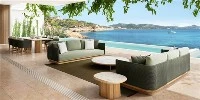
The pool deck is the most aggressive environment on any resort property. Furniture here faces a constant onslaught of chlorinated water, salt spray, body oils, and abrasive chemical sunscreens.
Commercial poolside loungers bulk purchases: Ergonomic sun loungers with replaceable, commercial-grade sling fabrics. Multi-position backrests must feature enclosed, pinch-free mechanisms to eliminate guest injury risks.
Double-occupancy daybeds: Positioned as premium, revenue-generating VIP rentals. Structures require heavy-gauge frames paired with hydrophobic drapes.
Side tables: Integrated with weighted bases to prevent tipping during sudden coastal wind gusts.
🍽️ Alfresco Dining & F&B Terraces
Food and beverage zones require furniture that supports fast guest turnover and immediate cleaning protocols.
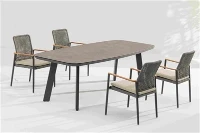
Mid-height dining chairs: Must feature stackable designs (minimum 4-6 high) to facilitate nightly storage and floor maintenance.
Table bases and tops: Highly recommended to specify seamless surfaces to prevent food particles from trapping in joints, eliminating bacterial growth zones.
🏡 Courtyards & Wellness Gardens
These areas focus heavily on landscaping integration and creating calm, residential-feeling sanctuaries for guests.
Deep-seating lounge chairs: Utilizing modular configurations to allow the property to quickly reconfigure the space for private corporate events or weddings.
Sourcing premium boutique hotel garden furniture ensures that intimate courtyard pockets maintain an upscale, residential-inspired aesthetic without sacrificing commercial longevity.

3. Material Engineering & Lifecycle Analysis
Selecting materials for a hotel outdoor furniture procurement list requires examining long-term maintenance costs rather than just the initial purchase price. The table below breaks down how primary commercial structural materials perform over a typical hospitality asset lifecycle.
| 📐 Material Type | 🛠️ Structural Core Specs | 🧼 Maintenance Protocols | ⏳ Expected Asset Lifecycle | ⚠️ Vulnerability Vectors |
| Powder-coated aluminum | Seamless extrusion, minimum 2.0mm wall thickness, Tiger drylac finish | Low; routine fresh water rinse, mild soap spray | 8–10+ Years | Scratches from guest baggage exposing raw metal (though rust-proof) |
| Natural teak | Grade-A certified heartwood, high native oil content | High; annual sanding and oiling, or natural silvering patina | 15+ Years (if maintained) | Surface checking if dried too fast; stains from red wine/oils |
| Synthetic wicker | High-density polyethylene (HDPE), UV-stabilized solid core | Medium; pressure wash on low PSI, bristle brush cleaning | 5–7 Years | Splitting if exposed to localized heat concentrations (e.g., glass reflections) |
| Marine-grade stainless steel | Alloy 316 stainless steel configuration, electropolished | Medium; passivating cleaner applications to prevent tea-staining | 10+ Years | Surface tea-staining in high-salinity beachfront zones if unpolished |
4. The Procurement Manager's Risk Management Blueprint
Hospitality project managers must mitigate massive operational liabilities when finalizing a hotel outdoor furniture procurement list. Below are the non-negotiable engineering safeguards that separate commercial-grade contracts from residential purchases.
🛡️ Fire Retardancy & Fabric Structural Integrity
Every cushion, foam core, and textile specified for indoor-outdoor transitional zones must hold structural flame-resistant certifications. Regular residential foam acts as an extreme accelerant; hospitality projects require specialized cushioning agents.
Ensure your procurement contract mandates CAL 117 compliance for North American projects or BS 5852 source 5 standards for European operations.
Textiles must utilize solution-dyed acrylic fibers, such as Sunbrella or High-performance fabric variants, where pigment is infused directly into the polymer melt prior to extrusion. This process guarantees the fabric can withstand high-ppm bleach cleanings to remove mold, body oils, and sunscreen stains without losing its original color.
🏗️ Hardware and Structural Joints
A major point of failure in high-traffic outdoor furniture is the structural joinery. Budget furniture relies on simple screw-in bolt configurations that loosen under constant shifting.
Commercial specifications mandate fully welded, TIG welding joins that are polished smooth before powder coating. All internal hardware connecting moving parts (such as lounger adjustment brackets) must use non-corrosive, marine-grade components to prevent internal rusting that seizes up mechanisms over time.
💨 Wind Load Calculation & Weight Management
If outdoor furniture is too light, sudden winds can turn a terrace chair into a dangerous projectile or blow a lounge chair directly into the main resort pool. Conversely, if a piece is too heavy, the housekeeping staff will struggle to move it, driving up daily labor costs and room turnaround times.
Rooftop & Beachfront Zones: Specify heavy-gauge frames or custom floor-anchoring tracks.
Poolside Slings: Ensure frames use open-weave matrices or mesh designs that allow high winds to pass directly through the furniture, keeping it safely anchored to the deck.

5. Operational Layout & Zoning Analytics
Maximizing floor plan efficiency requires understanding the physical spatial demands of each furniture type. This structural matrix assists project managers in setting correct spatial allocation budgets within their master hotel outdoor furniture procurement list.
| 🏨 Property Zone | 📐 Recommended Spatial Footprint per Unit | 📜 Non-Negotiable Safety & Performance Certifications | 💡 Key Operational Design Feature |
| Main Pool Deck | 3.2 m² per lounger setup (includes clearance corridors) | SGS load tested to 200kg, UV rating ▲ 2000 hours | Hidden wheels on rear legs for rapid severe weather evacuation |
| All-Day Dining Terrace | 1.8 m² per 2-top dining set configuration | BIFMA X5.5 (desk/table products), EN 581 commercial | Replaceable glide feet to protect expensive stone tiling |
| Rooftop Lounge / Sky Bar | 4.5 m² per modular patio sectional group | NFPA 260 cigarette ignition resistance certification | Removable cushion systems with hidden stainless steel d-rings |
| Oceanfront Guest Balcony | 2.2 m² per set (two chairs + one accent table) | ISO 9227 neutral salt spray testing (minimum 500 hours) | High structural weight minimums to prevent high-altitude wind lift |
6. Step-by-Step Sourcing & Execution Timeline
To avoid costly construction delays, a hotel outdoor furniture procurement list should be executed using a structured phase-gate process.
Phase 1: DD Spec Lock ──► Phase 2: Mock-up Audits
Phase 1: Deep Specification Locking (Weeks 1–4)
The procurement team aligns with the interior design group to verify all material finishes, fabric colorways, and precise dimensional boundaries against the master architectural site layouts.
Phase 2: Prototype & Mock-up Room Audits (Weeks 5–8)
Before signing off on mass production orders, require the manufacturer to supply physical mock-up units. Place these sample items directly on-site to undergo real-world testing.
Subject the samples to concentrated chlorine bathes, high-intensity cleaning compounds, and physical drop tests to check for frame flexing or weld failures.
Phase 3: Mass Production & Independent Quality Audits (Weeks 9–16)
Once prototypes are approved, mass production begins. Contract an independent third-party inspection agency, such as TUV or Intertek, to conduct random line audits.
The inspectors will verify that the factory is using the exact raw material wall thicknesses specified in the contract, and confirm that the powder coating thickness meets minimum mil specifications across all hidden joints.
Phase 4: Logistics, Installation, and Asset Tagging (Weeks 17+)
Coordinate container arrivals with the on-site construction schedules to avoid double-handling charges. As furniture is unboxed on the property, the operations team should apply unique weatherproof asset tags to each item.
This creates a clean tracking system for managing future maintenance schedules, fabric replacement cycles, and long-term warranty tracking.

7. Hospitality Industry FAQ
Q1: What is the difference between residential and commercial warranties for outdoor furniture?
Commercial warranties cover high-frequency public usage, typically spanning 3 to 5 years for structural frames under 24/7 exposure. Residential warranties explicitly exclude coverage if the product is deployed within a commercial, revenue-generating environment, leaving a hotel completely unprotected against early failure claims.
Q2: How can a resort manage cushion storage during unexpected heavy rainstorms?
Specify cushions engineered with open-cell QuickDry foam cores wrapped in a water-permeable mesh lining. This design allows rain to drain straight through the cushion interior within minutes, rather than absorbing water like a sponge. This eliminates the need for staff to scramble and store cushions indoors during sudden summer storms.
Q3: Why is powder coating thickness critical for oceanfront hotel properties?
Standard powder applications often leave microscopic pinholes along complex welded joints. In high-salinity coastal environments, salt air penetrates these micro-gaps, causing sub-film corrosion that lifts the coating and creates unsightly bubbling. Commercial specs require a multi-stage pre-treatment wash followed by an anti-corrosive primer coat prior to the final color layer.
Q4: How do we prevent sunscreens and tanning oils from permanently staining pool lounge fabrics?
Ensure all specifies slings and fabrics undergo a specialized soil-resistant treatment during weaving. The procurement list should explicitly demand composite fabrics made from PVC-coated polyester yarns, which can be wiped down instantly with a mix of isopropyl alcohol and water without degrading the underlying structural weave.
Q5: Can we use real wood on an open-air rooftop bar deck without full-time maintenance staff?
It is highly discouraged unless you budget for the labor costs of regular maintenance. Unprotected hardwoods will quickly weather to a silver-gray color and develop surface checks under intense rooftop UV exposure. For low-maintenance rooftop operations, specify aluminum frames finished with high-definition sublimated wood-grain powders to achieve a warm look without the upkeep.
Q6: What stackability parameters should be required for restaurant patio furniture?
Standard dining chairs on an outdoor terrace should stack safely at least 4 to 6 units high without tipping. The frame design must incorporate protective bumper pads on the undersides of the seats to prevent metal-on-metal scratching when chairs are stacked by the cleanup crew at night.
Q7: How do we protect delicate stone or composite pool decks from scratching?
Every ground-touching frame foot must be fitted with heavy-duty, injection-molded polyurethane or nylon glide feet. These glides must be secured using mechanical screws rather than cheap pop-in friction fits, ensuring they remain firmly attached to the furniture legs during daily guest shifting.