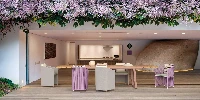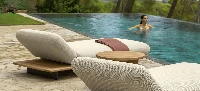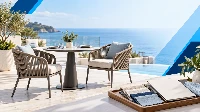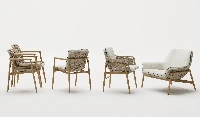

A pool deck can look spacious before anyone uses it. Then the loungers recline, dining chairs move back, towels collect on side tables and an attendant needs to get a cleaning trolley through. The furniture count still matches the drawing, but the space no longer works as intended.
Choosing commercial pool furniture means reviewing that occupied, working arrangement before placing the order. The strongest shortlist combines appropriate product evidence with a realistic plan for guest comfort, circulation, cleaning, drying, movement and repair. Neither a material name nor a "commercial-grade" label answers all of those questions.
For a busy hotel, resort, club or residential amenity pool, start with the furniture mix and operating routine. Then assess the exact models against them. There is no universal best material, lounger-to-room ratio or service-life figure that can replace this work.
Build the furniture mix around the way the deck is used

"High traffic" needs an operating description. Frequent changes of guest, long periods of occupation, repeated furniture movement and intensive cleaning place different demands on the selection. Record which of those conditions the property actually expects.
An established venue can draw on housekeeping records, repairs and staff observations. For a new development, ask the intended operator to walk through a normal busy day. Treat projected usage as a planning assumption, not an industry average.
The following is a selection framework, not a prescribed layout or furniture ratio:
| Pool-deck area | Furniture worth considering | Decision that needs resolving |
|---|---|---|
| Main sunbathing zone | Adjustable loungers and reachable side tables | Can guests recline and staff reset the area without obstructing circulation? |
| Family or social seating | Upright armchairs, dining-height seating and appropriate tables | Can the intended users sit comfortably, eat and reach belongings without relying on a low sunbed? |
| Premium relaxation zone | Cushioned loungers, daybeds or lounge seating | Can the team manage the complete upholstery, occupied footprint and recovery after wet use? |
| Poolside dining or bar terrace | Coordinated chairs, stools and table/base combinations | Do seating height, foot support, legroom, stability and service access work together? |
| Areas regularly cleared | Models specifically designed for the planned handling or storage method | Does the approved movement and storage arrangement fit the actual route and staffing? |
Give upright seating and tables a proper place
A line of commercial sun loungers does not serve every activity. A guest eating lunch, accompanying a swimmer or talking with a group may need an upright chair and a usable table instead.
Review the proposed chair and table together. Check seat height, arms beneath the tabletop, knee space, the base position and access from the intended approach. Some guests may value supportive arms and an easier sit-to-stand movement; the sample review should consider the intended range of users rather than one purchaser's preference.
Side tables deserve the same attention. Check whether guests can reach them without an awkward stretch and whether their bases project into walking space. A table is not an additional seat unless it is expressly designed for that use. Howvin's outdoor dining furniture collection provides a starting point for reviewing coordinated options; suitability still depends on the selected models.
Draw the occupied arrangement, including access equipment
When planning poolside furniture for hotels, use actual dimensions in the positions people will use: backrests reclined, chairs pulled out, parasols installed and daybeds occupied. Include trolley movement, cleaning access and the route between furniture and storage.
Keep required access to exits, pool-entry equipment and other safety facilities clear. Have the responsible project designer and operator review circulation, supervision and applicable accessibility requirements before fixing the furniture quantity.
For example, the U.S. Access Board's ADA Standards specify clear deck space at pool lifts. That space should not become an informal location for a lounger or umbrella base. The requirement concerns a particular U.S. access element; it is not a worldwide spacing rule between sunbeds. U.S. Access Board ADA Standards, section 1009.2.3.
Resolve shade and exposed contact surfaces together
Consider where the intended shade falls while furniture is occupied, along with the positions of bases, poles and moving canopies. Adding a parasol after the furniture layout has been approved can create a different circulation problem.
Review the actual proposed colours, arms, frame edges, adjustment points and seating surfaces under representative conditions. An indoor comfort trial cannot establish their exposed-sun performance. Arrange a controlled assessment with competent staff and appropriate measurement where needed; do not ask guests to test potentially hot surfaces. Neither a towel nor a material category should be treated as proof of acceptable contact comfort.
Select the material and seating system as one assembly

For outdoor pool furniture, separate the load-bearing structure from the finish, fittings and surface touching the guest. Two visually similar items can have different connections, textiles, drainage details and repair arrangements.
Metal frames: examine coating, joints and small components
For an aluminum or steel-framed item, identify the actual material and finish, then examine welds or mechanical connections, fasteners, feet and any moving components. Ask how the proposed specification addresses the stated environment and how coating damage is to be maintained.
A corrosion-resistance description does not mean care can be omitted. Tropitone's instructions, for example, warn that salt can accumulate on painted finishes in seaside settings and chlorides can accumulate in indoor pool environments. Those are product-care instructions from that manufacturer, not a guarantee about every metal frame. Tropitone Product Care.
Give bidders a precise setting: an open-air inland pool, beachfront deck and enclosed pool hall are different briefs. "Suitable outdoors" leaves too much unresolved when exposure is central to the purchase.
Moulded resin: ask about the particular construction
For resin seating, identify the material specification and the evidence for the finished item, including the relevant load, stability and exposure requirements. Inspect feet, backrest supports, adjustment points and the areas that contact another item when stacked.
The absence of a painted metal main frame does not answer questions about every fitting, seating insert or mechanism. Nor does the word "resin" establish an approved stack height or intended user capacity. Review the quoted configuration, not a generic description of plastic furniture.
Timber and woven details: agree on the appearance the operator will maintain
Where timber, rope or woven surfaces form part of the design, establish the actual material, supplied finish, cleaning access and accepted changes in appearance. Ask what maintenance the selected model requires to preserve the intended presentation.
Include joints, exposed ends, woven junctions and concealed support surfaces in the sample inspection. The practical question is whether staff can inspect and care for the item using the property's approved routine. A distinctive finish can justify additional work, but that work should be understood before award.
Sling seating and full cushions create different service tasks
A sling introduces fabric tension, edge attachments and a replacement method. A moulded seat needs its own comfort assessment. A cushioned lounger or daybed adds covers, filling, fastenings, drying and storage to the operating plan.
Confirm whether the product is intended to be used without an additional cushion. Removing a specified mattress to simplify housekeeping may leave a configuration that was never approved. Equally, adding a loose mattress changes the item the team must operate and maintain.
A premium upholstered zone can be appropriate where that service is planned. It should not be selected on the assumption that "outdoor fabric" removes the need to handle wet cushions.
Know what the product evidence actually covers

Mechanical reports need a model, configuration and use category
When comparing commercial pool lounge chairs, request the relevant report or supporting documentation for the actual item offered. Match its identifier, photographs, construction, seating surface and applicable configuration to the sample and quotation. Resolve differences with the supplier or laboratory.
NEN's public scope for EN 581-2:2026 concerns adult outdoor seating mechanical safety, strength and durability. It excludes removable upholstery, wheel durability and ageing caused by light, temperature and moisture, among other matters. A report to that standard therefore cannot establish complete cushion or weathering performance. The relevant requirements must still be selected for the product and destination market. NEN EN 581-2 scope.
Tables also need appropriate evidence for their own construction and intended use. A seating report is not a report for a table/base assembly. Keep stability, top fixing and any umbrella interface within the table's approval rather than transferring evidence from a matching chair.
Weathering results are not a calendar warranty
For UV, corrosion or other exposure claims, ask which material or assembly was tested, under what method and conditions, and against which acceptance criterion. Check whether the evidence identifies the finish, colour or fabric actually being supplied.
Q-Lab explains that accelerated weathering hours have no universal conversion into years outdoors. Test results can still inform selection, but a brochure's hour figure does not establish a guaranteed service life at the property. Keep test evidence, manufacturer warranty and any documented field history as separate records. Q-Lab on weathering correlation.
Check whether the furniture can return to service after a busy day

Approve a cleaning process for the complete item
Provide the supplier with the proposed cleaning product, concentration, contact time, application method and rinsing procedure. Obtain compatibility guidance for the frame, finish, sling or cover, seams, fittings and tabletop as applicable.
This matters when one cleaning operation reaches several materials. Tropitone, for example, lists bleach-containing cleaners among the products not to use on its stainless-steel furniture. A textile's cleaning allowance should not be transferred to adjacent components. Manufacturer's material-specific care instructions.
Have the operator resolve the cleaning plan with its hygiene requirements. Compatibility with a finish does not demonstrate disinfection effectiveness. Test the approved process on a suitable sample, following instructions, and inspect the result. Use the product-specific dilution and method rather than a general bleach recipe; pressure washing also needs express approval.
Assess the completed cushion, including the filling
Sunbrella's guidance distinguishes its water-resistant fabric from fully waterproof material and notes that finished-cushion fillings vary by manufacturer and product. A fabric name alone does not establish the behaviour of the complete cushion. Sunbrella's cushion guidance.
Ask for the filling, cover construction, seams, underside, fastenings and care label. Where drying affects availability, agree a representative assessment with the supplier: how the sample will be wetted, how it will be positioned, the surrounding conditions and what the operator considers acceptable for reuse. Record the outcome rather than repeat an undefined "quick-dry" claim.
Work through the handling after rain or wet use. Where does the complete cushion drain? Is there ventilated space for it? Who removes and reinstalls it, and where are clean replacements kept? Changing a cover does not, by itself, establish that the filling is ready for another guest.
Rehearse movement and stacking on the actual route
Stackable pool loungers need an approved stack count, stacking position, overall stack dimensions and handling method. Check whether cushions come off, which surfaces touch, and whether a trolley or other equipment is required.
Tropitone warns that nesting furniture moves forward as a stack grows and specifies adherence to recommended stack heights. That is a useful reason to obtain model-specific instructions, not a stack limit that can be copied to another product. Stacking and nesting instructions.
Review doors, turns, thresholds, gradients and the storage floor using the planned handling arrangement. Do not assume a wheeled lounger can be moved over every surface in the same way. Staff should use the instructed lifting or rolling points, rather than drag the frame or pull an unsuitable component.
Use the sample to make an approval decision

A sample review is most useful when it reproduces the intended work and ends with a recorded decision. Include procurement, design and the people responsible for pool service, housekeeping and maintenance.
For a shortlisted configuration, arrange a controlled rehearsal:
Set out the occupied furniture group. Check the reclined bed, pulled-out chair, table, shade base and required routes together.
Review normal use. Assess sitting, rising, reach and manufacturer-instructed adjustment for the intended users, without treating this as a safety certification.
Carry out approved cleaning and drying checks. Record compatibility, access to soiled areas and the handling needed before reuse.
Move and store it as instructed. Check the route, equipment, staff handling and actual storage footprint.
Demonstrate an agreed service task. Where relevant, show how a glide, cover or other approved replaceable part is identified and changed.
Record the model and revision, dimensions, finish, textile and accessory references, observations, outstanding issues and responsible approvals. Define acceptable outcomes before the review where possible. If cleaning is incompatible, the item obstructs an approved route, a mechanism operates incorrectly or a required report cannot be matched, hold approval until the issue is resolved.
This is an operational and ergonomic review. Do not improvise overload, tipping, entrapment or wind tests on site. Those questions need the relevant product evidence and qualified assessment.
Purchase the support needed to keep the deck usable

Specify pool furniture replacement parts by reference
Ask which feet, wheels, glides, slings, backrest components, covers and cushions are serviceable. For each relevant part, obtain a compatible reference, replacement instructions, required tools and the supplier's confirmed supply arrangements. "Replaceable" does not automatically mean locally stocked or practical for the hotel's team to fit.
Keep these details with the purchase record. Standardising a manageable set of models and components may simplify inventory, but retain enough variation to serve the different zones. A single design everywhere is not necessarily operationally efficient.
Compare the complete offer and plan the handover
Compare furniture, upholstery, approved accessories, relevant service parts, packaging, delivery and assembly scope on the same basis. Use the property's own information to assess cleaning effort, storage and repairs. Do not accept a fixed savings percentage or replacement cycle without evidence that fits the project.
Read warranty conditions alongside care instructions, including commercial-use eligibility and the proposed exposure. Obtain an inspection and maintenance plan covering items such as loose or missing fittings, damaged seating surfaces, cracked components and unreliable adjustment. Unsafe or suspect items should be taken out of service while they are assessed, not left in use pending a commercial decision.
When reviewing Howvin's commercial pool furniture range, identify the proposed models before requesting their supporting documents. Category-level guidance does not establish a model's load capacity, test status, stack limit or replacement availability.
For a project enquiry, share the zone plan, destination, quantities, intended use and operating constraints through Howvin's contact page. The purchase is ready to progress when the furniture arrangement, product evidence and staff routine support the same decision.
FAQs
Can furniture sold for poolside use be installed on a submerged pool ledge?
Not on the poolside description alone. Obtain written approval for the exact model's immersion conditions, permitted water depth, pool-water compatibility and support surface. Include installation, retrieval and any filling or restraint procedure specified by the manufacturer. A dry-deck item and an in-water item are different purchasing applications, even when they look similar.
Can a single-person lounger report support approval of a two-person daybed?
Do not assume it can. Confirm the tested model, configuration, intended occupancy and declared capacity with the supplier or laboratory. A larger-looking frame or a quoted static-load figure does not establish the evidence for shared use. Resolve the documentation for the complete daybed rather than adding together capacities from other products.
Can a furniture supplier certify that the complete pool deck is accessible?
A product document alone does not approve a complete site layout. Accessibility depends on the applicable destination rules, routes, access equipment and arrangement in use. Have the responsible project professionals assess the plan. A supplier can provide dimensions and relevant product information, but a general "ADA-compliant furniture" description should not be treated as certification of an entire pool deck or as a worldwide approval.
Can the hotel add a different mattress after the loungers arrive?
Treat it as a change to the approved configuration. Review dimensions, attachment, adjustment, cleaning and any affected product evidence or warranty conditions with the supplier. Obtain written acceptance where needed. An outdoor cushion is not automatically interchangeable with the mattress or seating surface originally specified.
Will matching-looking models from later batches accept the same spare parts?
Only if compatibility is confirmed. Retain model and revision identifiers, component references and relevant dimensions. Check the replacement sling, wheel, backrest fitting or other part against those records. Confirm whether old and new versions may stack together as well; similar appearance does not establish a compatible stacking interface or an exact finish match.
Who sets the weather-closure procedure for furniture and parasols?
The property must assign operational responsibility and establish a procedure using the actual product instructions, site conditions and qualified advice where needed. Confirm who monitors conditions, closes or removes equipment, and authorises reopening. Do not substitute a generic wind-speed number or an improvised heavier base for a reviewed product-and-site arrangement.