
Outdoor umbrella canopies in commercial hospitality environments endure constant exposure. Sunscreen overspray, atmospheric soot, bird droppings, red wine spills, and hard water minerals continuously degrade the canvas.
For resort facility managers and outdoor dining operators, the core operational challenge is straightforward: how do you remove embedded dirt without stripping the microscopic protective treatments that make high-end canvas waterproof and stain-resistant?
Knowing how to clean solution-dyed acrylic umbrella canopies without damaging the protective coating preserves both the aesthetic appeal and the long-term weatherproofing of your outdoor investments.
When maintenance crews use aggressive pressure washers or harsh industrial solvents, they may remove the stain-but they also strip away the factory-applied surface barrier. The result? A canopy that absorbs water like a sponge and accumulates grime twice as fast.
Understanding Solution-Dyed Acrylic & Its Vulnerable Coating 🔬
To clean high-grade outdoor fabric effectively, you must first understand its material composition.
Unlike piece-dyed textiles where yarn is woven first and dipped in dye baths, solution-dyed acrylic features color pigments mixed directly into the liquid acrylic polymer prior to fiber extrusion. The color locks into the very core of every yarn strand. You cannot bleach the color out of true solution-dyed acrylic.
However, the fabric's weather resistance relies on a secondary chemistry: a factory-applied Durable Water Repellent (DWR) finish. This ultra-thin fluoropolymer nanocoating lowers the fabric's surface energy, causing water droplets to form high contact angle spheres that roll off effortlessly.
The Coating Threat
While the acrylic fiber itself is virtually indestructible, the microscopic DWR coating is susceptible to damage.
High pH alkaline cleaners, harsh solvents, heavy scrubbing with wire brushes, and high-pressure water jets break down this chemical barrier. Once stripped, the bare acrylic fibers lose their hydrophobic surface tension, making the canopy vulnerable to water saturation and rapid soil absorption.
Common Cleaning Mistakes That Ruin Canopy Coatings ⚠️
Hospitality maintenance teams frequently destroy protective coatings through well-intentioned but improper cleaning methods.
Using High-Pressure Power Washers: Blasting canvas with water pressure exceeding 1,200 PSI shears the DWR coating right off the fiber surface. It can also physically stretch the weave, ruining the canopy shape.
Applying Harsh Degreasers or Solvents: Industrial solvents dissolve the synthetic polymers within the water-repellent layer, leaving raw, unprotected fabric behind.
Scrubbing with Hard-Bristle or Wire Brushes: Abrasive friction wears away the protective surface layer, causing the top fibers to fray.
Folding Canopies While Wet: Packing away damp fabric traps moisture inside folded pleats, encouraging mold spores to digest trapped organic dirt.
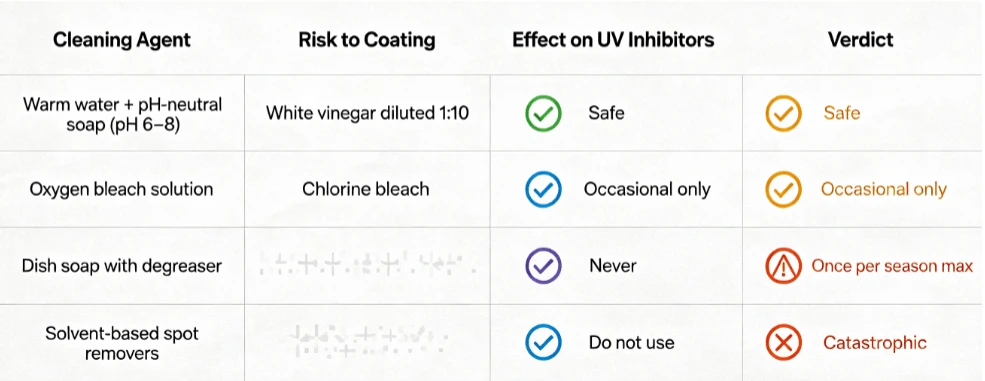
Commercial Cleaning Impact Matrix 📊
Choosing the correct cleaning method determines whether a canopy lasts three years or ten years. The table below evaluates common cleaning approaches based on their impact on protective coatings and overall fabric health.
| Cleaning Method | Cleaning Efficacy | DWR Coating Preservation | Fabric Fiber Health | Recommended Usage |
| High-Pressure Jet (>1,800 PSI) | High (Removes dirt quickly) | Severe Damage (Strips coating) | Micro-Fraying & Stretch | Never Recommended |
| Harsh Solvent / Undiluted Bleach | High (Kills mold instantly) | Moderate to Severe Degradation | Weakens Thread Seams | Emergency Spot Treatment Only |
| Low-Pressure Soft Wash + Neutral Soap | High (With proper dwell time) | 100% Preserved | Zero Structural Damage | Standard Operating Protocol |
| Abrasive Wire / Hard Nylon Brush | Moderate | Physical Abrasion Removal | Frays Yarn Surface | Never Recommended |
| Mild Soap + Soft Horsehair Brush | Excellent | 100% Preserved | Ideal Maintenance | Recommended for Regular Use |
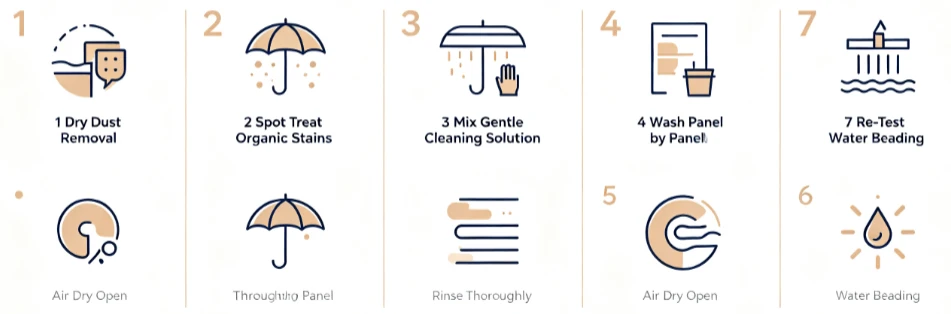
Step-by-Step Commercial SOP: Cleaning Without Coating Damage 🧼
Follow this standardized operating procedure (SOP) to maintain commercial shade canopies safely.
This process applies across diverse architectural shade designs, whether you are maintaining a classic single-vent canopy, a ventilated Double Top Patio Umbrella, or a decorative Fringe Patio Umbrella with delicate edge trims.
Step 1: Dry Debris Removal
Before applying water or liquid cleaners, sweep away loose surface contamination. Use a soft horsehair brush or a low-pressure air blower to remove dust, pollen, dry leaves, and atmospheric soot.
Skipping this step creates a muddy slurry when water is applied, pushing dirt deeper into the fabric weave.
Step 2: Prepare a Gentle Cleaning Solution
Mix a mild, pH-neutral soap solution using lukewarm water (under 100°F / 38°C).
Standard Mixture: 1/4 cup (60 ml) mild dishwashing liquid or specialized textile soap per 1 gallon (3.8 liters) of clean water.
Never use: Industrial degreasers, trisodium phosphate (TSP), or strong ammonia formulations.
Step 3: Controlled Application & Dwell Time
Lower the canopy to a manageable height. If managing a large Cantilever Patio Umbrella, tilt the frame downward so staff can access the fabric safely from ground level.
Spray or sponge the soap solution generously onto the canvas.
Allow a dwell time of 10 to 15 minutes. This lets the surfactants break down surface oils without harsh mechanical scrubbing.
Lightly scrub using a soft-bristle brush in circular motions. Pay extra attention to seams, double-vent flaps, and outer edges.
Step 4: Low-Pressure Thorough Rinsing
Rinsing is critical. Leftover soap residue acts as a dirt magnet and lowers the fabric's hydrophobic surface tension.
Use a standard garden hose with a spray nozzle set to a gentle shower pattern. Rinse continuously until runoff water is completely free of soap bubbles.
Step 5: Complete Air Drying
Never close or cover a wet umbrella. Allow the canvas to air-dry completely in the open position under direct sunlight. Natural sunshine helps kill remaining micro-spores while ensuring all moisture evaporates from the inner seams.

Stain-Specific Maintenance Protocol 🧪
When routine soft-washing isn't enough, use targeted spot treatments to protect the underlying fabric matrix.
| Stain Type | Target Contaminant | Recommended Cleaning Solution | DWR Impact & Action |
| Tree Sap & Resin | Sticky organic hydrocarbons | Spot-dabs of isopropyl alcohol on a microfiber cloth | Strips local DWR; requires localized spray re-proofing after drying |
| Bird Droppings | Uric acid & organic matter | Enzymatic outdoor spot cleaner or mild soap soak | Safe on DWR; rinse thoroughly with fresh water |
| Grease & Sunscreen | Non-polar lipids & oils | Citrus-based neutral surfactant or mild dish soap | Preserves DWR if rinsed completely without excessive friction |
| Heavy Mold / Mildew | Fungal mycelium colony | 1 cup household bleach + 1/4 cup mild soap per gallon water | Removes mildew; will strip DWR. Must re-apply fluoropolymer finish |
Structural Handling & Anchoring Considerations During Maintenance ⚓
Cleaning heavy commercial umbrellas safely requires stable anchoring systems. Staff should never attempt to scrub a large, unstable shade structure on a windy day.
For permanent outdoor dining installations, a bolt down deck plate for cantilever umbrella setups provides maximum stability. This prevents the frame from swaying or tipping while staff scrub high canopy sections.
If your venue requires flexible seating layouts, using a mobile base with locking wheels for commercial umbrella configurations allows maintenance teams to roll shade units to a dedicated wash bay. Always engage wheel locks fully before starting any soft-wash routine.
DWR Re-Proofing: Restoring Protective Coatings 🛡️
Even with gentle care, years of UV exposure and routine washing gradually wear down the factory water-repellent finish. Restoring this protective layer is a simple, cost-effective maintenance step.
How to Re-Proof Acrylic Canopies
Ensure the fabric is thoroughly cleaned and 100% dry.
Choose a commercial-grade fluoropolymer re-proofing spray designed specifically for solution-dyed acrylics.
Apply the spray in an overlapping pattern under ambient temperatures between 60°F and 85°F (15°C to 29°C).
Allow the fabric to cure completely for 24 hours before exposing it to rain or folding the canopy.
Once cured, rainwater will immediately form tight, spherical beads on the canvas surface once again.

Industry Testing Standards & Quality Certifications 📜
Commercial procurement teams rely on recognized testing standards to verify fabric quality and coating performance.
| Certification / Standard | Testing Authority | Performance Metric | Hospitality Benchmark Target |
| AATCC 22 | AATCC | Water Repellency: Spray Test | Rating 90–100 (Zero water sticking) |
| AATCC 127 | AATCC | Hydrostatic Head Pressure | > 1,000 mm water column resistance |
| ISO 4920 | ISO | Textile Surface Wetting Resistance | Grade 4 to 5 |
| ASTM D3786 | ASTM | Hydraulic Bursting Strength | High tensile resistance against tearing |
| OEKO-TEX Standard 100 | OEKO-TEX | Chemical Emission & Safety | Free of harmful PFOA / PFOS heavy chemicals |
| GREENGUARD Gold | UL Solutions | Low VOC Air Quality Compliance | Certified for safe outdoor hospitality use |
Independent lab testing by organizations like SGS, TÜV Rheinland, and Intertek confirms that proper maintenance protocols preserve these certified performance levels over years of heavy commercial use.
FAQs:
1. Can I use a pressure washer to clean my solution-dyed acrylic umbrella canopy if I stay far away?
Pressure washing is not recommended. Even at a distance, water pressure can strip the microscopic DWR coating and stretch woven fibers. Stick to low-pressure hose rinses and soft-bristle brushes.
2. Will bleach ruin the color of my solution-dyed acrylic canopy?
Pure solution-dyed acrylic fibers are bleach-safe because color pigments are embedded throughout the yarn core. However, bleach will strip the top waterproof coating, requiring a fresh application of re-proofing spray after cleaning.
3. How often should hospitality venues clean their outdoor umbrella canopies?
Perform a dry brush cleaning weekly to remove dust and pollen before dirt embeds in the weave. A soft-wash rinse should be performed every 1 to 3 months, depending on local environmental conditions.
4. How do I know if the protective DWR coating on my umbrella has been damaged?
Spray fresh water onto the canopy. If water beads up and rolls off in spheres, the coating is intact. If water flattens out, darkens the fabric, and soaks into the weave, the coating has degraded and needs re-proofing.
5. Can I put a solution-dyed acrylic canopy cover in a commercial washing machine?
Machine washing is not recommended for large commercial canopies. Agitation, spin cycles, and warm water can damage seam stitching, distort the shape, and wear down protective coatings.
6. What is the safest way to remove bird droppings without stripping the fabric coating?
Soak the spot with warm water and mild soap for 10 minutes to soften the debris. Gently wipe it away using a soft microfiber cloth, then rinse thoroughly. Avoid scraping dried droppings with hard tools.
7. Is it necessary to remove the canopy from the frame before cleaning?
Not necessarily. Most routine soft-wash cleanings are easiest when the canopy remains mounted on its frame. This keeps the fabric taut, making scrubbing and low-pressure rinsing quick and efficient.
8. How long does a re-proofing fluoropolymer spray treatment last?
Under daily commercial sun and rain exposure, a professional re-proofing treatment typically lasts 12 to 18 months before needing re-application.
9. Why does my canopy absorb water after being washed with dish soap?
If soap residue isn't completely rinsed away, it leaves a microscopic film that lowers surface tension, causing water to soak into the weave. Rinsing thoroughly with fresh water restores proper water-beading performance.