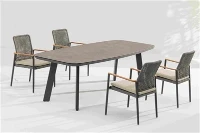

The lunch rush hits, a party of four leaves, and the next guests are already hovering by the host stand. You have about ninety seconds to turn that teak outdoor dining table into a spotless, food-safe surface. How to clean and sanitize outdoor teak tables between cafe customer seatings without ruining the wood or leaving chemical residue? That's the everyday reality for cafe operators, and it's a completely different challenge from deep-cleaning at closing time.
At Howvin, we sell a lot of cheap teak patio furniture to independent cafes that need to maximize turnover without sacrificing the warm, natural look of wood. We also supply L shaped outdoor teak sectional units to lounges where spills are constant and cushions take a beating. The one thing every operator asks is the same: "What can I wipe with that won't strip the teak or poison my customers?" The answer is a system, not a single spray bottle.
"We used to grab whatever glass cleaner was under the counter. Six months later, our teak tops looked gray and splotchy, and the health inspector flagged residue. We switched to a two-step wipe and it changed everything." - a bistro owner in Portland.
Here's the no-nonsense protocol that works for high-traffic patios, whether you're maintaining a grade A heartwood teak furniture for oceanfront properties or a budget-friendly cafe set.
🧼 First, Understand What You're Cleaning
Teak is not granite. It's a natural material with surface oils that repel water but can be stripped by harsh solvents or abrasives. The goal between seatings is contact-time disinfection-killing pathogens on the surface-without driving chemicals deep into the grain where they can linger and affect food contact safety.
The biggest mistakes we see:
❌ Using bleach or quaternary ammonium in high concentrations. These oxidize the wood fibers and leave a chalky residue.
❌ Scrubbing with steel wool or stiff brushes. This gouges the soft grain and creates pockets for bacteria.
❌ Letting liquid pool. Standing water on teak for even 10 minutes can raise the grain and create a rough texture.
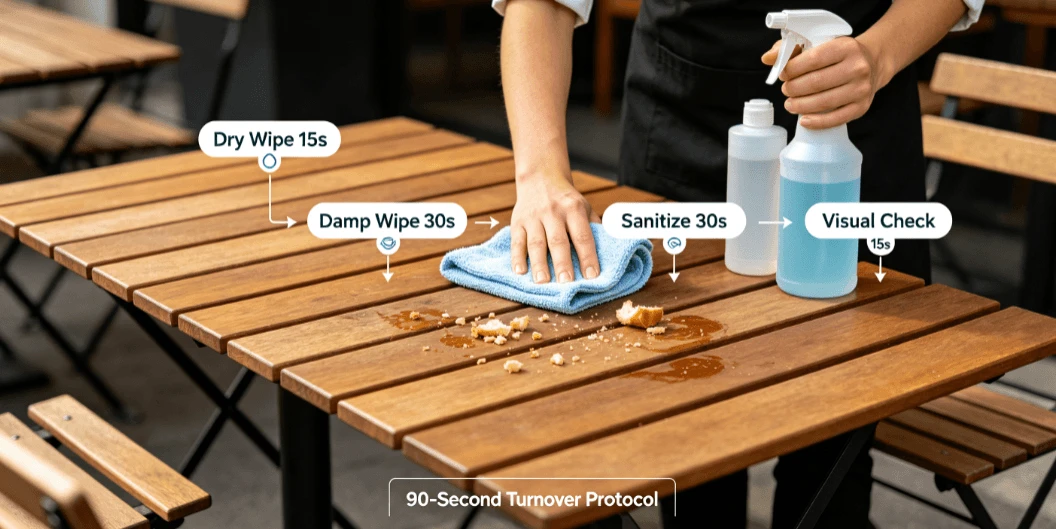
✅ The correct approach is a two-step method: first, a mild food-safe detergent to lift grease and crumbs; second, a fast-evaporating food-contact sanitizer that air-dries within 60 seconds without soaking in.
🧴 Sanitizer Selection: What Works on Teak Without Damage
Not all sanitizers are wood-friendly. In commercial food service, you're usually choosing between chlorine bleach, quaternary ammonium (quats), hydrogen peroxide, or alcohol-based formulas. Here's how they perform on teak specifically.
| Sanitizer Type | Efficacy on Teak | Residue Risk | Wood Damage | Evaporation Speed |
|---|---|---|---|---|
| Isopropyl alcohol (70%) | ✅ High | ✅ None | ✅ Minimal | ⚡ Very fast (under 30s) |
| Hydrogen peroxide (3%) | ✅ High | ✅ None | ⚠️ Slight lightening if overused | ⚡ Fast |
| Quats (200 ppm) | ✅ High | ⚠️ Can leave film | ⚠️ May strip oils | 🐢 Slow |
| Bleach (100 ppm) | ✅ High | ❌ Corrosive residue | ❌ Severe discoloration | 🐢 Slow |
🔬 Pro tip: For rush turnover, a spray bottle of 70% isopropyl alcohol is your best friend. It evaporates in seconds, kills most bacteria and viruses on contact, and leaves zero residue on Grade A heartwood teak furniture for oceanfront properties-a must for venues where salt air already stresses the wood.
🧽 The 90-Second Turnover Protocol
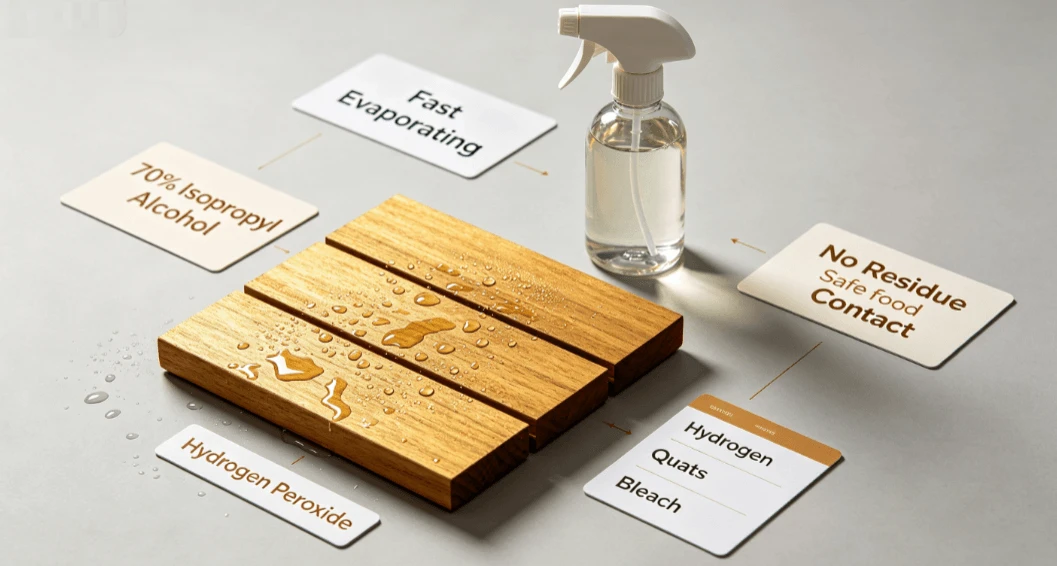
Here's the exact sequence we recommend to Howvin cafe clients. It assumes you already have a spray bottle of detergent and a second bottle of sanitizer at each service station.
🔹 Step 1: Dry wipe (15 seconds)
Use a microfiber cloth to sweep crumbs, salt, and debris into a small bin or apron pocket. Never use the same cloth for more than a few tables without rinsing-it turns into a bacteria spreader.
🔹 Step 2: Damp wipe with detergent (30 seconds)
Spray a food-safe surface cleaner (look for NSF-certified products) onto the tabletop and wipe in the direction of the grain. This lifts oils, sunscreen, and coffee rings. Avoid soaking; a fine mist is enough.
🔹 Step 3: Sanitize (30 seconds)
Lightly mist the surface with 70% isopropyl alcohol or a hydrogen peroxide-based sanitizer. Let it air dry completely before seating. Don't wipe it off; the evaporation is what does the disinfecting.
🔹 Step 4: Visual check (15 seconds)
Run your hand across the surface. It should feel smooth and dry, not tacky. If there's any sticky residue, you used too much detergent-give it a quick dry buff with a clean cloth.
✅ Total time: 90 seconds. Train your bussers to follow this rhythm until it becomes muscle memory.
🧪 Disinfecting Without Damaging the Finish
Some teak tables come with a sealer or teak oil finish, while others are left raw to weather to silver. Your cleaning protocol should adapt accordingly.
| Finish Type | Compatible Sanitizers | Avoid | Maintenance Note |
|---|---|---|---|
| Natural (unfinished) teak | Alcohol, hydrogen peroxide | Bleach, quats | Will develop silver patina; clean with wood soap weekly |
| Teak oil finish | Mild detergent, alcohol wipes | Harsh degreasers | Oil may break down faster with frequent alcohol; re-oil monthly |
| Water-based sealer | Hydrogen peroxide, quats | Solvent-based cleaners | Sealer forms a barrier; wipe gently to preserve film |
| Varnish/lacquer | Any food-safe sanitizer | Abrasive scrubbing | Hard finish tolerates most chemicals but chips easily |
🧴 If you own an all weather teak outdoor sofa with removable washable cushion covers, the frame can handle alcohol wipes, but the cushion covers need to go straight into a washing machine with hot water and mild detergent. Keep at least two extra sets of covers per seating unit so turnover never stalls.
🌊 Special Considerations for Oceanfront Cafes
Salt air changes everything. A grade A heartwood teak furniture for oceanfront properties may look majestic on a seaside terrace, but salt crystals are abrasive and hygroscopic-they pull moisture from the air and keep surfaces damp. Between seatings, add a dry wipe with a damp chamois before sanitizing. This removes the invisible salt film that would otherwise react with alcohol and create a cloudy residue.
At Howvin, we recommend oceanfront venues upgrade to marine-grade stainless steel bolts and teak treated with a breathable sealer to slow salt penetration. And avoid using quats near the ocean spray zone; they can bond with salt to form a slippery film on the table edge.
🔎 Common Mistakes That Earn Health Code Violations
❌ Using one rag for everything. Cross-contamination is the fastest way to fail an inspection. Use color-coded cloths: red for tables, blue for chairs, yellow for highchairs.
❌ Spraying sanitizer directly onto tables near food. Always turn away from plates and cups, or better yet, clear the table completely before sanitizing.
❌ Skipping the dry wipe. Wet crumbs become a paste that can harbor Staphylococcus and E. coli.
❌ Using wood polish or furniture oil during service. These are not sanitizers and can attract dust and grease. Save them for closing.
✅ Quick compliance check: Your sanitizer must be EPA-registered for food-contact surfaces if used in the US, or carry a local equivalent. The label should state "no rinse required" or "safe for food contact" in clear terms.

📅 Cleaning Frequency: When to Go Deeper
Between seatings is rapid maintenance. But you also need scheduled deep cleans to remove buildup and restore the teak's natural look.
| Cleaning Level | Frequency | Method | Time |
|---|---|---|---|
| Turnover wipe | Every seating | 2-step detergent + alcohol | 90 seconds |
| Daily wash | End of service | Warm water + mild dish soap, soft brush, rinse | 10-15 min per table |
| Deep clean & brighten | Monthly or as needed | Two-part teak cleaner, brightener, rinse, dry | 45 min per table |
| Sanding & re-oiling | Annually | Light sand with 220-grit, apply teak oil or sealer | 2-3 hours per table |
🗓️ If your patio includes an L shaped outdoor teak sectional, schedule cushion cover laundering at the same cadence as daily table wash, and rotate cushions weekly to even out wear.
🧾 Certifications That Matter for Cleaning Supplies and Furniture
When you buy cheap teak patio furniture, the wood itself may not come with certifications, but the cleaning products and the manufacturing process should. Here's what to look for:
NSF International – certifies food-safe detergents and sanitizers. Look for the NSF mark on your spray bottles.
EPA Registration – in the US, any product claiming to disinfect must be registered. This ensures it kills specific pathogens at the labeled contact time.
FSC (Forest Stewardship Council) – guarantees the teak wood is sourced from responsibly managed forests. A Howvin teak outdoor dining table ships with FSC documentation.
SVLK – Indonesian timber legality standard, mandatory for teak exports.
SGS – third-party material testing; ask for reports on teak density and oil content to confirm you're getting Grade A heartwood.
ISO 9001 – quality management system; ensures consistent manufacturing of furniture that stands up to daily cleaning without falling apart.
💡 If your furniture supplier can't provide at least FSC and SGS paperwork, you may be buying plantation sapwood teak that will warp and crack under frequent sanitizing. At Howvin, every teak piece is SVLK-certified and comes from ISO 9001-audited factories.

📊 Three Comparison Tables for Fast Reference
Turnover Sanitizing Agents for Teak
| Agent | Contact Time | Food-Safe? | Cost per Table | Teak Compatibility |
|---|---|---|---|---|
| 70% Isopropyl alcohol | 30 sec | ✅ Yes | $0.02 | ✅ Excellent |
| 3% Hydrogen peroxide | 60 sec | ✅ Yes | $0.03 | ✅ Good |
| 200 ppm Quats | 60 sec | ✅ Yes | $0.01 | ⚠️ May film |
| 100 ppm Bleach | 60 sec | ❌ No | $0.01 | ❌ Damage |
Cloth Management Systems
| Cloth Type | Best Use | Wash Frequency | Replacement Cycle |
|---|---|---|---|
| Microfiber (high GSM) | Dry wipe & polish | Daily | Every 3 months |
| Cotton terry | Detergent application | Every 4 hours | Every 1 month |
| Disposable paper | Single-use sanitizing | After each table | N/A |
| Color-coded set | Zone separation | Daily | Every 2 months |
Teak Finish vs. Sanitizing Tolerance
| Finish | Alcohol Wipe | Quats Spray | Bleach | Daily Soap |
|---|---|---|---|---|
| Raw teak | ✅ Safe | ⚠️ Occasional | ❌ Never | ✅ Safe |
| Teak oil | ✅ Safe | ⚠️ Occasional | ❌ Never | ✅ Safe |
| Water sealer | ✅ Safe | ✅ Safe | ⚠️ Occasional | ✅ Safe |
| Varnish | ✅ Safe | ✅ Safe | ⚠️ Occasional | ✅ Safe |
💬 FAQ
Q1: Can I use Clorox wipes on teak tables?
Avoid them. Most Clorox wipes contain bleach or quaternary ammonium compounds that can strip the natural oils and leave a residue. Stick to 70% isopropyl alcohol or a hydrogen peroxide spray labeled safe for food contact.
Q2: How do I remove coffee rings quickly between customers?
A paste of baking soda and water rubbed gently with a soft cloth lifts fresh coffee stains without damaging raw teak. For finished teak, a quick spray of food-safe degreaser followed by alcohol works better.
Q3: Will frequent sanitizing turn my teak gray faster?
Not if you use alcohol or hydrogen peroxide. Graying comes from UV exposure and oxidation, not sanitizing. However, harsh chemicals like bleach accelerate color change and uneven blotching.
Q4: What about sanitizing an L shaped outdoor teak sectional frame?
The wooden frame can be wiped with alcohol. The cushion covers should be removed and machine washed. If cushions are fixed, spray them with a fabric-safe sanitizer and let air dry in the sun for at least 30 minutes-UV light adds an extra antimicrobial punch.
🌍 Final Word
Keeping a teak outdoor dining table clean and safe between cafe customers doesn't require expensive equipment or harsh chemicals. It requires a disciplined two-step wipe: lift the grime, then sanitize with a fast-drying, food-safe agent. Whether you invested in cheap teak patio furniture for a startup cafe or a full L shaped outdoor teak sectional for a luxury lounge, the rules don't change. Teak rewards patience and punishes shortcuts.
At Howvin, we build outdoor furniture that survives the chaos of high-volume service. We also provide our commercial clients with laminated cleaning guides, spare cushion covers for all weather teak outdoor sofa with removable washable cushion covers, and documentation for FSC, SVLK, and SGS compliance. Because a beautiful patio is only as good as the last table you wiped down before the next guest sat.